Generate discussion and awareness amongst community members about their animals’ welfare needs and the animal husbandry and management practices that can meet them (refer to Part 1 below).
Support the identification of behaviours that are feasible for communities to adopt to improve their animals' welfare (refer to Part 2 below).
Identify actions communities can take to improve their animals welfare even when they are unable to address identified welfare issues due to barriers they/the project faces in resolving these issues’ root causes (refer to Part 3 below).
This resource demonstrates how the five domains of animal welfare framework can be linked with human behaviours using donkeys as an example. It illustrates its use as a discussion tool in promoting understanding of donkey’s welfare needs, and for identifying behaviours feasible for community members to adopt to improve their donkeys’ welfare. Refer to this illustrative example to support your development of a five domains framework linked with human behaviours that is relevant to the context of your work. The Animals and Communities Learning Module is also a recommended foundational reading for understanding animal welfare and the five domains of animal welfare discussed in this resource.
PART 1: Developing a Five Domains of Welfare Linked to Human Behaviours Discussion Tool
Table 9a provides an illustrative example of a five domains of welfare framework for donkeys, linked with identified potential human behaviours for meeting donkeys’ welfare needs. It is recommended to populate the five domains framework with animal welfare experts knowledgeable in the target species, and then brainstorm a list of human behaviours in consultation with representative members of the animal owning community to ensure they reflect locally appropriate and acceptable behaviours. In addition, animal welfare experts must work hand in hand with community development/engagement teams for these discussions to ensure any potential behaviours identified for meeting animals’ welfare needs support positive life experiences and do not adversely cause harm to animals. Developing a species specific five domains framework linked to the potential human behaviours for meeting an animals’ welfare needs within the domains of nutrition, health, environment and behaviour can support community discussions and awareness raising about animals’ welfare needs and the animal husbandry and management practices recommended to meet them.
Donkey Welfare Needs Associated with Domains of Welfare
Human Behaviours Associated with Meeting Donkey’s Welfare Needs (Ideal Best Practices Appropriate within Local Context)
NUTRITION DOMAIN
a.Food Quantity and Quality · Donkey’s nutritional requirements are met by eating a sufficient quantity and variety of nutritional feeds (e.g. fibre based feeds) for taste and pleasure. · Donkeys feed on small potions and very often. This is essential for health. In a natural situation donkeys eat for 12-16 hours a day to maintain health. With work they likely need additional energy (e.g. feed during rest breaks during work). b.Water Quantity and Quality: · Donkeys have access to and drink sufficient quantity of water while working and at home
a.Human Behaviours Related to Food Quantity and Quality · Provide sufficient quantities of predominantly fibre based feeds (grass/hay) and other suitable locally available forages including straw (e.g. from oat, barley, wheat), and/or soya meal as local availability permits based on recommended proportions for their animals’ size and workload, at intervals throughout their working day (every 3 hours or /2-3 times/day). · Provide donkeys with opportunities to graze on natural forage when they are not working as often as possible when locally available and provide forage (e.g. straw/hay) when they are not working if there is no or limited natural vegetation available to graze. b.Human Behaviours Related to Water Quantity and Quality · Provide freely available clean water to donkeys whenever they are at home not working. · Provide clean water to donkeys throughout their working day (every 3 hours or /2-3 times/day). · Provide more clean water during hot seasons/conditions and adjust working hours to avoid strong heat time
HEALTH DOMAIN
a.Absence of Disease b.Absence of Lameness c.Absence of Preventable Injuries e.g. wounds d.Provide Timely Treatment and Pain Management
a.Human Behaviours Promoting Absence of Disease · Seek yearly health checks from qualified animal health service providers. · Check donkey’s general health and well-being on daily basis. · Take preventative measures against preventable diseases at recommended treatment intervals (e.g. yearly vaccines, parasite control). · Clean manure from donkey resting areas at home on a daily basis to mitigate parasitic diseases spread by flies, and hoof health issues. b.Human Behaviours Promoting Absence of Lameness · Load donkey carts in a balanced way within the reasonable maximum load to prevent lameness · Pick/clean donkey’s hooves daily before and after working to maintain hoof health and comfort during working. · Seek qualified farriery service providers to trim donkey’s hooves at the regularly recommended frequency to promote hoof health and mitigate lameness. · Clean donkey resting areas on a daily basis to ensure substrate is clean and doesn’t accumulate pools of water/urine to mitigate hoof health issues. · Allow the donkey to go more slowly and choose their route if the ground surface is uneven. If an alternative less uneven route is available, select this route. · Allow the donkey to go more slowly and choose their route if the ground surface is uneven. If an alternative less uneven route is available, select this route. c.Human Behaviours Promoting Absence of Preventable Injuries e.g. wounds · Clean equipment which comes into direct contact with donkey’s skin to remove accumulation of dust and prevent painful rubbing and wounds (e.g. pads and harnesses). · Load donkey carts in a balanced way to prevent equipment rubbing from causing wounds. · Use body and verbal communication to guide donkeys instead of whipping to prevent wounds and stress. · Groom animals to remove dust from skin before they work to prevent equipment rubbing and causing wounds. · Use properly fitting, quality equipment purchased from welfare friendly equipment suppliers (e.g. cart, harness, bit makers), and/or made from locally available materials in accordance with recommendations for promoting welfare (e.g. padding made with straw). · Clean donkey’s eyes daily to remove discharge and debris and check for abnormalities to help mitigate eye problems. · Load donkeys with no more than the recommended weight appropriate for the animals’ size to prevent injury. d.Human Behaviours Promoting Timely Treatment and Pain Management · Clean any skin wounds in accordance with recommended guidance as soon as wounds are observed. · Provide rest for donkey to recover from the injury or until wound recovers · Seek timely treatment from qualified animal health service providers when animal is sick or injured. · Donkeys pain and suffering is managed as needed when injuries or illnesses occur through administration of pain medications prescribed and administered as needed by a qualified animal health service professional
ENVIRONMENT DOMAIN
a.Thermal Comfort/Weather Protection · Prevention of adverse physiological reactions from sun/heat and adverse weather conditions b.Safe Environment · Environment where donkey lives/works is safe and does not pose a risk of injury/harm e.g. traffic, edible rubbish, sharp objects, pooling water where animal stands etc. · Environment permits escape/safety from predation c.Space for Exhibiting Natural Behaviours · Sufficient available space for donkeys to freely socialize with others within shelter or outside the shelter, and also to allow them to move away from other animals as needed e.g. to avoid conflict · Donkeys have space to roam and carry out normal grazing/foraging behaviours without competition · Donkeys have space to roll in the dirt and scratch when not working. d.Substrate/Floor Comfort · Substrate where animals rest and stand is free from excrement and/or pooling water
a.Human Behaviours Related to Thermal Comfort/Weather Protection · Provide donkeys with shelter during hot and wet/rainy weather. · Rest donkeys in shade or shelter with appropriate ventilation while on breaks during working hours to protect them from the heat of the sun and other adverse weather conditions. · Provide shelter large enough to accommodate all animals made of locally available and appropriate materials to remain at optimal temperatures that protect their animals from the heat and other adverse weather conditions (e.g. physical building, wall or other man made or natural structure that is appropriately ventilated.) b.Human Behaviours Promoting a Safe Environment for Donkeys · Remove harmful items/hazards from locations where donkeys are left to rest, graze, and in their shelter areas (e.g. edible plastics, sharp objects etc.) to prevent risk of harm. · Use shelter materials which are safe and do not pose a risk to donkey’s safety · When allowing donkeys to freely graze iv. Keep an eye on their movements and ensure they do not wander to rubbish heaps and ingest plastics and/or v. Tether donkeys using recommended welfare promoting methods and equipment to ensure their safety and prevent their ingestion of harmful materials, and change their location frequently so as not to limit the quantity of feed they are able to graze. · Keep to sides of roads to mitigate potential traffic collisions while transporting goods/people. · Equip donkey carts with reflectors to ensure they are visible to traffic while working. · Equip donkey carts with breaking systems to help manoeuvre effectively in traffic while working. · Ensure donkeys are safe from potential theft, predation and road traffic at night by keeping them in their shelters or other designated safe space close to home where they can be heard if distressed. · Ensure donkeys are safe from road traffic accidents at night by using carts with reflectors. c.Human Behaviours Promoting Space for Donkeys to Exhibit Natural Behaviours · Provide daily opportunities for donkeys to freely roam/carry out normal grazing/foraging behaviours without competition whenever safe to do so. · Allocate adequate space as available and daily opportunities while donkeys are not working to: 1) to freely move their limbs in a natural state, 2) rest, access feed, and avoid excrement, 3) socialize with other donkeys if present/feasible, and 4) move away from other animals as needed for their safety/mitigate conflict/competition and/or predation, 5) Roll and scratch without hindrance of equipment. d.Human Behaviours Promoting Substrate/Floor Comfort · Clean donkey shelters/rest area’s at home daily of excrement and any and excess pooling water · Provide deep, soft substrate for comfort and effective rest/sleep.
BEHAVIOUR DOMAIN
a.Ability/agency to interact with other animals · Donkeys can choose to interact and socialize with other donkeys or other species animals (e.g. touch/mutual grooming, play) or remove themselves from the presence of others. b.Ability/agency to Interact with Environment/Exhibit Natural Behaviours · Donkeys carry out normal behaviours such as rolling, lying down/resting, and resting during non-work periods without restriction. · Donkeys choose and carry out to graze, scratch, shelter, roll or explore their physical environment. c.Donkeys Respond Positively to Interactions with Humans e.g. alertness, interest, engagement with people, calm, no fear or stress response, or remove themselves from interacting with humans
a.Human Behaviours Promoting Donkey Agency · Provide donkeys with an ability to choose to move around freely without restriction/restraint while at rest at home. · Allow donkeys to interact with other animals (touch/mutual grooming), and move away from other donkeys if they choose too, including during their work day whenever feasible without hindering their work. · Use a halter when it is necessary to restrict a donkey’s movement. b.Human Behaviours Promoting Donkeys Exhibition of Natural Behaviours · Use recommended welfare friendly methods of restricting donkey’s movement when it necessary to so as to enable them to maintain as much natural movement as possible (e.g. use of harness and rope rather than hobbling) · Allow donkey foals stay with their mothers as much as possible, and provide them with opportunities to socialize and play with other foals if feasible. · Provide donkeys with intervals of rest throughout the day when they are working, and a day of rest at home without working them after lengthy work days to enable them to recuperate. · Provide donkeys with daily opportunities to freely carry out normal behaviours such as rolling, scratching, grazing, and interacting/playing with other donkeys if available while at home and not working. c.Human Behaviours Supporting Positive Interactions with Donkeys · Calmly approach and speak with donkeys to keep them calm and prevent stressful human interactions which cause them to exhibit fear or aggression. · Use body language communication or sound cues and/or as a ‘firefighting’ immediate option only, the presence of soft sticks which are unable to inflict pain can be used as a visual encouragement or light tap to inspire Donkeys to move as needed rather than whipping them which can cause them fear and stress. · Provide information to a handler or any third party how their donkeys are trained and respond to cues · Owners seek to develop owns skill to train and communicate with their donkeys in a compassionate way or ask for support from animal welfare organizations to build their own skills.
¯ DONKEY’S MENTAL STATE WHEN NEEDS MET/HUMAN BEHAVIOURS ADOPTED ¯
Free from fear, distress, anxiety Feels comfortable Expresses happiness and enjoys pleasure Feels Secure, Protected and Confident
Table 9a. Example Five Domains of Welfare Framework for Donkeys Linked with Human Behaviours
PART 2: Using Root Cause Analysis and Five Domains Framework linked with Human Behaviours to Identify Feasible Animal Welfare Issues and Actions for Addressing Them
The steps below outline a process which can be used or adapted to support the identification of behaviours that are feasible for communities to adopt to improve their animals welfare through use of a root cause analysis and species specific five domains of welfare linked with human behaviours.
First identify the animal welfare issues prevalent in the community. Consider using a participatory animal welfare assessment process, ideally involves members of the animal owning community whenever feasible to do so. The T22 Animal Welfare Transect Walk tool can be used to support this process.
Next, seek to understand the root causes of identified animal welfare issues in collaboration with community members or representative key informants from the animal owning community. Consider using the T25 Problem Animaltool to support undertaking a participatory root cause analysis of identified animal welfare issues. An example of root cause analysis for animal welfare issues identified through a participatory animal welfare assessment are illustrated in Figure 9a below.
Once a root cause analysis of welfare issues has been conducted, facilitate a discussion with community members or representative key informants from the animal owning community to the animal welfare issues which may be feasible and of interest for community members and the project to work together to address based on an understanding of their root causes. Seek agreement on the welfare issues which will be prioritized for improvement, and use a species specific five domains framework linked with potential human behaviours (refer to example in Table 9A above) to further discuss and identify the behaviours feasible for community members to adopt to address these welfare issues. Consider inviting animal welfare experts to the discussion to ensure any behaviours identified do not adversely harm animals and are likely to result in desired animal welfare improvements. Refer to the following considerations to help the selection of target behaviours:
How likely it is the behaviour can be changed (when considering the likelihood of change being achieved, think about the barriers and motivators to change in terms of capability, opportunity, and motivation to change of those who perform the behaviour)
How much of an impact adopting the behaviour would have on improving the overall welfare state of the animal in terms of the five domains.
How likely it is that the behaviour (or group of behaviours) will have a positive or negative impact on other, related behaviours.
How easy it will be to measure the behaviour.
Can the project support communities in adopting this behaviour given its available resources and implementation capacity e.g. if the project is being implemented through trained community change agents, can they effectively support communities in adopting this behaviour as needed?
Figure 9a. Example Root Cause Analysis of Donkey Welfare Issues
Table 9b below is an example of the target donkey welfare issues and behaviours identified as feasible for a community and project to address based on the results of the root cause analysis in Figure 9a. These discussions included representative community key informants and change agents, as well as animal welfare experts who helped ensure any behaviours identified support animal welfare improvements and do no harm.
Identified Donkey Welfare Issues Feasible to Address Based on Root Cause Analysis
Identified Behaviour Change Priorities for Addressing Priority Donkey Welfare Issues (Feasible and Appropriate within Local Context)
NUTRITION DOMAIN
a. Donkey is malnourished/skinny due to insufficient provision of quality and quantity of feed - Not feasible to address based on root cause analysis
Not feasible to address at this stage.
HEALTH DOMAIN
a. Excessive eye discharge b. Back Wounds c. Hindquarter wounds d. Overgrown hooves - Not feasible to address based on root cause analysis
a.Human Behaviours for Addressing Eye Discharge · Clean donkey’s eyes daily to remove discharge and debris and check for abnormalities to help mitigate eye problems. · Avoid as far as possible environments with air contamination e.g. during rest if it is not possible to avoid during work · Contact animal health practitioner if one eye is being different to the other eye, swelling, closed eye, thick and have coloured discharge and there is obvious change to the colour of the eye. · Avoid using blinkers and decorative items that dangle around the eyes b.Human Behaviours for Addressing Back Wounds · Wipe down and/or shake out any equipment to remove any accumulated mud or dirt before or after each use to prevent excess accumulation of dirt causing rubbing. · Groom animals carefully to remove dirt and dust from skin before they work to prevent equipment rubbing and causing wounds. · Use back padding under any loads whenever donkeys are using packs or to prevent carts from rubbing, in accordance with welfare promoting instructions for making such back pads using locally available materials (instructions to be provided by project). · Gentle cleaning with clean cloth to clean the wound. · Give the donkey to rest to recover from the wound c.Human Behaviours for Addressing Hindquarter Wounds · Rest animals from work to enable wounds to heal. · Use body and verbal communication or sound cues and/or as a ‘firefighting’ immediate option only and once wounds are healed use soft sticks which are unable to inflict pain as a visual encouragement or a light tap to inspire donkey’s to move as needed rather than whipping them which can cause them fear and stress (Request for a Compassionate Handling training to be provided by an animal welfare organization).
ENVIRONMENT DOMAIN
n/a – no issues identified from transect walk
n/a – no issues identified from transect walk
BEHAVIOUR DOMAIN
n/a – no issues identified from transect walk
· n/a
Table 9b: Priority Animal Welfare Issues and Actions for Addressing Them
PART 3: Using a Five Domains of Animal Welfare Framework Linked with Human Behaviours to Improve Animal Welfare When Unable to Address Root Causes of Animal Welfare Issues
While identifying existing animal welfare issues is a recommended step in community animal welfare improvement projects, it is not uncommon for community members or a project to be constrained in their ability to address the root causes of such issues. For example, it may not be feasible to resolve animal welfare issues whose root cause is communities’ lack of access or availability of financial resources using a Community Engagement Approach where trained community change agents are the primary implementing agents tasked with supporting community behaviour change at the individual household level. When resolving identified animal welfare issues is not feasible, opportunities to increase animals’ positive life experiences nevertheless exist.
Using a species specific five domains framework linked with associated human behaviours, you can facilitate discussions with community members and encourage them to identify and adopt other feasible actions/behaviours to improve the overall net gain in animals’ welfare even when identified welfare issues cannot be addressed. Using this resource can support flexible, solution oriented discussions with communities for improving animal welfare which are cognizant of contextual constraints, and mitigate promotion of unobtainable welfare standards that are not feasible to achieve. Improving animal welfare is more about creating positive change in animals’ welfare status through increasing animals’ positive life experiences so as to tip the balance between negative and positive life experiences. While addressing identified animal welfare issues is always a goal, you can still achieve an overall net gain in animal welfare even when such issues remain unaddressed. Figure 9b below illustrates the concept of this balance of life experiences.
Figure 9b: Balance of Life Experiences (adapted from [2])
To improve animal welfare it is important to seek to understand and assess animals both positive AND negative experiences within each domain and consider how an animal’s experiences within each of the four domains may be contributing to its mental state AND influencing its overall welfare. Thus, in addition to the identified donkey welfare issues (negative experiences) and associated human behaviours that can be adopted to address them which were identified in Table 9b above, Table 9c below provides examples of additional feasible actions identified in discussion with community members to improve their donkeys’ overall positive life experiences identified by using table 9a to generate awareness and discussion amongst community members. This demonstrates how this facilitator resource can be used to promote animal welfare improvements through focusing on ways to promote positive life experience rather than solely focus on addressing welfare issues. Without it, these opportunities for improving donkeys welfare through enhancing positive life experiences would not have been identified through the transect walk alone, which focussed more on assessing animals’ welfare to identify issues. It is recommended to prioritize elements within each of the domains instead of focussing on all efforts for improving an animals’ welfare within fewer domains to the extent feasible. As such, for this exercise, communities were encouraged to identify ways they could improve their animals’ positive life experiences within the domains of environment, behaviour and nutrition since all of their previously identified issues and behaviours were associated within the one domain of health.
Donkey Welfare Needs/Positive Life Experiences
Identified Potential Behaviour Change Priorities to Improve Donkey’s Welfare (Feasible and Appropriate within Local Context)
NUTRITION DOMAIN
a. Donkeys feed on small portions and often
Human Behaviours Promoting Improved Donkey Feeding a. Provide donkeys with feed and water 2-3 times a day throughout their working day (every 3 hours or 2-3 times/day).
HEALTH DOMAIN
N/A – priority donkey welfare issues already identified for health domain (refer to table 9b)
N/A - human behaviours to address priority donkey health issues already identified (refer to table 9b)
ENVIRONMENT DOMAIN
a.Thermal Comfort/Weather Protection · Prevention of adverse physiological reactions from sun/heat and adverse weather conditions b.Space for Exhibiting Natural Behaviours · Donkeys have space to roll in the dirt and scratch when not working.
a.Human Behaviours Related to Thermal Comfort/Weather Protection · Rest donkeys in shade or shelter while on breaks during working hours to protect them from the heat of the sun and other adverse weather conditions. b.Human Behaviours Promoting Space for Donkeys to Exhibit Natural Behaviours · Provide adequate accessible space for donkeys to roll, scratch, and lay down without hindrance of equipment when not working.
BEHAVIOUR DOMAIN
a.Ability/agency to exhibit natural behaviours/interact with other animals · Donkeys can choose to interact with other animals of their species (e.g. touch/mutual grooming, play) or remove themselves from the presence of other animals. · Donkeys can choose to carry out normal behaviours such as rolling, lying down/resting, and resting during non-work periods. b.Donkeys Respond Positively to Interactions with Humans
a.Human Behaviours Supporting Donkeys Exhibition of Natural Behaviours · Provide donkeys with daily opportunities to freely carry out normal behaviours such as rolling, scratching, grazing, and interacting/playing with other donkeys (if present) while at home and not working. b.Human Behaviours Supporting Positive Interactions with Donkeys · Use communication or sound cues and/or the presence of soft tipped sticks which can be used as a visual encouragement or light tap to inspire Donkey’s to move as needed rather than whipping them which can cause them fear and stress (also supports addressing whipping wounds under health domain).
Table 9c: Additional Actions for Increasing Positive Life Experiences of Donkeys to Improve their Overall Welfare Status
A credit analysis examines existing sources of income, expenditure and credit. This motivational tool is primarily used during planning to generate interest in establishing a self-help or savings group to promote collective action. If group savings is not appropriate or part of the local culture, this tool is great for promoting the benefits of collective action to reduce common expenditures, such as animal feed or veterinary treatments.
Tool purpose:
Time needed:
• To generate interest in establishing a self-help group through collective regular savings and loaning activities. • To identify the coping strategies undertaken to meet household and animal needs. • To understand the advantages and disadvantages of credit sources and their impacts on animal welfare and people’s livelihoods. • To identify opportunities for collective action to reduce common community-wide expenditures. • To support a gender analysis during a participatory needs assessment to identify perceived differences in income, expenditure and credit between men and women.
1.5 - 2 hours
Materials needed:
Chart paper, cards & pens, or coloured chalk and other local resources that represent each source of income, expenditure and credit.
Specific Topics: Livelihoods, Group Formation / Strengthening
Income, expenditure & credit analysis
Figure T13 Analysis of income, expenditure and credit by animal owners
The figure above (T13) shows an income, expenditure and credit analysis carried out by members of animal-owning households in a community. In this example, participants were asked to allocate an estimated annual amount per household for each source of income and expenditure. They also identified where they were able to find credit when income is less than expenditure.
The diagram illustrates:
Most animal owners earn their main income through work with their animals using plough and traction ($800).
Additional income comes from agricultural labour ($500), selling animals ($400), manual labour ($100) and selling eggs ($50).
The major household expenditures are household medical treatment and health care ($700), animal feed and fodder ($600), human food ($500) and animal health treatments ($500).
Other household expenses include children’s education ($400), and animal’s equipment ($200) and alcohol and cigarettes ($150).
Many animal owners are dependent on credit from employers, the local money lender, relatives or the egg buyer.
The discussion during this exercise led the group to start their own savings fund in order to support their animal-related and household needs and reduce their dependency on high interest loans from money lenders.
Income, Expenditure and Credit Analysis
Step 1
Start by explaining the purpose of the activity and ask a community helper to draw a large triangle, either on the ground or on a large piece of chart paper. Label the left side ‘income’ and the right side ‘expenditure’. Draw arrows facing into the triangle for income and out of the triangle for expenditure (see figure T13).
Step 2
Ask participants about their various sources of annual household income. Encourage them to describe all the types, not only cash, but payments in kind (such as food, handmade goods, or other resources). Urge participants to recall both regular (daily, weekly, monthly) and seasonal income. If this activity is conducted by men and women separately, make sure that they include income from all family members. Have the helper write each source of income on individual cards using words or symbols and have participants align the cards along the outer left-hand side of the triangle.
Step 3
Have the group discuss and agree on their common major household expenditures, including animal-related expenditures. Remind them to include big items that might not be regular expenditures, such as household construction and renovations, gifts for family members and wedding expenses. Have the community helper write each source of expenditure on individual cards using words or symbols and ask participants to place the cards along the right-hand side of the triangle.
Step 4
Ask the participants to provide an estimated average annual amount for each source of income and have the helper add the amount to each card. Then, ask the group to provide an estimated average annual amount for each household expenditure and have the helper add the amount to each card.
Step 5
Total the average annual income with the participants and have the helper write it on the triangle in the bottom left-hand corner (below all the income source cards).
Total the average annual expenditure with the participants and have the helper write it on the triangle in the bottom right-hand corner (below all the expenditure cards) (see figure T13).
Step 6
Once income and expenditure have been totalled, compare the total average income with total average expenditure. If expenditures appear to be more than income, ask the participants what they do to cover the costs of expenditures that income does not cover. What do you do during a period of emergency or when unexpected costs arise (health care, gifts, ceremonies, etc.) to meet the needs of your households and animals? (Coping strategies)
Step 7
Ask participants to describe and list their various sources of credit. Have the helper write the credit sources on cards and place them along the bottom of the triangle (see figure T13).
Participants may identify reasons for selecting specific sources of credit, such as:
• ease of access • interest payments • loan repayment terms • threats and pressure (from family/friends) • the need for a guarantor • collateral and mortgage terms
Step 8
Once the triangle is complete, ask the group:
• How can you reduce common expenditures? • What are some potential collective action activities? • Why do you prefer one source of credit over another? • What are the negative implications of continuous borrowing on your own lives and your animals’? • Are there alternative options that would have less consequences or impacts?
Step 9
Record any actions the group agrees (e.g. establishing a self-help group, starting their own savings group, opportunities to take collective action to reduce expenditures) to the community action plan. For those interested in setting up a savings and/or self-help group, set a date and time to meet soon to ensure that interest is not lost.
Record actions to be taken by the team in your project action tracker and support the community by linking them to any necessary stakeholders.
Facilitator’s notes: Income, expenditure and credit analysis
The primary purpose of this tool is to generate interest in group formation. If you know that a savings/self-help group already exists, it might be more appropriate to use another tool such as T9 Matrix Ranking and Scoring (T9c credit matrix ranking and scoring) for group strengthening or T15 cost-benefit analysisto initiate collective action.
For some groups this might be a sensitive discussion. Trust is important between community members before they will have an open discussion on income, expenditure and credit, thus, it is essential to have a good understanding of the trust between participants before conducting this activity.
Decide the group dynamics ahead of time and whether it would be best carried out with men and women (or other subgroups) separately or in a mixed group. This will depend on your rapport with the community, culture and local gender dynamics.
If conducted separately between men and women, consider bringing the two groups back together at the end of the activity to review the results of each chart and resolve any differences if time allows.
If it is not appropriate to conduct this activity with men and women together in the local context, or if it could prohibit participation and freedom of discussion, consider conducting this activity separately.
This tool may support gender analysis when conducted separately with men and women, by enabling communities to identify and compare differences in perceptions of sources of income, expenditure and credit, total estimated amounts of each and the advantages and disadvantages of each source of credit. The facilitator job is to help participants explore whythese differences exist, how they help or hinder them from meeting their own and their animals’ needs and identify actions to address the differences.
Next Steps
This tool is predominantly used for action planning. Consider following this activity up with another credit analysis tool, such as T9 Matrix Ranking and Scoring (T9c credit matrix ranking and scoring) for group strengthening or T15 Cost-Benefit Analysisto initiate collective action.
Once the group has identified potential for alternative credit options, follow up with them to see if they any require further support. This might include linking the group to other programmes, or guiding them to the appropriate organisations, agencies, schemes etc.
If the group has shown interest in forming a self-help or savings group for collective action, follow this activity up with a session on forming and sustaining a group. Do not let much time pass between this activity and the next meeting or else the community might lose the momentum and enthusiasm for forming a group.
If the community has only come up with sources of income, this might be an opportunity to explore other income generation activities with the group if there is interest.
This activity provides a visual representation of a savings and loaning groups’ overall status, including the reasons for lending or borrowing money between members of a savings and loaning group. The group’s savings fund or common contributions are lent (inter-loaned) for various purposes, such as buying animal feed, paying for service provision, equipment repair and maintenance, purchase of additional animals and other household needs. Reasons for taking loans may have been identified previously through tools such as T13 income, expenditure and credit analysis and may be reviewed in their community action plan if necessary.
Tool purpose:
Time needed:
• To support a community savings group to understand their financial strength, status and potential for long-term sustainability of group savings and loaning activities. • To assess and/or monitor how group savings and loans are being used to improve animal welfare and the lives of animal-owning households. • To give an indication of loan repayments and promote accountability amongst members. • To identify opportunities for additional and/or collective income-generating activities. • To compare changes in how loans are being used (base line to end line).
2 hours
Materials needed:
Materials needed: Chart paper and markers, post-its, cards or any other local materials
Project Support: Participatory Learning and Action Tools, Monitoring and Evaluation
Specific Topics: Vulnerability / Resilience, Livelihoods, Group Formation / Strengthening
Group inter-loaning analysis
This exercise is used to assess the present status of group members’ loan repayments, thereby providing a social accountability mechanism which encourages group members to repay their loans to the group fund as originally agreed between group members.
Information gained from this activity can help participants decide where collective spending might save them money and therefore reduce their need to borrow from the fund. For example, if many group members are borrowing money to buy animal feed, a common fund could be used to buy animal feed in bulk. The group may wish to arrange vaccinations for all community animals at the same time for a reduced fee or buy resources together in bulk.
Figure T14a Group inter-loaning analysis (template)
Figure T14b Group inter-loaning analysis (sectioned)
Figure T14c Group inter-loaning analysis completed by a community
A savings group analysed the use of money lent from their common savings fund. All members of the group had taken a loan at some point. The circle rings represents:
Name of group members: Individual names of people who have an outstanding loan
Purpose of loan: The reason for taking the loan
Loan amount: Original loan amount and the repayment terms (months to repay)
Status: the amount still owing and number of months left to repay
In this savings group, most loans were taken by group members to buy animal feed. This exercise helped the group discuss where they could take action collectively for their animals, such as buying feed in bulk at a discounted price.
Group Inter-Loaning Analysis
Step 1
Take time at the beginning of the exercise to have an in-depth discussion on the group’s general activities and different projects that they work on together. This will act like an icebreaker and help participants feel more comfortable and willing to share freely before beginning any type of discussion on money or finances.
Slowly transition the discussion to focus on financial activities and on inter-loaning.
Step 2
Ask the community helper to draw a small centre in the middle of a piece of chart paper that will represent the group and label it with the group name. Then, have the helper draw four big circles around the centre circle (see figure T14a).
Ask the group generally for what purpose they take loans from the savings group.
Please note: From here, the conversation will move to the individual level, so ask the group if they feel comfortable with this and give consent to sharing individually. Assure them that the discussion will be kept confidential and that it is for the purpose group learning. Also, advise them that they are not obligated to participate if they do not feel comfortable. You can also mention that this tool has potential to be used to monitor individual progress over time, or to improve or strengthen group loaning activities.
Ask members with active loans who would like to volunteer to participate in the activity. Try to have between 6-10 participants. Remind them that this is not an individual analysis, but a group analysis. The facilitator should try to ensure that there is diversity amongst the loan purposes.
Step 3
Ask participants to write their names on separate cards or to identify themselves using different symbols. Put a card on the outside circle labelled ‘name’. Arrange the cards representing each person who has taken a loan around the outside edge of the circle. Then, have the community helper divide the circle into segments according to how many participant names are along the outer circle (e.g. 11 segments for 11 participants) (see figure T14b).
Ask participants about the purpose of their loan and have the helper write the purpose on a card. Put a card on the second outer ring labelled ‘purpose’. Add the card representing the purpose in line with the person’s name.
Ask participants about the loan amounts taken and repayment periods. Have participants write the amount and period (e.g. 2,000 / 24 months) on a card. Have the community helper put a post-it on the third outer circle labelled ‘amount & period’. Add the cards representing the amount & period in line with each participant’s segment.
Finally, ask participants about the loan balances and remaining repayment periods. Have participants write the loan balance and remaining repayment period (e.g. 500 / 2 months) on a card. Have the community helper place the card on the remaining circle labelled ‘loan statuses. Add the cards representing the loan status in line with each participant’s segment.
Step 4
Once the chart is complete, ask the group about their general observations of the final chart.
Depending on their responses, you might probe further into the terms and conditions or rules and regulations of the savings group.
Guiding questions might include:
• What are the criteria for a group member qualifying for loans? (rules & regulations governing group loans) • If defaulting has been identified, ask: what are the reasons for defaulting on loan payments? Ask for a few personal examples. • If defaulting has not been identified, ask participants whether any members have ever defaulted and why? • Are they comfortable with the rules and the terms? If no, what changes are possible? • Has there been a time when a group member needed a loan, and the group was unable to provide it? If yes, why? - What did they do about it individually or as a group? • What strategies are the group currently undertaking to increase their savings and loaning capacity? - What could they do to increase the amounts available for loaning as a group?
Step 5
At the end of the exercise, ask the group to summarise their findings:
• Highlight how animals have benefited from the group’s inter-loaning activities. For example, loans taken for: - Animal treatments and health care - Purchasing feed and fodder - Seeking health or welfare service - Materials to build a shelter
• How animals could benefit from inter-loaning activities. • How members have benefited from initiating income-generating activities individually or as a group.
After this discussion, ask participants what actions they can take from the analysis. Have the community helper record the actions and any specific activities in the community action plan. Make sure to include who will monitor it and a realistic timeline. Support the community by linking them to any necessary stakeholders. Add the outputs of this activity to your project action tracker and any action points to follow up on.
Facilitation Notes
This exercise is ideal for a community-based group of animal owners that has been operating for at least one year, with members making regular contributions to a common savings fund and accessing group loans.
Consider removing the individual names from the outside of the circle and replacing them with symbols or numbers to make those who volunteered feel more comfortable and willing to share during the analysis.
It is best to do this exercise without referring to the group’s register or ledger of savings and loans. If any queries arise, look at the register together at the end of the exercise and make changes to the chart then if needed.
Encourage each group member to tell you about their loan amounts themselves. Discourage one particular member or group leader from leading the exercise and talking about or for the other members.
Next Steps
Revisit the actions and activities in your project action tracker in the next meeting to monitor their progress and what further support is required.
Repeat the inter-loaning analysis annually to assess changes and promote accountability amongst members.
If conducted in the exit and evaluation phase and results of the activity have shown that the savings and loaning group is well-functioning, consider carrying out a sustainability mapping exercise to help the group determine whether they can continue without help from the facilitating organization.
This PLA may be conducted to explore the potential benefits, risks and affordability of different practices to enable participants to thoroughly examine the implications of their choices for more informed decision-making. This tool includes step-by-step guidance for three different versions, including:
This tool explores the potential benefits, risks, and affordability of adopting different animal welfare-related practices to both people and their animals, thereby enabling participants to thoroughly examine the implications of their choices for more informed decision making. By promoting understanding of the benefits of changing their behaviours or practices to improve animal welfare, along with the costs and effects of existing practices, this exercise promotes animal welfare improvements by generating motivation and commitment to change, and identifies opportunities for reducing costs through collective action.
Tool purpose:
Time needed:
• To promote understanding of the potential effects/costs and benefits of improving animal welfare practices for both animals and people. • To motivate participants to adopt new practices, either independently or collectively, to improve the welfare of their animals. • To identify ways to reduce costs of adopting new practices to improve animal welfare through collective group action.
2 hours
Materials needed:
Chart paper, index cards or sticky notes, pens/markers, chalk and/or locally available materials
Project Support: Participatory Learning and Action Tools
Specific Topics: Animal Husbandry and Management Practices, Livelihoods, Group Formation / Strengthening
Cost-benefit analysis of animal welfare practices
This exercise facilitates assessment of the costs and benefits of adopting different animal husbandry and management practices such as: feeding and watering, sheltering, humane handling, freedom of movement/no hobbling, allowing animals to socialize together, grooming, using welfare friendly equipment etc.
In the example below, animal-owning participants assessed the costs and benefits of adopting animal welfare practices that were previously identified as gaps during the T21 Animal Welfare Practice Gap Analysis.
T15a Cost-benefit analysis of improved animal welfare practices
The above example was produced by a group of animal-owners in a brick kiln community in Pakistan who identified lack of provision of balanced feed as an animal welfare practice gap.
Through discussions, the group identified the following as key learnings:
A balanced ration can be purchased by spending only Rs 50 more per day individually
Keeping the animal healthy is not only important for the health and wellbeing of the animal, but also for the family
Through discussions, the group identified the following possible solutions:
A few people decided that they would add maize to their regular feed ration
The group agreed to explore purchasing feed in bulk because it will save time and they can purchase it collectively at a reduced cost
Cost-benefit Analysis of Animal Welfare Practices
Step 1
Before undertaking this activity, identify key behaviours necessary for improving animal welfare that have been difficult to change amongst the community. For this exercise, have the community select only one hard to change behaviour for analysis at a time, where low motivation and/or high costs have been identified as hindering adoption.
Step 2
Start by drawing a matrix and write the difficult behaviour selected in step 1 in the top row. Ask a community helper to assist in creating the matrix if time and capacity permits.
Step 3
Start the discussion by asking the group to identify the perceived costs of adopting the practice, in terms of money, time and labour. Allow the community to identify the costs important to them without leading them and have the community helper write the costs on cards using words or symbols and place them in the matrix.
Step 4
Once the costs of adopting the new practice is identified, ask participants to specify the benefits to the animal. After the benefits to the animal are identified, ask participants to identify the benefits to the household and have the community helper write the benefits on cards using words or symbols and place them in the matrix.
Step 5
Once the matrix is complete for adopting the new practice, ask participants to identify the effects/costs on the animal if the new practice is not adopted. After these effects/costs to the animal are identified, ask them to identify any effects/costs on the household. Have the community helper write the effects/costs on cards using words or symbols and place them in the matrix.
Step 6
Once the matrix is complete, review it with participants to assess the costs and benefits of adopting the new practice. The following guiding questions may be used to facilitate the discussion:
• What have you learned from this exercise? • What are possible solutions to reduce the negative impacts to animal welfare and your household, while also mitigating the potential costs to your household of adopting the new practice? (Either at household or group level) • Who needs to do what differently and how often?
Have the community helper document the key learnings and possible solutions from the discussions. Based on the discussion, prompt the group to decide on what actions they wish to take, any support needed and who will monitor. Add them to the community action plan.
Step 7
The matrix should be left with the community. A copy should be made for reference for future discussions and action planning. Add a copy to your project action tracker along with any identified needs for support or actions that need to be taken by the project. Make sure to add identified gaps in knowledge or understanding to your action tracker, as well as any plans to further sensitize animal-owning households in these areas.
Facilitator’s notes: Cost-benefit analysis of animal welfare practices
This tool is best conducted with participants who have already been introduced to concepts of animal welfare, understand animals’ needs and best practices. Consider using any or all of the following tools before undertaking a cost-benefit analysis. T19, T21, and T22 are particularly recommended, as reviewing their findings prior to this activity can help to identify the hard to change behaviours.
Make sure that participants consider more than just the financial costs when deciding whether to adopt any new practices.
It may be useful for professionals, such as vets or community animal health workers, to be present for this activity to advise on the animal welfare implications of any identified solutions. This will promote understanding of costs and benefits to animals and resolve any misconceptions about animal welfare issues and best practices.
Consider using any combination of writing, drawings, symbols or number scoring and/or locally available materials to represent costs and benefits identified to enable participants to understand and discuss the matrix once finalized.
When participants’ are considering the effects on the animal, encourage them to think about the physical, behavioural, mental/emotional state of the animal.
In contexts where male and female household members have different animal-related roles and responsibilities (e.g. ownership, care, use, financial decision making), conduct this activity with all household members who have key roles and responsibilities associated with the specific animal welfare practices being assessed and for which change is desired.
When new practices or behaviours are relatively easy to adopt with little risk or cost (e.g. grooming), it may be possible to assess more than a few behaviours in one session without overwhelming participants.
As changes in existing practices are achieved, and/or new priorities emerge, consider conducting this activity again to generate motivation for change in other animal welfare and management practices.
Next Steps
The following tools are recommended for use as a reflective learning exercise to understand whether any of the originally perceived costs and benefits were realized as a result of changes adopted to practices:
Participants may monitor animal-based welfare indicators to assess changes in animal welfare resulting from their changes in practice. Consider using animal-based welfare indicators developed in the following exercises:
T15b: Cost-Benefit Analysis - Prevention and Treatment of Animal Health Issues
This tool explores the potential benefits, risks, and affordability of preventing and treating animal health issues to both the animal and their owners, users and carers thereby enabling participants to thoroughly examine the implications of their choices for more informed decision making. By promoting understanding of the benefits of changing their behaviours or practices to improve animal welfare, along with the costs of inaction, this exercise can support animal welfare improvements by generating motivation and commitment to change, and identify opportunities for reducing costs through collective action.
Tool purpose:
Time needed:
• Promote understanding of the potential costs and benefits of preventing and/or treating animal health issues and effects of inaction for both animals and people. • To motivate participants to take action, either independently or collectively, to improve the health their animals. • Identify ways to reduce costs of adopting new practices to improve animal health through collective group action.
2-3 hours
Materials needed:
Chart paper, index cards or sticky notes, pens/markers, chalk, stones, pebbles, local materials (leaves, seeds, etc.)
Stages of Behaviour Change: Contemplation, Preparation Stage
Project Support: Participatory Learning and Action Tools
Specific Topics: Animal Health and Services, Livelihoods, Group Formation / Strengthening
Cost-benefit analysis of prevention and treatment of animal health issues
This version of the cost-benefit analysis promotes prevention and treatment of animal diseases or illnesses by assessing the costs and benefits of each to humans and animals, and potential effects if no action is taken. This activity can identify opportunities for collective action to reduce the costs associated with preventing and treating some animal health issues e.g. reduced rate group vaccinations.
In the example below, a cost-benefit analysis was conducted with an animal-owning group when prevention and treatment of animal illnesses were identified as a gaps in their welfare practices using the T21 animal welfare practice gap analysisexercise. The costs and benefits of prevention and treatment were assessed for the two highest priority illnesses previously identified by the community using the T8 pairwise ranking and scoring.
T15b Cost-benefit analysis of preventing and treating tetanus and colic
Cost-benefit analysis of prevention and treatment of animal health issues
Step 1
Before undertaking this activity, identify a priority disease or illness which has been difficult to encourage the community to adopt prevention or treatment measure. Consider reviewing findings from T1c Mapping - disease, T8 pairwise ranking and scoring or T9 matrix ranking and scoring to identify priority illnesses or diseases to analyse with the group. For this exercise, select only one disease to analyse at a time.
Step 2
Start by asking the community helper to draw a matrix and list ‘prevention’ and ‘treatment’ along top of the matrix.
Step 3
Ask participants about the main factors they consider when weighing the costs and benefits of preventing or treating the animal disease/illness being assessed. The group may add as many factors as they feel necessary.
The facilitator may probe the participants to consider the following factors if not initially identified, however factors should only be included which the participants use to inform their decision making:
• Cost of treatment/prevention • Disease/illness frequency • Severity • Prevention/treatment cost • Effectiveness • Loss of work/income due to animal illness (for working animals)
Ask the community helper to list identified factors in the first column of the matrix.
As a facilitator, ensure that the benefits to both animals and people are well represented by adding ‘benefits/effects on animal’ and ‘benefits/effects on household’ to the matrix once participants have identified the factors they consider when deciding whether to take preventative measures for illness/disease being assessed. Facilitate the group to fill in the matrix.
Step 4
Once the matrix is complete, review with participants.
Use the following guiding questions to facilitate the discussion:
• What have you learned from this exercise? • What are the benefits to both animal and household of taking preventative measures rather than seeking treatment? • What are possible solutions for reducing this disease/illness that reduce the costs for households? • Are there opportunities to take collective action to reduce the costs? • What steps would you take to put these solutions into practice?
Based on the discussion, prompt the group to decide on what actions they wish to take, any support needed, responsible parties and add them to the community action plan.
Step 5
The matrix should be documented, either through photos or recreated on paper. Copies should be made and distributed to the group for their records and for reference for future discussions and action planning. Add a copy to your project action tracker along with any identified needs for support or actions that need to be taken by the project.
Facilitator’s Notes: Cost-benefit analysis
As this exercise may take some time to complete, limit the number of assessed diseases/illnesses to the main 2-3 priorities. More can be added as time permits or the activity can be conducted again in the future to assess other illnesses/diseases. This is important to reducing the likelihood that participants’ become overwhelmed and/or demotivated to change as a result of the number of changes they are being asked to consider.
As changes in existing practices are achieved and/or new priorities emerge, consider conducting this activity again to generate motivation for change in other animal welfare and management practices.
This tool is best conducted with participants’ who have already been introduced to concepts of animal welfare, understand animals’ needs and best practices. Consider using any or all of the following tools before undertaking a cost benefit analysis:
In contexts where male and female household members have different animal-related roles and responsibilities (e.g. ownership, care, use, financial decision making), conduct this activity with all household members who have key roles and responsibilities associated with the specific animal welfare practices being assessed, and for which change is desired.
If literacy amongst participants is low, consider filling in the matrix using symbols, drawings, or number scoring rather than written text to represent general concepts (e.g. +/-, ?/?/☹). The facilitator is responsible for asking questions and facilitating discussions about representations in the matrix to promote understanding and engagement of all participants. See example in animal feed cost-benefit analysis.
It is common for participants to start by analysing the financial costs and benefits of alternative animal welfare practices and naturally seek out the cheapest options. Your role as a facilitator is to ensure that animal welfare costs and benefits are included in the discussions, along with their related implications on animal-owning households.
Next Steps
Address any misconceptions or gaps in knowledge or understanding that were added to your project action tracker (plans for additional outreach, trainings, or experiential learning activities to further sensitize animal-owning households within their own action plan).
The following tools are recommended for use as a reflective learning exercise to understand whether any of the originally perceived costs and benefits of action were realized as a result of changes adopted to practices.
Participants may monitor animal-based welfare indicators to assess changes in animal welfare resulting from their changes in practice. Consider using animal-based welfare indicators developed in the following exercises:
This tool explores the potential benefits, risks and affordability of adopting different animal feeding practices to both the animal and their owners, users and carers thereby enabling participants to thoroughly examine the implications of their choices for more informed decision making. By promoting understanding of the benefits of changing their current feeding practices to improve animal welfare, along with the costs of maintaining the current situation, this exercise can support animal welfare improvements by generating motivation and commitment to change, and identify opportunities for reducing costs through collective action.
Tool purpose:
Time needed:
• To promote understanding of the potential costs and benefits of improving animal feeding practices and effects of inaction for both animals and people • To motivate participants to take action, either independently or collectively, to improve the welfare their animals • To identify ways to reduce costs of adopting new feeding practices to improve animal welfare through collective group action.
2-3 hours
Materials needed:
Chart paper, index cards or sticky notes, pens/markers, chalk, stones, pebbles, local materials (leaves, seeds, etc.)
Stages of Behaviour Change: Contemplation, Preparation Stage
Project Support: Participatory Learning and Action Tools
Specific Topics: Animal Husbandry and Management, Group Formation / Strengthening
Feeding practice analysis
In our experience, many working animals are thin and community groups identify feeding as one of their main concerns. Root cause analyses often highlight difficulties in finding enough good quality food of high nutritional value and the high cost is often considered a barrier. The feeding practice analysis explores whether changes in animal feeding practices will lead to better animal welfare outcomes whilst remaining affordable. It can assess current feeding practices, the nutritional content of different feeds and/or general effect on the animal, and the best formulation of feed at low cost. Finally, this tool can identify opportunities to improve the affordability of feeds through collective action.
T15c Cost-benefit analysis of animal feeding practices in Halaba, Ethiopia
Cost-benefit Analysis of Feeding Practices
Step 1
Start by asking participants to discuss different types of feed available throughout the year, not just those which are currently available. Ask the community helper to draw a matrix on the ground or a large piece of chart paper, list the difference types of feed down the first column using words, symbols, pictures, or locally available materials to represent the different feed types.
Step 2
Ask participants to list the factors they consider when weighing the costs and benefits of using the different feeds. The group may add as many factors as they feel necessary.
The facilitator may probe the participants to consider the following factors if not initially identified, however factors should only be included which the participants use to inform their decision making:
• Cost • Availability (seasonal/annual) • Access (ease of obtaining) • Nutritional value for promoting animal health and productivity • Discounts for buying in bulk
Ask the community helper to list identified factors along the top row of the matrix.
Please note: As a facilitator, ensure that the nutritional value for promoting animal health and productivity is included in the matrix if not already identified by participants so that the assessment of costs and benefits of different feed types do not solely consider factors important to households.
Step 3
Facilitate the group to fill in the matrix. Consider using any combination of writing, drawings, symbols, number scoring (e.g. 🙂/😐/☹️, +/-) and/or locally available materials to complete the matrix so participants can understand and discuss it.
Step 4
Review the matrix with participants to assess the costs and benefits associated with changing feeding practices to improve animal welfare.
Use the following guiding questions to facilitate the discussion:
• Which of these feeds do you currently use? • What is the cost of the feed currently being provided (allow participants to specify in terms that are relevant to them e.g. daily/weekly cost)? • Do you think it would be better to use a different formulation of feed than you currently use given each type of feed has a different potential benefit for your animals? • What feeds/formulations would have the highest nutritional content and greatest benefit for animals at lowest cost for households? • Are there opportunities to adopt these improved formulations of feed through collective action/purchase to get a reduced group rate? • What steps would you take to put these solutions into practice?
Based on the discussion, prompt the group to decide on what actions they wish to take, any support needed, and responsible parties, and add them to the community action plan.
Step 5
The matrix should be documented, either through photos or recreated on paper. Copies should be made and distributed to the group for their records and for reference for future discussions and action planning. Add a copy to your project action tracker, along with any identified needs for support or actions that need to be taken by the project.
Step 6
The diagram should be documented through photos or recreated on paper. Copies should be made and distributed to the group for their records, future reference and/or action planning. Add a copy to your project action tracker and note preferred resource and service providers.
Facilitator’s Notes: Cost-benefit analysis
Participants should be sensitized to the nutritional value of different feed types available in their locality and the benefits to promoting animal welfare using easily understood local language. Ideally, this would happen shortly before this activity is conducted.
It is useful for professionals, such as vets or community animal health workers, to be present for this activity to advise on the nutritional content of different feeds to promote understanding and accurate accounting of potential costs and benefits to animals of different feeds and support development of a locally appropriate feeding plan.
Make sure that participants consider more than just the financial costs when deciding whether to change feeding practices. Ensure that planned changes do not reduce household costs at the expense of animal welfare.
This tool is best conducted with participants’ who have already been introduced to concepts of animal welfare, understand animals’ needs and best practices. Consider using any or all of the following tools before undertaking a cost benefit analysis:
In contexts where male and female household members have different animal-related roles and responsibilities (e.g. ownership, care, use, financial decision making), conduct this activity with all household members who have key roles and responsibilities associated with the specific animal welfare practices being assessed, and for which change is desired.
If literacy amongst participants is low, consider filling in the matrix using symbols, drawings, or number scoring rather than written text to represent general concepts (e.g. 🙂/😐/☹️, +/-). The facilitator is responsible for asking questions and facilitating discussions about representations in the matrix to promote understanding and engagement of all participants. See example in animal feed cost-benefit analysis.
It is common for participants to start by analyzing the financial costs and benefits of alternative animal welfare practices and naturally seek out the cheapest options. Your role as a facilitator is to ensure that animal welfare costs and benefits are included in the discussions, along with their related implications on animal-owning households.
Focus on assessing only a few top priority animal welfare practices at a time to reduce the likelihood that participants’ become overwhelmed and/or demotivated to change as a result of the number of changes they are being asked to consider. This is important if the changes are perceived as challenging or high risk to adopt. However, when new practices or behaviours are relatively easy to adopt with little risk or cost (e.g. grooming), it may be possible to assess more than a few without overwhelming participants.
As changes in existing practices are achieved and/or new priorities emerge, consider repeating this activity with other animal welfare and management practices.
Next Steps
Add identified misconceptions or gaps in knowledge/understanding to your project action tracker, along with any of the community’s plans for outreach, trainings or experiential sensitization/learning activities.
Use the following tools as reflective learning exercises to understand whether any of the originally perceived costs and benefits were realized as a result of adopted changes:
Participants may monitor animal-based welfare indicators to assess changes in animal welfare resulting from their changes in practice. Consider using animal-based welfare indicators developed in the following exercises:
The Behaviour Change Planning Table to helps you strategically think through and plot the theory of change for achieving desired behaviour change to inform your community animal welfare improvement project planning.
Approaches for Working With Communities: Community Development Approach, Community Engagement Approach, Societal Outreach and Campaigns Approach
Behavioural Drivers (COM-B): Behaviour Change Diagnosis and Planning
Project Support: Facilitator Resources, Documentation and Reporting
Complete the table by following Steps 1-6 in the table. A completed table is provided as an example, along with a blank template for you to complete for your project. The table reflects information related to one desired behaviour, and it is recommended you complete one for each behaviour, or desired result, the project desires to promote whenever feasible.
Example of Completed Behaviour Change Planning Table
STEP 1
STEP 2
STEP 3 (*see instructions below)
STEP 4
STEP 5
What behaviour/ action is being promoted by the project and what are the animal welfare issue(s) it is expected to address?
Who is the target group (who is expected to adopt this change)?
What needs to change for target groups(s) to be able adopt desired behaviours/improve animal welfare? (e.g. in terms of COM-B/barriers to behaviour change)
What do project activities need to achieve to address what needs to change? (e.g. Increase/ decrease/ improve / reduce…. + …perception …ability (knowledge / skills) …availability of / access to…)
What activities will be undertaken by the project to achieve these desired changes?
EXAMPLE: Feed animals dry feed mixed with small amount of water to reduce dust inhalation to reduce the incidence of colic
EXAMPLE: 1. Women carers 2. Girls and boys who help with feeding
EXAMPLE: 1. Women, girls, and boys are not aware of the causes of colic (C-Ps) 2. Women, girls, and boys do not know how to prevent colic (C-ps) 3. Water is not available in the house to mix with feed in the mornings (only available after midday once retrieved from local water point by women) (O-ph)
EXAMPLE: 1. Increase women, boys, and girls understanding of the causes of colic 2. Increase women, boys, and girls’ ability to prevent colic that results from their husbandry and management practices
EXAMPLE: CCAs conduct home visits where:
STEP 6
EXAMPLE Impact Indicators: # Of incidents of colic reported by animal owning households Improved income generation from reduced number of days animal is unable to work
EXAMPLE Outcome Indicators: % women carers and girls and boys who feed animals dry feed mixed with small amount of water % Of women, girls, and boys aware of the causes of colic and how to prevent it % Of households reporting water is accessible in the house in the morning to mix feed
EXAMPLE Output Indicators: # Of training sessions held on causes and prevention of colic # Of women carers and girls and boys attended training on causes and prevention of colic
Example 1
Example of Completed Behaviour Change Planning Table
STEP 1
STEP 2
STEP 3 (*see instructions below)
STEP 4
STEP 5
What behaviour/ action is being promoted by the project and what are the animal welfare issue(s) it is expected to address?
Who is the target group (who is expected to adopt this change)?
What needs to change for target groups(s) to be able adopt desired behaviours/improve animal welfare? (e.g. in terms of COM-B/barriers to behaviour change)
What do project activities need to achieve to address what needs to change? (e.g. Increase/ decrease/ improve / reduce…. + …perception …ability (knowledge / skills) …availability of / access to…)
What activities will be undertaken by the project to achieve these desired changes?
EXAMPLE: Owners’ guiding donkeys using verbal and body communication whenever donkeys are required to move.
EXAMPLE: Urban donkey cart drivers in Kenya
EXAMPLE: Urban donkey cart drivers not aware of alternative positive methods of communication with donkeys which does not involve a whipping (C-Ps).
Urban donkey cart drivers lack skills to effectively communicate with the donkeys using body language (C Ph).
EXAMPLE: Increase urban donkey owning cart driver’s awareness of alternative methods of communication which do not involve whipping.
Increase urban donkey owning cart driver’s ability to use verbal or body language to communicate with the donkeys and train donkeys to respond with desired behaviours without using a whip.
EXAMPLE: · Conduct awareness sessions for Urban donkey cart drivers · Animal welfare experts conduct alternative guiding methods training sessions · Coach and mentor owners to practice new guiding method skills they are trained on in classroom and in real life setting
STEP 6
EXAMPLE Outcome Indicators:
# Of Urban donkey cart drivers in Kenya reporting that they use alternative guiding (verbal and body communication)
% Donkeys in urban areas in Kenya with improved body score condition.
EXAMPLE Output Indicators:
# Of training/mentoring sessions held on alternative guiding communication with Urban donkey cart drivers
Example 2
* For STEP 3: List what needs to change for desired results of project in terms of the following COM-B components, labelling each need accordingly (e.g. C-ph, M-Au)
Physical capability (C-ph) – physical skills, strength, or stamina
Psychological capability (C-ps) – knowledge, cognitive and interpersonal skills, memory, attention, decision making processes, behavioural regulation
Physical opportunity (O-ph) – physical environment and resources
Social opportunity (O-so) – social influences
Reflective motivation (M-Re) – beliefs (e.g. about capabilities, consequences), optimism, intentions, social/professional roles and identify
Most communities may not know how best to apply the Cost-benefit analysis tool (T15) to motivate groups to improve the welfare of their working animals. The animal welfare snakes, and ladder game provide a fun and entertaining way for the communities to apply the cost benefit analysis tool: The tool is adapted from the traditional ‘snakes and ladders’ game.
Tool purpose:
Time needed:
To engage the interest of participants and increase their collective knowledge about animal management and motivates them to act on poor welfare practices.
2 hours
Materials needed:
Chart paper or a piece of cloth, markers, or other locally available resources, such as cards, photos, bottle tops, leaf’s, stones, etc.
Stages of Behaviour Change: Pre-contemplation Stage, Contemplation Stage
Project Support: Participatory Learning and Action Tools
Specific Topics: Animal Husbandry and Management; Animal Handling; Animal Welfare, Feelings and Needs; Community Change Agents
Figure T16: Illustrated example of original large cloth board of Snakes and ladders game developed by Brooke Egypt, Cairo (2009).
Animal Welfare Snakes and Ladders Game
Step 1
For this game you need to prepare beforehand. The common Snakes and Ladders board game is used for the exercise, either the small size available in the market, or you can make a big version using large sheets of cloth or paper. The game has between 50 and 100 squares in a matrix. Ladders and snakes are drawn or painted on, connecting different squares (see Figure T16b)
To convert the game for animal welfare cost-benefit analysis, two types of information need to be collected before starting:
• Existing animal management or work practices which are positive/good. • Existing animal management or work practices which are negative/bad.
These practices need to be recorded in advance on cards, using words, symbols, or photos. Place one card in the square at the top and bottom of each snake, and one at the top and bottom of each ladder. Snakes are usually associated with cost or loss and ladders with benefit or gain. This cost or loss and benefit or gain can be expressed in both welfare and financial terms. For example, bad hoof care practices can lead to lameness (pain and poor welfare for the animal) as well as three days’ loss of work for the owner, costing them a certain amount of money a day. Alternatively, causes and effects can be put at opposite ends of the snakes and ladders. For example, the card at a snake’s head could show a lame animal, while the one at the tail could show poor hoof care practices (bad quality shoeing or untrimmed feet).
Step 2
Normally six to eight people play the game together using dice. Each participant is represented by a different counter or object (such as a bottle top, leaf, or stone) placed on the first square. Everyone gets a chance to play by rolling the dice in turn. At the beginning somebody must roll a six before the game can start. Then each player moves their counter the same number of squares as he or she rolls on the dice.
Step 3
When a player’s counter lands on a square containing a card or photo, the card is turned and discussed by the players. If a player reaches a square showing the head of a snake, the counter must be moved down to the tail of the snake. When a player reaches a square at the bottom of a ladder, they can climb the ladder to reach the square at the top.
Before moving from a snake’s tail, players must describe a situation that they have experienced which is like the one shown on the card. Encourage the group to discuss this and decide what types of action would turn the cost into a benefit, before moving on to the next player.
Facilitation Notes
Consider using many variations of this game, such as placing question cards about good and bad animal management practices in random squares on the board.
Consider using a large board so that players can walk around it to play.
The game can be used with both adult and children with great success.
Next Steps
The tool can be supplemented with the following tools to determine if there have been any changes in motivation of the community towards improving their animal welfare and the value they place on the animal, as well as their knowledge on how to best take care of the animals:
This resource will walk you through the process of identifying effective behaviour change strategies most likely to be effective in support the adoption of desired behaviours based your identification of what needs to change in terms of COM-B. This resource has three parts that needs to be used step-by-step to identify the appropriate strategy and has been adapted and informed by the Behaviour Change Wheel: A Guide to Designing Interventions Book by Lou Atkins, Robert West, and Susan Michie [21]. The first part explores what you need to do after identifying your COM-B Community level behaviour diagnosis; and how to categorize/map the gathered information in a strategic manner to point you to the appropriate intervention function. Part 2 focuses on identifying the relevant behaviour change techniques to further sharpen the strategy and the activity designing. To use this resource, you will need to have completed steps 1-4 in your Behaviour Change Planning Table.
If the information contained in this facilitator resource is something you have not heard of before, please go to the Human Behaviour Change Learning Module.
Approaches for Working with Communities: Community Development Approach, Community Engagement Approach, Societal Outreach and Campaigns Approach
Behavioural Drivers (COM-B): Behaviour Change Diagnosis and Planning
Project Support: Facilitator Resources, Training, Documentation and Reporting
Part 1: Identifying Effective Behaviour Change Intervention Functions
The behaviours we observe people exhibiting occur because of three, often interacting conditions or drivers: 1) capability, 2) opportunity, 3) motivation, commonly referred to as COM-B. These three components of behaviour are defined below, along with their subcomponents:
Capability: individual’s psychological and physical ability to enact or engage in the behaviour, and includes having the necessary knowledge and skills
1. Physical capability (C-ph) – physical skill, strength, or stamina
2. Psychological capability (C-ps) – knowledge, cognitive and interpersonal skills, memory, attention, and decision processes, behavioural regulation
Opportunity: factors which fall outside the individual which make the behaviour possible or prompt it
3. Physical opportunity (O-ph) – physical environment and resources, opportunities afforded by the environment involving time, resources, locations, cues, physical ‘affordance’
4. Social opportunity (O-so) – social influences, opportunity afforded by interpersonal influences, social cues and cultural norms that influence the way that we think about things
Motivation: reflective and automatic mechanisms/cognitive processes that activate or inhibit the behaviour including habitual processes, emotional responding, as well as analytical decision making
5. Reflective motivation (M-Re) – professional/social role and identity, optimism, goals, processes involving plans (self-conscious intentions) and evaluations (beliefs about what is good and bad, about capabilities)
Through your consultations with communities, ideally through COM-B diagnosis which helps you to identify the barriers and motivators (e.g. Facilitator Resource No. 11 Behaviour Change/COM-B Diagnosis Community Guide Question), you should have some degree of understanding of factors related to the target actors’ capability, motivation, and opportunities causing the undesirable behaviours underlying observed animal welfare issues (Refer to completed Step 3 column of theBehaviour Change Planning Table.
You can then use the table below to identify the most effective type of intervention functions to consider implementing to promote adoption of the desired behaviour based on yourCOM-B Diagnosis of what needs to change for the desired behaviour to be adopted [25]. It is not uncommon for each behaviour to have numerous drivers, and each may therefore require numerous types of interventions be undertaken to effectively change the behaviour, as shown in the figure 13a below.
Each of the types of intervention function are further defined in the table below [25]:
Intervention Functions
Definitions
Examples
Education
Increasing knowledge or understanding
• Providing information to promote better care for equids and create understanding about consequences. • Raise awareness of animal husbandry practices that support positive welfare states
Persuasion
Using communication to induce positive or negative feelings or stimulate action
• Using imagery and/or respected messengers to motivate increase in the feeling of how important your equid is.
Incentivisation
Creating expectation of reward
• Having a system that rewards practising the desired behaviour, such as being celebrated as the owner of the healthiest equid.
Coercion
Creating expectation of punishment or cost
• An animal owning community-based organization adopt bylaws that include financial consequences for members who mistreat their animals • Working with law enforcement officers to punish those who mistreat or do not take good care of their equids.
Training
Impacting skills
• Providing trainings on how to communicate with the equids without whipping. • Provide training on handling or farriery techniques
Restriction
Using rules to reduce the opportunity to engage in the target behaviour (or to increase the target behaviour by reducing the opportunity to engage in competing behaviours)
• Prohibiting using equids to carry loads over a certain weight, in relation to the equid weight to avoid overloading, or not using the equid without equid-friendly harness.
Environmental restructuring
Changing the physical or social context
• Printing posters (even billboard) and pinning them in the environment as a reminder for the need to practice the desired behaviour. • Encouraging equid owners’ associations or local administration to create/facilitate animal shelters at marketplaces to allow animals to rest comfortably after transporting goods to market
Modelling
Providing an example for people to aspire or imitate
• Identifying and using leaders or community change agents, who already practice the desired behaviour for others to copy them.
Enablement
Increasing means/reducing barriers to increase capability or opportunity.
• Providing social support groups, for people to feel part of similar group doing the same action or behaviour. • Supporting animal owning groups to form groups to do bulk purchase of feed for their animals.
Table 13a - Examples: Providing information to promote better care of animals, raise awareness of animal husbandry practices that support positive welfare states
Part 2: Identifying Complementary Policy Categories
Once you have identified the intervention function, the next step will be to explore if there are relevant Policy Categories that you can use to sharpen your strategy to help you embed the desired behaviour. The policy category can be used as part of your asks in the message you will craft when you are using this approach to identify gaps or to anchor your interventions direction even if you are not going to directly engage in policy advocacy work.
[25]
Part 3: Identifying Behaviour Change Techniques Relevant to Selected Intervention Functions
Once you have identified the appropriate intervention functions and policy categories for each behaviour, create a table like the example below, and refer to the table of behaviour change techniques (BCTs) related to each intervention function provided below, and select the behaviour change techniques most likely to be appropriate to the community context in which you are working.
You can download the free Behaviour Change Techniques Taxonomy v1 application (BCTTv1) to support your identification of the most used behaviour change techniques relevant to each intervention function, or refer to the table below which provides definitions and examples behaviour change categories with examples.
S.N.
Intervention Functions Definition
Behaviour Change Techniques* *All BCTs could potentially be considered for any intervention type, however the BCT’s listed here are those which have been most used and evidenced as effective for each type of intervention function within the behaviour change science literature.
Education: Increase knowledge or understanding
· Information about social and environmental consequences · Information about consequences of inaction/not adopting desired behaviour e.g., to animals and/or their owners Feedback on behaviour · Feedback on outcome(s) of behaviour · Prompts/cues · Self-monitoring of behaviour
Persuasion: Use communication to induce positive or negative feelings to stimulate action
· Credible source · Information about social and environmental consequences · Information about consequences of inaction/not adopting desired behaviour e.g., to animals and/or their owners · Feedback on behaviour · Feedback on outcome(s) of behaviour
Incentivization: Create an expectation of reward
· Feedback on behaviour · Feedback on outcome(s) of behaviour. · Monitoring of behaviour by others without feedback. · Monitoring of outcome(s) of behaviour without feedback. · Self-monitoring of behaviour.
Coercion: Create and expectation of punishment or cost
· Feedback on behaviour. · Feedback on outcome(s) of behaviour. · Monitoring of behaviour by others without feedback. · Monitoring of outcome(s) of behaviour without feedback. · Self-monitoring of behaviour.
Training: Impart skills
· Demonstration of the behaviour. · Instruction on how to perform the behaviour. · Feedback on behaviour. · Feedback on outcome(s) of behaviour. · Monitoring of behaviour by others without feedback. · Monitoring of outcome(s) of behaviour without feedback. · Self-monitoring of behaviour. · Behavioural practice and rehearsal · Instructions on how to perform the behaviour
Restrictions: Use of rules to reduce the opportunity to engage in the behavior
There are no BCTs identified as ‘most frequently used’ for Restriction because BCTs are focused on changing the way people think, feel, and react rather than the way external environments limit their behaviour.
Environmental Restructuring: change the physical environment
· Adding objects to the environment. · Prompts/cues. · Restructuring the physical environment.
Modelling: Provide an example for people to aspire to or emulate
· Demonstration of the behaviour
Enablement: Increase means or reduce barriers to increase capability (beyond education or training) or opportunity (beyond environmental restructuring)
· Demonstration of the behaviour. · Social support (unspecified). · Social support (practical). · Goal setting (behaviour). · Goal setting (outcome). · Adding objects to the environment. · Problem solving. · Action planning. · Self-monitoring of behaviour. · Restructuring the physical environment. · Review behaviour goal(s). · Review outcome goal(s).
Table 13b Intervention functions (IFs) and frequently used BCTs
Next, use the APEASE criteria also provided in a table below to help you narrow your selection of behaviour change techniques. Although the APEASE criteria provides a structured way of narrowing appropriate BCTs, it is important to draw on local knowledge and your own expertise when selecting the most appropriate intervention functions and BCTs to be implemented in each context. When narrowing your selection, it is also helpful to consider the BCTs used most frequently before considering those used less frequently [21].
Once you have completed the activity, use the identified BCT’s which meet the APEASE criteria to inform the development of effective community engagement activities to address the barriers and motivators identified as needing to change. List community engagement project activities within the Step 5 column of the Behaviour Change Planning Table provided within the facilitator resources.
Criteria
Description
Affordability
Acceptable in terms of project budget. It does not matter how effective or even cost effective it may be if it cannot be afforded. An intervention is affordable if within an acceptable budget it can be delivered to, or accessed by, all for whom it could be relevant or of benefit.
Practicability
Extent to which it can be delivered and designed through the means intended to the target population and ease of adoption by the community given the means available to them. You know, or have great cause to believe, that the barriers to adoption of behaviours hoped to be addressed by the intervention are not beyond the scope of project to address
Effectiveness and cost effectiveness
Effectiveness refers to the effect size of the intervention in relation to the desired objectives within the local context. It is important when weighing intervention strategy options to the extent to which the intervention will have a direct, significant impact on solving/reducing the severity of observed animal welfare issues and promote the adoption of desired behaviours, and whether it has potential to affect change in many welfare issues/behaviours, and/or have spill over/generalizability to other behaviours and people. Cost Effectiveness refers to the ratio of cost to effect. If two interventions are equally effective it is always recommended to pursue the more cost-efficient strategy. If one option is more effective but less cost effective, then other criteria such as affordability should be considered.
Acceptability
Acceptability refers to the extent to which an intervention strategy will be judged as appropriate by relevant stakeholders. Acceptability may be different for different stakeholders.
Side effects/safety
Side effects/safety refers to the extent a particular intervention may have unwanted side-effects or unintended consequences. Consider whether interventions may cause harm to animals, people, or the environment before deciding whether to proceed.
Equity
An important consideration is the extent to which an intervention strategy may reduce or increase disparities in standard of living, health, or well-being for different sectors of society.
Table 13 c APEASE Criteria - adapted from [21]
The table below provides an example of a completed behaviour change intervention functions and behaviour change techniques identified based on COM-B diagnosis findings for changing whipping behaviour in Kenya. Consider creating a similar table to support your own behaviour change intervention planning using the human behaviour change intervention planning approach outlined in this resource.
Behaviour Change Statement: Guiding donkeys using verbal and body communication whenever donkeys are required to move.
Most Relevant/Recently Used Behaviour Change Techniques (BCT)
Does BCT meet the APEASE Criteria in the context of the desired behaviour?
Education
Psychological capability
Providing information about the consequences of whipping.
Yes, it is affordable, practical, acceptable, with positive side effects on improving and knowing what is needed to improve the health of the donkey
Persuasion
Reflective Motivation
Using dram/skits to highlight the benefits of guiding a donkey without whipping to elicit emotional response.
Acceptable, practical, not so costly and can reach a wide audience of people depending on the delivery mode.
Environmental Restructure
Social Opportunity
Putting cues/leaflets in visible places to remind the donkey users and the community on how to treat their animals
Yes, affordable, acceptable and may lead to other additional benefits such as awareness on donkeys health and how to guide them
Training
Physical Capability
Teaching the owners how to guide without whip, by using body language
Acceptable, practical, socially acceptable but may not be affordable as it requires one on one training of an individual
Table 13d Example of Completed Intervention and Behaviour Change Intervention Selection for Changing Whipping Behaviour in Kenya
Facilitator's Note:
It should be noted that this guidance focuses on identifying intervention functions from the behaviour change wheel, however the behaviour change wheel can also be used to identify policy categories to support the intervention. However, if barriers to the adoption of desired behaviours are identified amongst communities that may require policy level change, you may wish to consider conducting this activity using the behaviour change wheel’s policy categories as well, to identify those which best support delivery of the intervention functions [21].
Consider downloading the BCTTv1app from iTunes or google play to further help you.
‘If I were an animal’ is a tool specifically designed to put the animal and its welfare at the centre of community analysis and discussion and is very popular in animal-owning communities. It enables people to experience the point of view of the working animal by asking them to reflect on the question: ‘If I were an animal, what would I expect from my owner or carer?’ This tool is a good follow up to animal body mapping (T20) and animal feeling analysis (T19).
Tool purpose:
Time needed:
• To raise awareness of animals’ needs and promoting positive welfare states • To understand the effects on animals and humans when animals’ needs are not met • To identify the perceived extent animals’ needs are being met within the community • Can support identification of indicators related to animals’ body and behaviours, husbandry and management practices, and effects of animal’s welfare on people’s lives • To identify perceived animal welfare issues and gaps in knowledge to support intervention planning
1.5 - 2 hours
Materials needed:
Sticks, coloured powder or chart paper, cards, markers, stones, beans, seeds or other locally available materials. Picture of an animal if one is available.
Approaches for Working With Communities: Community Development Approach, Community Engagement Approach, Societal Outreach and Campaigns Approach
Behavioural Drivers (COM-B): Behaviour Change Diagnosis and Planning, Capability, Motivation
Stages of Behaviour Change: Pre-contemplation Stage, Contemplation Stage
Project Support: Participatory Learning and Action Tools, Needs Assessment, Monitoring and Evaluation
Specific Topics: Animal Husbandry and Management; Animal Handling; Animal Welfare, Feelings and Needs; Livelihoods; Compassion / Empathy, Community Change Agents / Resilience
If I were an animal…’
Figure T17 shows the completed ’If I were an animal’ diagram developed by a group of animal owners as one of the first steps in a participatory welfare needs assessment. They identified five expectations that their animals have of them as owners in order to survive and thrive: humane handling (no beating), no over-loading, timely treatment, sufficient feed/fodder and sufficient water. In the second circle they scored their present practices out of ten: they scored lowest on humane handling (no beating) and highest on sufficient food/fodder. Through discussion, the group identified the effects of not meeting their animals’ expectations on the animal, including fear, lameness, weakness and wounds, including where they would look for the specific behavioural and physical signs resulting from not meeting their animals’ expectation. Finally, they identified the effects on the human owners, including loss of income and aggressive/scared animals that are more difficult to handle. These effects were recorded and used by the group to assess their animals during an Animal welfare transect walk (T22).
'If I were an animal'
Step 1
Start by encouraging participants to see the world from their animals’ point of view. Ask what expectations their animals have of them to have a happy and healthy life. If they are struggling with this concept, ask them what they need as humans to be happy and healthy, then extend the question to their animals. At this point, the group should start identifying expectations animals have of their owners. Ask the community helper to write the expectations on cards for everyone to see or use representative drawings.
When participants have finished identifying their animals’ expectations of them, it is the facilitator’s responsibility to ensure that all welfare components have been considered. Use the following guiding questions as needed to facilitate participants to identify their animals’ expectations of them in terms of any of the following domains of welfare which they have not yet considered:
• Health - What do animals need/expect of owners to be healthy? (Disease prevention, timely treatment, proper fitting equipment) • Nutrition - What do animals need/expect of owners for good nutrition? (feeding & watering) • Environment - What do animals need/expect of owners in their environment? (Comfort, rest, temperature, shelter) • Behaviour - What do animals need/expect of owners to express their natural behaviours? (Freedom of movement, social interaction with other animals)
Please note: The facilitator should group/organise similar expectations into one category and explain the reason for the grouping (only if the anticipated effects of the expectation not being met are the same). For example, if the community identified ‘free access to water’ and ‘clean water’, consider consolidating the two examples into one ‘free access to clean water’ category.
Once the list is complete, ask the community helper to record the group-identified expectations on cards using words, symbols, or local materials.
Step 2
Next, ask the community helper to draw a big circle on the ground or on paper and place an animal in the centre. If you carry drawings or models of animals with you, such as the one used for animal body mapping (T20), put one of these in the centre of the circle to represent the animal instead.
Step 3
Once all cards have been placed, ask participants which of the actors support their animals specifically. Mark the card with coloured dot or sticker representative of the animal. The more the dots or sticker representing the animal are placed on an actor, the more support the actor provides.
Step 4
Ask participants to identify which relationships are accessible by men, women, or both, by placing a different indicative mark on the card (either using pens or stickers, or bean types). If the relationship is accessible to both men and women, ask whether accessibility is equal for both sexes. You may wish to place a > / = / < in between the representative marks or objects to indicate which sex has greater access. If it is just one group (e.g. only men) then this step is not necessary.
Step 5
Once the social Venn diagram is complete, encourage participants to discuss what it shows (if not already identified through previous discussions).
Consider using the following questions as a guide:
• Why are some relationships perceived to be more or less important? • Why are certain actors more important for men or women? (If identified) • Are there differences between men, women and/or children within the household? • Why are some actors positively or negatively affecting people and their animals? • What changes in this network could improve yours and/or your animals’ lives? • What can you as an individual or group do to improve your relationships with these actors? • What have you learned because of participating in this activity?
Initiation Phase:
Step 6
The diagram should be documented through photos or recreated on paper. Copies should be made and distributed to the group for their records, future reference and/or action planning. Add a copy to your project action tracker.
Planning Phase:
Step 7
Have the community helper record any actions the group agrees to the community action plan. Record the community’s agreed actions and activities in your project action tracker and support the community by following up with any identified key stakeholders.
Facilitator’s Notes: ‘If I were an animal’
Consider conducting an animal feeling analysis (T19) in a prior session to assess the positive and negative factors that influence how animals feel and behave.
Ideally, this exercise should be carried out with 15-20 participants in order have everyone input into the discussion. If the group is large, consider having a second facilitator and break the group into two.
Encourage everyone to express their own views and avoid using only one person’s examples or contributions for the diagram. Allow enough time to discuss participants’ own beliefs and traditional animal management practices.
It can be helpful to have pictures/diagrams on hand that represent the possible effects on animals when their expectations are not met, which may be used instead of hand writing. This can support sensitization and be used in situations where literacy is low.
Next Steps
Follow up with the T22 Animal welfare transect walk to support the assessment and monitoring of animals’ welfare and identification of common welfare problems to inform action planning.
As a first step, the facilitator should prepare a list of the observable indicators derived from identified expectations and effects which reflect animal-based indicators (body and behavioural related indicators), resources, and management practices. In addition, animal-based welfare indicators identified through T19 ‘Animal feeling analysis’, and/or T20 ‘Animal body mapping’ exercises can be used to inform indicator selection for the transect walk. This list of indicators can then be presented back to the community to agree on the criteria which defines each in terms of good, moderate, bad condition/state (green, yellow, red).
Consider using the ‘effects on humans’ identified in step six to inform human indicator selection if part of the project.
Address any identified gaps in knowledge through sensitization or training sessions. It is recommended to conduct this prior to undertaking any community-based action planning.
Any identified gaps can be examined in more detail using the following tools, especially prior to undertaking any community-based action planning:
T21 Animal welfare practice gap analysisto promote understanding of the drivers of gaps in animal welfare practices, such as lack of motivation, resources, or knowledge that can be used to develop targeted behavioural change strategies.
T25 Problem animal to identify the root causes of the different animal welfare issues observed on the body of the animal and inform action planning to address them.
T26 Animal welfare cause effect analysis to explore the root causes of specific animal welfare issues and promote understanding of the effects of the issue on animals and people as a means to generate improved motivation to take action and inform action planning.
This tool encourages people to think about how their animal(s) feels based on their experience. By mapping animals’ experiences and associated feelings over time, it allows community members to see the cumulative positive and/or negative impact of these experiences. In this way, the tool can provide insights into how communities perceive their animals’ experiences and understand their feelings and needs.
Tool purpose:
Time needed:
• Generate communities’ understanding of how daily activities affect animals’ feelings contribute to animals’ positive or negative welfare states and impact their quality of life. • Improve communities’ compassion for their animals. • Support communities to identify opportunities for providing positive life experiences of their animals. • Motivate communities to increase the provision and frequency of positive life experiences of their animals, as well as other people in their lives. • Help identify gaps in communities’ understanding of animal welfare and animal sentience which can help inform project activity planning
2-2.5 hours
Materials needed:
Facilitator prompt sheets/visual aids including Balance of Life Experiences scale (refer to the animal welfare learning module for example), Five Domains of animal welfare, pens, and paper (not limited to paper, the facilitator can explore different ways the different communities want to document their information)
Stages of Behaviour Change: Pre-contemplation Stage
Project Support: Participatory Learning and Action Tools, Training
Specific Topics: Animal Husbandry and Management; Animal Handling; Animal Welfare, Feelings and Needs; Animal Health and Services; Compassion/Empathy; Community Change Agents
T18a: A day in the Life of an Animal
“A day in a life of an animal”
Step 1
Form 2-3 small groups of 3-5 people depending on the number of participants. The more groups the longer the activity may take.
Step 2
Ask the groups to think about the animals in their community, and to choose an individual animal that they will explore together. Ask the group for a summary of the individual animal, for example age, name, whether they work. If using pens and paper this animal can be drawn in the middle, or if reporting verbally then the participants can give a quick overview in the introduction to the group in Step 5.
Be prepared to ensure the group focuses on one example (e.g., a horse working in a brick kiln, a chicken providing eggs).
Step 3
Ask each group to draw a clock with 24hrs and briefly describe what the animal is doing over the course of the day (e.g., waking up, eating/drinking, being prepared for work, working, resting) and map these on the 24 clocks. Check to ensure all key periods and activities have been included, asking probing questions if you think anything may be missing.
Step 4
Then ask each group to pick at least 3 time points throughout the day (recommended to choose at least as many time points as people in their group), and consider in more detail what the animal is experiencing at each of these time points including: • What activities are/ is the animal doing/engaged in (e.g., feeding)?
Prompt the group to think in terms of the five domains. Often people will focus on tangible things like food and water. Try to also ensure that other activities are also covered, for example free time, rest, social contact. Refer to the five domains of animal welfare visual aid if available to support their discussion.
• What are the frequency and duration of these activities/experiences? • How does each activity/experience make the animal feel (e.g., experiencing pleasurable tastes) and influence the animal’s mental state?
Some people find it easier to reflect on how they would feel in that situation. So, for example discussing quality rest – you could ask, “how do you feel when you don’t sleep well? Can you sleep when it is very noisy around? Has anyone ever been prevented from sleeping because they were worried about something (that was going to happen to them the next day)?”
Step 5
Next, bring the groups together and ask them to give a short introduction to their chosen animal’s day to the whole group. Each person in the group can present at least one time point so that between them they cover the full day.
Next, facilitate a discussion using the points below as a discussion guide: • Probe for more details on their animals’ daily experiences/activities where appropriate and needed to encourage them to think about and identify the nature of these experiences in terms of whether they may be positive or negative where this may not yet be clear.
For example, with rest, can the animals move freely? Are they restrained up next to someone or something they don’t like or fear? Are they restrained so that they cannot relax properly and achieve good quality rest? Is the environment noisy, preventing them from sleeping? How do their rest patterns align with their natural needs?
• Discuss whether an activity and/or experience is truly positive or whether it reflects an alleviation of a negative experience. For example, providing water to a dehydrated animal is alleviating a negative experience, whereas play is (most likely) a positive experience. - As negative and positive experiences are not always the direct opposite of each other, it is important to discuss them separately e.g., is the experience negative or not; is the experience positive or not.
• Encourage discussion of how the frequency, duration, and intensity of experiences differ, and how this can impact an animal’s quality of life.
For example, if an animal is wounded in an accident, this may be a very intense experience and painful at the time. However, if the animal is in a secure environment and receives prompt and effective treatment, then the negative experience will be lasting. However, if the animal does not receive treatment, then the negative experience will last longer. Even if the injury is minor and the pain experienced is not initially intense, if left untreated the pain will increase, and the animal may need to be active or work with the painful injury or be unable to rest properly if in pain. These experiences will accumulate, making the overall balance of these experiences will be negative, and lower the animals’ resilience to other negative experiences. In this example, a short but high intensity experience may have less impact on the balance of experiences than a less intense but longer lasting experience.
• Ask what opportunities are provided for their animal to experience comfort, pleasure, interest, confidence, and the ability to make choices and feel a sense of being in control? - For example, if they are provided with shelter, do they have the choice about when to enter the shelter and when to remain outside, allowing them to adjust for their thermal comfort and security (e.g., some animals, such as horses, may feel very trapped in a shelter, whereas other animals, such as dogs, may feel a lot safer within a shelter than outside).
• Based on this discussion, where do you believe your animal sits on the balance of life experiences scale and why? (Refer to the balance of life experience visual aid if available)
Once concluded, summarize their discussion in terms of the following points: • Key points in the animal’s day (e.g., rest, work, eat, drink, are tied up (movement restricted), roam freely). • The range of their animals’ experiences and feelings. • How animals’ feelings would change if experiences were very frequent or very prolonged. • Highlight where the animal sits on the balance of life experiences scale and why.
Step 6
Next use the following questions to encourage participants to reflect and learn from the activity:
• Was there anything that surprised you? • What did you learn from this activity? • How representative do you think this is of your other animals/animal in the community? • Is there anything that you think you could do differently in the future to improve your animal’s quality of life based on your learnings from this activity?
Encourage them to identify and/or draw attention to the positive aspects of what they already do as a means to promote reflection and learning and motivation to do more of what is already feasible for them, rather than focusing on what they can’t.
Step 7
Finally, draw the activity to a conclusion using the following points: • Reflect on the original aims and purpose of the activity and draw conclusions relevant to these • Highlight key reflections about what participants learned doing this activity. • Summarize what the group concluded they could do to minimise negative experiences and/or increase positive experiences in their animals’ lives.
T18b: The Life of an Animal
The life of an animal
Step 1
If doing this exercise in a separate session from the day in a life activity, begin with Step 1 and 2 from the “A day in the Life of an Animal” activity above first.
If conducting this activity in the same session following completion of the day in the life activity, skip to step 2 below.
Step 2
Explain they will be mapping their animal’s experiences over the course of the animal’s lifetime and ask them to decide how they wish to represent the lifetime of their animal’s life cycle visually e.g., table, circle, list, timeline.
Then ask each group to identify the major life cycles/stages/time points of their animal, and plot these in accordance with how they decided to represent the animal’s lifetime. Encourage them to identify at least as many life events as people in their group, ensuring they include consideration of the animal’s life cycle from birth, growth, reproduction, working up to end of life as well.
Step 3
Once the life stages/time points of their animal are identified in step 2, ask each group to explore in more detail what the animal is experiencing at each stage, you can use the following to guide the discussions:
• What activities are some of the activities the animal is doing/engaged in at each stage (e.g., working, breeding)?
Prompt the group to think in terms of the five domains for the life cycle/stage of the animal they have picked to focus on. Often people will focus on tangible things like food and water. Try to also ensure that other activities are also covered, for example free time, rest, social contact. Refer to the five domains of animal welfare visual aid if available to support their discussion. • What are the frequency and duration of these activities/experiences? • How does each activity/experience make the animal feel (e.g., experiencing pleasurable tastes, experiencing positive human-animal interactions, experiencing and exhibiting positive natural behaviours, etc.) and influence the animal’s mental state?
Some people find it easier to reflect on how they would feel in that situation. So, for example discussing quality rest – you could ask, “how do you feel when you don’t sleep well? Can you sleep when it is very noisy around? Has anyone ever been prevented from sleeping because they were worried about something (that was going to happen to them the next day)?”
Explore the different life stages in more detail considering what the animal is experiencing at each stage. Details to be discussed should consider both the activity (e.g., weaning) and the associated mental state (e.g., distress/fear/panic if forcibly weaned and put in isolation). • What are the frequency and duration of these life experiences? • How does each experience make the animal feel (e.g., experiencing pleasurable tastes, experiencing positive human-animal interactions, experiencing and exhibiting positive natural behaviours, etc.) and influence the animal’s mental state?
Some people find it easier to reflect on how they would feel in that situation. So, for example discussing being separated from other animals and kept alone – you could ask, “how do you feel when you are isolated from friends and family? Has anyone ever been prevented from socializing with your network of support?”
Step 4
After discussion, bring the groups together and ask them to present the lifetime of their animals to the whole group. Each person in the groups should present at least one time point/life stage, which between them covers the entire lifespan. Encourage discussion of how the animal’s welfare changes over their lifetime using the guiding questions below, and encourage a process of reflecting on the exercise, generalising, and application. Conclude where this animal sits on the Balance of Life Experiences chart.
Step 5
Once finished, summarize key reflections and learnings from discussions including:
• Key points in the animal’s life (e.g., birth, early life, weaning, working/productive life, ownership changes, end of life). • The range of experiences and feelings, and how these change over time. • How quality of life is impacted by experiences that are very frequent or very long. key reflections and what people discovered by participating in this exercise. • What the group concluded they could do to minimise negative and add more positive experiences, including any immediate actions vs longer term changes needed.
Conclude by reflecting on the original aims and purpose of the exercise and draw conclusions relevant to these, and ensure concluding reflections highlight where the animal sits on the balance of life experiences scale and why.
Facilitator's Notes
Preparatory work (things to consider before the exercise):
It is important that participants have been socialized in the concepts of the five domains of animal welfare and balance of quality life experiences prior to beginning this activity. If they have not yet had an introduction to these concepts, you will need to build in more time to introduce these concepts in advance.
Consider your target audience (community, community facilitators) for this exercise.
Establish your motivations and goals for doing this exercise with that group of participants.
Based on this, decide whether you will run both activities and only run one of the activities.
Establish what species/animals are you are likely to, or need to, discuss and why (consider whether there is benefit of having same species groups e.g., equid owners).
Do you feel confident with the application of this task to those species? Do you feel confident discussing the range of positive and negative experiences for the different animal species that you may be discussing during the exercise? Do you need to seek some further support or clarification?
Consider a manageable group size (too small may produce too little discussion, too big may result in too much variation, debate, or not enabling everyone to participate fully).
Be prepared with information to respond to how a community views the animal experiences. We suggest that in advance of the session you have a list of ‘red flags’ – practices that are very dangerous to welfare and need an immediate response – and an idea of what the ideal situation would look like, so that you are clear on what you can praise/want to see.
Consider how you may capture these results with literate and illiterate groups (use photo to capture if they have used different symbols to represent the life of an animal)
In this tool it is important to focus on increasing opportunities for positive experiences, and not only opportunities for reducing negative experiences.
for “The life of an animal” activity, the following suggestions also apply:
Consider how the community/culture would most likely break down the life of an animal e.g., by age, by life event, and work with them to establish the best way of doing this. Ensure that all the critical stages/life cycles from birth to end of life are captured in the discussion even though the classification might vary.
Be prepared to challenge or fill in gaps of key life stages that may be missed.
Next Steps
This exercise may be used to improve communities understanding of how experiences can impact on an animal, promote understanding of the concept of animal welfare generally, and/or as a precursor to community action planning by helping to generate discussion and ideas about how community members can provide more opportunities for their animals to have more positive life experiences and a greater sense of control choice and feeling of control. Next steps will therefore vary depending on your intended objectives of use of this tool, and in what project phase you are implementing it. Think about how the information or outcomes generated from this activity may be used or help inform your next steps. You may also wish to consider whether they can serve as an indicator of change which you may wish to assess again later. (Although if this uncovers incidents of welfare practices that are unacceptable then the facilitators should explore using the available resources within this guide how to address them).
This resource outlines key information for community facilitators to support effective group formation and management including the process of group formation, key characteristics of successful community groups and factors influencing community group success, as well as common challenges and any advice for mitigating them.
Approaches for Working With Communities: Community Development Approach
Project Support: Facilitator Resources, Training
Specific Topics: Group Formation/Strengthening
14a. Overview of Group Formation Process
The process of group formation begins with community mobilization. This entails engaging the community to come together to support a common shared interest and achieve a particular goal or objective.
The process of group formation was first outlined by psychologist Bruce Tuckman and describes how teams (or small groups) move through stages which are further defined below and include: forming, storming, norming, and performing, and adjourning (or mourning). The figure below illustrates Tuckman’s team development model, where each of the five stages of team development represent a step on the team-building ladder. As the group members climb the ladder, they move from a random assembly of strangers into a high-performing team or group capable of working towards a common goal.
Fig 14a: Process of Group Formation (Adapted from [70, 111])
The five stages of small group development are further defined below.
Forming: At this stage, the individuals or community group members begin to know each other, understand the purpose of the team or group, and looking for direction from the group leader.
Storming: At this stage, people start to push against the established boundaries. Conflict or friction can also arise between team members as their true characters – and their preferred ways of working surface and clash with other people
Norming: People start to resolve their differences, appreciate one another's strengths, and respect the authority of their leader.
Performing: The group is in flow and performing to its full potential. With hard work and structured processes, the team is likely to achieve its goals efficiently.
Adjourning (or Mourning): Many groups reach this stage naturally. For example, projects come to an end, or permanent groups are disbanded, and people redeployed.
It should be noted this model and stages are not a one-way street. Groups may go back and forth between stages. For example, when a new group member joins a group it can disrupt the group dynamic, or when it decided to undertake a new collective action it may regress and need to re-evaluate the groups’ goals and members’ roles and responsibilities. Thus, when a group arrives at the performing stage, it is important to continue observing the groups progress and assess whether there is any regression which may need to be addressed.
Follow the steps below to support facilitation of a group’s progress through the stages of group formation and strengthening:
Identify the stage that your group is at from the descriptions above.
Consider what you/the group’s members and/or leadership can do to support the group’s progress to the next stage
Schedule regular reviews of group progress and adjust behaviours and leadership approach accordingly.
14b. Factors Influencing Community Group Success
Factors influencing group success are outlined below [88] [112]:
Similarities of Attitudes and Values: One of the strongest sources of group cohesiveness is the similarity in attitudes and values among group members. This plays a key role when focusing on a particular goal that the whole group believe in. Having a clearly defined group vision is therefore critical to group success.
Size of the Group: Small groups are effective. The larger the size of the group, the less cohesive the group is. The main reasons for this are: i. When the group is small, its members have constant face to face contacts. Thus, there will be high degree of interaction and communication with each other. In large groups, the possibility of interaction among members is less. ii. As group size increases, it becomes more difficult to get the group to agree on common goals and activities and expression of disagreement and dissatisfaction increases. iii. Another problem with large size groups is that there is a likelihood of forming small groups within the large groups. This would result in the dilution of the common group goal thus increasing the extent of power politics play. This tends to decrease the overall cohesiveness. iv. Studies have shown that if all the members of the group are of the same sex, then small groups have better cohesion than large ones. But when the groups were made up of both males and females, the large groups have better cohesion.
Time: It is quite natural that the more time people spend with one another, the more they will get to know each other and more tendency there will be to get closer to each other, thus, strengthening the degree of cohesiveness.
Location: Location of the group plays an important role in determining the cohesiveness. Where members of a group are located close together separated from other groups, they will develop greater cohesiveness because of constant face to face interaction. Where there is no dividing line between one group and another, cohesion is more difficult to achieve because a chain of interactions develops.
Difficulty in Entry: The more difficult it is to get in a group, the more cohesive that group becomes. The reasons are that in exclusive and elite groups the members are selected based on certain characteristics and these characteristics being common to all add to the degree of liking and attraction towards each other. The more exclusive the group the more is the closeness among members. As the groups are not easy to join, the selected members feel a sense of pride and accomplishment.
Inter Dependency: When each member of a group has independent activities, the cohesiveness among the members of such group will be less as compared to the group whose members are doing the operations which are dependent upon each other, thus, mutual dependency leads to greater cohesiveness.
Group Leadership Behaviour: The behaviour of the group leadership has a direct influence on the degree of cohesiveness that exists within a group. The leader can make close relations difficult by creating unhealthy competition among members. On the other hand, he can build solidarity by rewarding cooperative behaviour. The cohesive group can help attain the group goals more effectively, if the group members are properly inspired by their leader. A stable and accepted leadership structure. Comprised of honest individuals who demonstrate dedication and sufficient expertise/competency is therefore important to a group’s success.
Member Turnover: To make a group more cohesive, there is need for some degree of stable relationships among members. The higher the degree of member turnover, the less cohesive a group becomes. this is because the more frequently members leave a particular group, the more time it will take for new and old members to get to know each other and re-establish trust and a willingness to cooperate.
Threat: Common threats or challenges are a very powerful force which can unify community members and support group formation, particularly when: i. The perceived threat comes from outside the group ii. Cooperation can help over-come the threat/challenge, and iii. There is little or no change to evade experiencing the threat For example, when there is a perceived threat of poor leadership within a community, community members can become motivated to come together as united front to ensure the threatening party has less chance to succeed and take advantage of the community.
Shared Goals and Previous Successes: When a group achieves a meaningful goal, the cohesiveness of the group increases because the success is shared by all the members and each one feels responsible for the achievement. If the group agrees on the purpose and direction of its activities, this serves to bind the group together. Having a common purpose/shared interest and well defined and agreed upon goals objectives is critical for group success. Regular review of vision, mission, and objectives is also helpful to promoting group success.
Cooperation: Sometimes the general atmosphere of group enhances cohesiveness.
In addition to effective leadership, factors which are important to promoting a positive group atmosphere and group cooperation include:
• A comprehensive constitution and by-laws agreed by all members, where rules are in use/enforced • Having clear mechanisms for the sharing benefits and liabilities amongst members • Effective participation of group members, which can be supported by having clearly defined tasks, and membership responsibilities which are shared. • Effective participation of group members with equal representation of all members. • Strong interpersonal skills for team building • Effective and timely internal conflict resolution mechanisms. • Members respect each other. • Having regular meetings. • Having well established and agreed communication channels within the group, as well as for communication with non-members.
Other general group characteristics contributing to group success include [88] [112]:
Enhance welfare of other members.
Group resources are managed as agreed by group members.
Leaders are democratically elected at specified intervals.
All members are afforded an equal chance/opportunity of being elected leaders.
Group membership is clearly defined.
There is proper record keeping and documentation.
Transparency and accountability.
Continuous acquisition of new skills
In contrast, factors which can contribute to group failure include [88] [112]:
Poor leadership
Unclear vision/ objectives
Poor interpersonal relationship
Poor communication
Undefined tasks
A weak constitution /by laws
Non-adherence to constitution
Lack of mechanisms on sharing benefits
Poor participation
Weak conflict resolution and transformation mechanism
Unwillingness to acquire new skills
Weak interpersonal skills for team building
14c. Common Challenges in Community-based Organization Governance and Recommendations for Addressing Them
Examples of common challenges faced by community-based organizations are outlines below [88]:
Ineffective leadership by political, community and/or religious leaders
Inadequate political good-will from the leaders who are currently in office and out of office
Conflicts, infighting and splinters within groups
Conflict of interest by leaders, government officers, donor agencies, development partners and other stakeholders
External interference from technical officers, local and political leaders
Mismanagement and misappropriation of community project resources
Inadequate resources
Dependency syndrome
Inadequate organizational and management capacity
Poor governance
Low level of community participation and contributions
Poverty
Retrogressive culture
Hostile natural factors
Poor policy framework
Clannism/nepotism/tribalism
Illiteracy
Language barrier
Top – down approach to development
Differences in socio economic status
Dominance by influential community leaders (pioneer syndrome)
Differences based on gender and discrimination
In addition, the following challenges have been identified related to facilitating group formation and strengthening [112]:
May take long time.
If not managed well, might polarise/benefit a specific section of the community.
Misrepresentation of the group.
Conflicts may delay progress.
Might not address individual expectations.
Excluded members may sabotage.
Some individuals might dominate or have adverse roles.
Guidance for addressing some of these common challenges facing community based organization success are outlined below [88]:
Lack of trust
Trust is crucial to teamwork, and it starts with people knowing each other. Group members need to be acquainted, both professionally and personally, particularly in projects where tensions will run high at some point. Otherwise, members won’t understand each other, they won’t want to engage because they haven’t made that human connection and they won’t fully trust each other.
Conflict and tension
Conflict or a difference of opinion can be healthy and, if carefully managed, can trigger useful debates. It can make people think differently, expanding knowledge and insight; innovation can happen and results flourish. Different opinions within a group should not be seen as a bad thing. The group should put in place a mechanism to handle conflict whenever it arises.
Not sharing information
Knowledge is not power – unless it’s shared. Group members all bring a unique set of skills, knowledge, experience, and wisdom to the table. Effective groups fearlessly share regularly and generously for the benefit of everyone and for the benefit of the project’s success. This makes the capability of the whole group grow and gives the group more power. Leadership should strive to ensure that information is freely shared among members.
Low engagement
Group engagement is crucial to the group success. If engaged, group members will be interested in what they do, committed to the group mission and willing to go the extra mile. They are there in body as well as mentally and emotionally. The key to engagement is involvement – by involving others you make it impossible to stay detached.
Lack of transparency
Without transparency, trust will suffer – both within the group and outside. Transparency is becoming the presumed norm in project and programme management and expectations are growing. It starts at the top: the more senior you are, the more responsibility you must be a role model for this. Group members will follow the leader’s behaviours, good or bad. When this is done well, it can have a positive cascade effect throughout the organisation.
No long-term thinking
Group leaders must get beyond day-to-day urgencies, see the big picture, and consider how all parts fit together. For group members, this means being able to think beyond your own area, about how you fit into the wider group and how you impact the groups’ business. This is about group sustainability and long-term success. Everyone is busy, but just being busy is not enough. Long-term group success requires long-term thinking.
Badly perceived, not delivering
A group has a brand, an image and a reputation created by the actions and behaviours of the group members. A large part of the perception is driven by how well the group delivers on expectations and promises made. Community facilitators and group leaders need to make sure that everyone understands and takes responsibility for their roles in creating the perception of the group. This includes both what is delivered by the group and how it is delivered.
Poor change management
Change is constant and unless carefully managed, it can be detrimental to the group progress and results. Change starts and ends with communication. Whenever you think you’ve communicated enough, you need to communicate some more – and it needs to be interactive: listen, talk, and involve. Be aware of the change curve, or the four predictable stages of change: denial/resistance, emotional, hopeful, commitment. Each stage is needed, but how long someone stays at each stage can be managed and kept to a minimum.
Working in silos
Silo working is a reality for many groups. Group members may sit side by side but not really work together. A great group can be like the three musketeers – all for one and one for all. So, if you are in a group, you may as well really be in it. Working together in earnest is about making the most of the fact that you are a team. Honour your time and efforts by seeing yourself as a full-time member of the group, not just an individual contributor.
Not going in the same direction
To walk in the same direction, a group needs to know where it is going or what it is contributing to (vision) and why (purpose). Spend time on this with your group. This clarity provides a framework and ‘reason to be’ that can rally any given group to work together. Keep in mind that visions need to be compelling and purposes meaningful. People respond to the importance of both.
This facilitator resource provides example templates that community-based organisations can adapt to support their governance and promotion of minimum standards required for operating as community organisations.
Approaches for Working With Communities: Community Development Approach
Project Support: Facilitator Resources, Documentation and Reporting
Specific Topics: Group Formation / Strengthening
15a: Components of Community-based Organization Constitution
The components of a community-based organisation (CBO) constitution you may wish to consider including are listed below. If seeking formal recognition of CBO designation my local authorities/governments, it is important to understand the legal requirements for CBO constitutions ensure any constitution developed meets these legal requirements.
Name of Community Based Organisation (CBO)
Purpose of the CBO Constitution
Objectives of the CBO
Area of Operation
Applicable Legislation to the CBO Constitution
Members of the CBO
Composition of the CBO
Annual General Meetings
General Meetings
Resolutions, Voting and Powers at Annual and General Meetings
Procedure to be followed at CBO Meetings
Finances of the CBO
Powers and Authorities of the CBO including the power to
Call General Meetings
Acquire property and Assets
Manage finances and Fundraising
Engage in contracts and Partnerships
Employ Staff
Duties and Obligations of the CBO
Indemnity - security or protection against a loss or other financial burden
CBO Discretion- Having the freedom to decide how things should be done
Signatures- the action of signing a document as a sign of agreement or being bound by what is in the document.
Legal Personality- In law, a legal person or 'thing' (less ambiguously, any legal entity) that can do the things a human person is usually able to do in law – such as enter contracts, sue, and be sued, own property, and so on.
Amendment of the Constitution and Dissolution of the CBO
Dispute Resolution
Termination
Annex 1: List of Members of the CBO
Annex 2: Mandate from the Community (formal agreement from community authorities/members that CBO represents their community interests in the agreed upon area(s) of interest)
15b: Community-based Organization Group Maturation Checklist
The checklist below is an example checklist of common indicators a community-based group has reached maturation and is well-functioning. Community facilitators are encouraged to use or adapt this checklist to their local context and needs.
Group Maturation Indicator
Rating out of ten
1
Does the group hold regular meetings according to its constitution
2
Attendance of the group meetings (is it 70% and above)
3
Active participation of members in group activities (such as savings)
4
Does the group have a constitution (and is it fully, or partially implemented) Having a constitution (5 points), Full implementation (5 points)
5
Group governance structures are functional
6
The group keeps its records well, (both program-activity and financial records)
7
All decisions made by most group members in accordance with the constitution
8
All members share in the goals and objectives of the group
9
Group members undertake regular development (or skill upgrading programs)
10
Group members composition is sensitive to gender, and other marginalized groups
Total
100
15c: Community-based Organization Group Record Keeping Templates
Group Membership Register
The below is a sample of group memberships register (that can be adapted to accommodate different group’s needs). The template below is for purposes of providing an example only and should not be wholly adopted.
Date of registration
Full Name
Identification document number
Address
Remarks- Paid up membership
Community/Group Meeting Minute Template/Content
Meeting Minutes “Minutes are the notes taken whenever a group meets. The Secretary of the group is usually responsible for writing these minutes. The minutes should include:
The date of the meeting
The place for the meeting (for example, a health centre or school)
The title or purpose of the meeting or activities
The agenda of the meeting
The names of members present, as well as those absent
What was talked about
What decisions were taken, who will be responsible for carrying out the decision, and by what date
What will be done in the future as follow-up
Meeting Attendance Record Template
Date of the meeting.
Agenda of the meeting
List of attendances – as provided in the table below.
No
Name
Identification document number
Signature or thumb print
Meeting discussions.
Agenda
Deliberations
Action points (who, what when)
Group Financial Record Keeping Template Content
A sample financial record template is provided below; it is not exhaustive as several templates maybe required for group financial record keeping.
The animal feelings analysis examines an animal’s experience of its own life. This tool has been developed specifically to help participants understand that their animals are sentient beings, whose emotions can be positively or negatively impacted by their state of health, environment, nutrition, ability to express natural behaviours and through people’s interactions with them. By helping people recognize that animals, like people, are sensitive and have feelings about what is happening to them, this exercise can improve people’s motivation to care more about the effect of their own actions on their animals’ overall welfare. In addition, this tool helps participants to assess whether their animals are experiencing a positive emotional state e.g. high and low energy, such as excitement, pleasure, sociability, choice over environment, comfort, satiety (fullness) and/or calm. This tool can be used either on its own as a sensitization exercise, or incorporated into the T22 Animal Welfare Transect Walk/Participatory Welfare Needs Assessment.
Tool purpose:
Time needed:
• To sensitize animal owners, users and carers to the fact that animals have feelings, which are expressed through their behaviour or ‘body language’. • To raise awareness of the observable signs and symptoms that people can use to assess how their animals are feeling. • To generate discussion around positive and negative factors influencing the feelings and behaviour of animals, and ways animals’ positive emotional state can be improved, and increase people’s motivation to improve it.
2 - 3 hours
Materials needed:
Sticks, coloured powder or chart paper, post-it notes, cards, markers. Animal jigsaw puzzle if available and/or or other visual aides to illustrate positive and negative welfare states.
Stages of Behaviour Change: Pre-Contemplation Stage
Project Support: Participatory Learning and Action Tools
Specific Topics: Animal Welfare, Feelings and Needs; Compassion / Empathy, Community Change Agents
Animal feeling analysis
Figure T19 Animal feelings analysis by an animal-owning community
As a first step in participatory welfare needs assessment, a group of animal owners identified 15 indicators that they could use to assess happiness and unhappiness in their animals. All animals were scored collectively based on these indicators, with three pebbles for ‘happy’, two pebbles for ‘medium’ and one pebble for ‘sad’. Only one animal scored three pebbles for all the signs assessed. The animal owners discussed why this animal was found to be so happy and most of the other animals were not. Based on the discussion the group agreed on several action points to make the other animals happier.
Animal Feeling Analysis
Step 1
Ask participants “what do their animals expect of their owners to be happy and healthy?” and ask a community helper to list these expectations on a sheet of paper using words or drawings”. Probe participants to think about what animals expect in terms of the following components which contribute to a positive welfare state (Five Domains)
• To be healthy? (prevention & timely treatment of disease, pain) • For good nutrition? (feeding & watering) • For their environment? (Comfort, rest, temperature, shelter) • To express their natural behaviours? (Freedom of movement, social interaction w other animals, positive human-animal interactions)
Please note: If participants are struggling to identify animals’ needs and expectations, ask them what they require for their own (human) wellbeing. How would you feel without regular access to water or time to socialise with your friends or ability to go wherever you want?
Step 2
Next, ask the community helper to draw a matrix with four columns and write ‘happy, ‘neutral’ and ‘unhappy in the 2nd, 3rd, and 4th top columns (see figure T19). If you feel the community will struggle to identify neutral states, make only the columns, with happy and unhappy in the 2nd and 3rd column.
While the community helper is creating the matrix, ask participants how they observe/know whether their animal is happy or sad. Where do they look or what do they observe to know this? List the general body parts, expressions, or behaviours they identify using words or drawings in the first column of matrix.
For example: several communities advised that their animals use the position and movement of their ears, eyes, head, and neck to show if they are in their ‘best’, ‘better’ or ‘bad’ emotional state.
Step 3
Next ask participants to detail the combination of behaviours or expressions that indicate an animal that is feeling happy, those that indicate that the animal is feeling unhappy, and those that indicate a neutral state for each of the identified signs in the first column.
Step 4
Once the matrix is complete, facilitate the group to reflect on what they learned from this activity. Encourage them to think about the importance of observing these signs and indicators and how this can help them to understand what their animals are feeling and enable them to better respond and meet their animal’s needs. Summarize the exercise by reflecting that animal have feelings like people, and they can use these signs and indicators to help them be sensitive to their animals’ feelings and understand what is happening to them at any moment and reflect on how their own actions have an impact on what they are observing in their animals.
Step 5
Summarize the results of the activity and have the community helper add any actions and activities to the community action plan. Agree on a date and time for the next session.
The matrix should be left with the community. Make a copy or take a photograph for your reference for future discussions and further action planning. Add a copy to your project action tracker. If they have not already performed one, agree a time when they will assess their animals by doing an animal welfare transect walk (T22) together.
If part of T22 Transect Walk
Step 6
If this exercise is part of the transect walk, first carry out steps 1-4 above. Then, develop a matrix with the agreed behavioural signs written along the top and the names of owners and their animals written down the side. You can use either numerical scoring (2 = happy; 1 = neutral; 0 = sad) or traffic lights to indicate best (green), better (orange) and bad (red). Go with the group on a transect walk to visit individual animals and assess their behaviour and surroundings. Discuss the body language of each animal in detail and associated factors that contribute to a positive mental state to build consensus among all the participants about how each animal truly feels.n tracker.
Step 7
At the end of the transect walk, sit together, and discuss which factors cause or influence the feelings of animals, both positively and negatively and reasons for this. Summarize the results of the activity and agree on action points that individuals and/or the group can take to make their animals feel happier. Have the community helper add any actions and activities to the community action plan. Agree on a date to repeat the exercise and monitor changes in animal feelings.
Facilitator's Notes: Animal Feelings Analysis
The animal feelings analysis is best carried out in small or medium-sized groups, as crowding around an animal may change its behaviour.
Participants should have a general understanding of animal welfare prior to conducting this exercise.
Behavioural expressions or body language may be different for different species of animal. There may be more than one type of behavioural expression for the same feeling. Encourage participants to discuss this.
It may be helpful to prepare visual aides of examples of positive and negative expressions of animals’ feelings to enable participants to understand the signs and symptoms of positive and negative emotional states.
Next Steps
Follow up with the T22 Animal welfare transect walkto support the assessment and monitoring of animals’ welfare and identification of common welfare problems to inform action planning.
As a first step, the facilitator should prepare a list of the observable indicators derived from identified expectations and effects which reflect animal-based indicators (body and behavioural related indicators), resources, and management practices. In addition, animal-based welfare indicators identified through T17 ‘If I were an animal’ and/or T20 ‘Animal body mapping’ exercises can be used to inform indicator selection for the transect walk. This list of indicators can then be presented back to the community to agree on the criteria which defines each in terms of good, moderate, bad condition/state (green, yellow, red).
Consider using other tools such as T17‘If I were an animal’ and T21‘Practice gap analysis’to look at the physical aspects of welfare such as food, water, shelter, disease and injury and their effects on the animal’s behaviour.


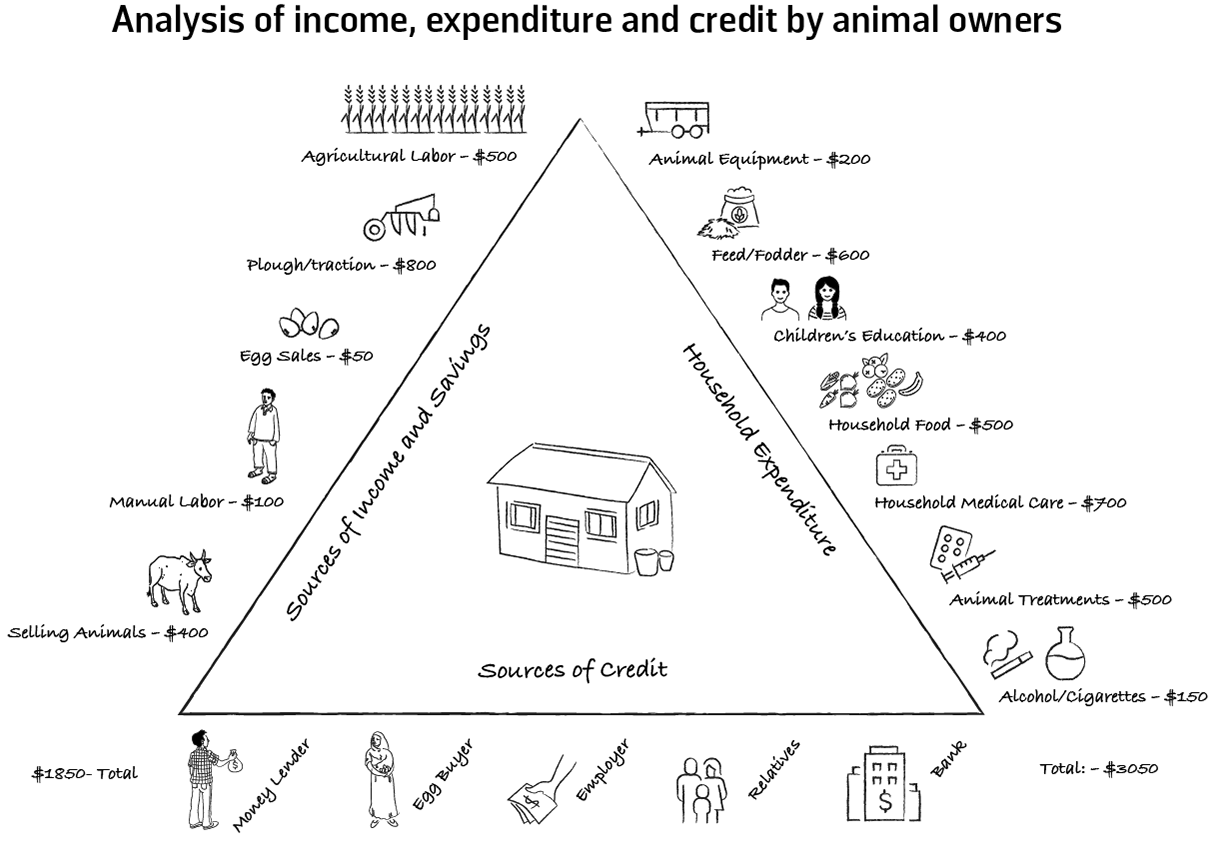


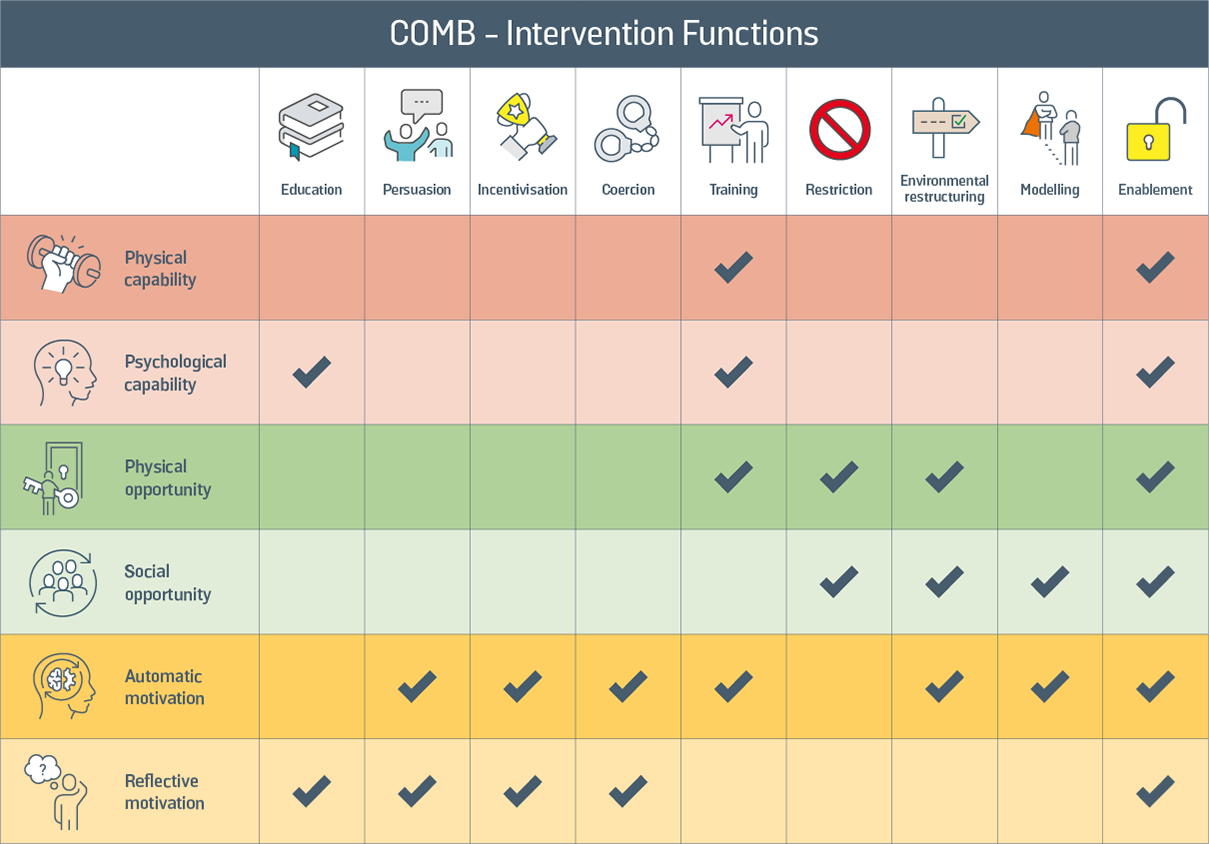


![Fig 14a: Process of Group Formation
(Adapted from [70, 111])](http://communitiesforanimals.thebrooke.org/wp-content/uploads/2022/06/image-3.png)
