This checklist is intended to assist projects in gender mainstreaming by providing a list of key considerations for mainstreaming gender within any project. It may be used as a framework to both design and evaluate projects in terms of the extent to which they include gender in their design, planning, implementation and monitoring and evaluation.
Have the key characteristics and possible differences among the target groups been clearly identified by sex, age, type of work, income, ethnic origin, etc.?
2
Has a gender analysis been conducted to identify and understand?
a) The needs of male and female beneficiaries
b) The problems that both men and women face related to their animals’ husbandry and management/use (not just men or women only)
c) Gender roles in the community or home related equine care and use between men and women, boys, and girls (e.g. decision-making in relation to equine care, use and management, accessing of service providers, perception of service providers about women and men), etc.)
d) The gender relations (norms, customs, traditions, beliefs) in the community or home related to the division of labour and benefits amongst men and women, boys, and girls as they relate to their animals.
3
Have the views of both men and women community stakeholders been sought in a consultative process?
4
Is the outcome of gender analysis used to inform the design of project plans?
Project Planning/Strategy
5
Are there strategies in place to ensure that men and women can participate equally in the project activities? For example, if household chores and family care responsibilities are roles expected of women and girls, they tend to have less time to participate in project activities. Are these kinds of concerns considered when organizing activities?
6
Are there clear strategies in place to ensure that women and men will equally benefit from project activities?
7
Have any existing gender inequalities been identified amongst community stakeholders that could potentially affect their ability to meet their animals welfare needs/adopt desired behaviours?
a) If yes, are any gender transformative strategies built into the project to address this?
8
Is the promotion of gender equality included explicitly as one of the project strategies? e.g. ensuring gender equality in representation in messaging, community leadership roles, how men and women are treated and their views valued by the project.
9
In strengthening the capacity of the target groups, is there a consideration to avoid increasing the workload of the members of the household who have a greater labour burden? e.g. women, girls
Project Planning/Outputs & Outcomes
10
Do the outputs (and corresponding indicators) reflect priority concerns and respond to the needs of both men and women related to their animals’ welfare/their ability to meet their animals’ welfare needs?
11
Do the outcomes and outputs identify the intended target stakeholders by gender or other marginalized or vulnerable group requiring special consideration (e.g. migratory workers, religion, caste, race etc.)?
12
Do the outputs specify the ratio or number of target stakeholders by gender or other relevant marginalized social status?
Project Implementation/Activities
13
In training/education activities, are the numbers of boys, girls, women, and men who will be trained/educated clearly stated?
14
Is there proportionate budget allocation as well as staff/trainer time investment to ensure all genders interests, needs and roles are given adequate attention to facilitate their empowerment to improve animal welfare?
15
If there is a high chance that women will participate less and/or potentially not benefit equally as men, have quota been set for men’s and women’s participation under the outputs and activities?
16
Are communication channels identified that will effectively reach specific target groups, in particular women and girls, and any other marginalized groups?
17
If women and girls, or men and boys, cannot or will not speak freely in mixed groups, are separate events planned for women/girls only and men/boys only, or with facilitators of the same sex to promote equal participation?
18
During project implementation, do staff take opportunities to raise awareness on gender equality and demonstrate that the participation of women alongside men is beneficial to everyone?
19
Does the programme have support from, or cooperate with, gender experts or organizations with gender expertise, if it needs assistance in this respect?
Project Monitoring and Evaluation
20
Does the project collect any information or data that can be disaggregated by gender or other marginalized group to identify potential inequalities, constraints, and opportunities these groups face?
21
Are methods and tools provided to project staff to enable them to effectively measure and evaluate the nature and extent of impact and benefits for male and female project stakeholders and/or other marginalized groups?
22
Does the project collect feedback from male and female stakeholders (or other marginalized groups)? Are the timings for feedback and monitoring meetings convenient for the gender roles of male and female stakeholders? Are there female facilitators/evaluators/translators etc. to create a safe space and culturally/religious norms of the area?
Approaches for Working With Communities: Community Development Approach, Community Engagement Approach, Societal Outreach and Campaigns Approach
Stages of Behaviour Change: Contemplation Stage
Project Support: Facilitator Resources, Training
Specific Topics: Outreach and Communications; Community Change Agents
When someone is contemplating making a change, there is balance between their reasons for and against change, and people often experience a period characterised by ambivalence where they weigh the advantages and disadvantages of change to help them make a decision. Resolving this ambivalence and tipping the balance in favour of change can be achieved by strengthening a person’s language about their reasons to change, referred to as change talk, and softening their language in favour of the status quo, referred to as sustain talk. The purpose of this facilitator resource is to enable you to recognize and understand the difference between change talk and sustain talk. Your ability to recognize change talk and sustain talk is a necessary first step to enabling you to effectively facilitate conversations about change as needed to evoke and strengthen community members’ rationales for change (change talk), and overcome their arguments for not changing (sustain talk).
Ambivalence
Ambivalence is the state of experiencing conflicting beliefs, feelings or emotions simultaneously, which can stop people’s progress towards change. When someone is in a state of ambivalence, they will often have very good reasons for change and very good reasons against change. The language community members use (change talk and sustain talk) will indicate whether they are in this contemplation, or ambivalent stage of change.
If someone is simply not yet ready to change or does not believe there is a problem, this is different than ambivalence. In such situations you may instead encounter resistance talk, indicating they are in the pre-contemplation stage of change. For example, someone may say “I don’t believe this is a big a problem and don’t see the need to change.”
Change Talk
The acronym “DARN CAT” is useful to use to understand the types of change talk we hear. When someone is preparing to change, “DARN talk occurs, which is described with examples in the table below [111].
Types of Change Language
Change Talk Examples
Desire Statements about preference for change.
“I’d like my animals not to be lame regularly.”“I want to...” “I would like to...” “I wish…“
Ability Statements about capability.
“I guess I could pick out my animal’s feet more regularly.”“I could…”, “I can...”, “I might be able to…“
Reasons Specific arguments for change
“I want my animals to have good welfare.”“I would probably feel less stress if my animal’s welfare improved”“My animal needs to feel better as my family’s livelihood depends on it.”
Need Statements about feeling obliged to change.
“I must spend less time and money seeking treatments from animal health service providers.” “I ought to…”, “I have to…“, “I really should…”
When someone is close to resolving their ambivalencein favour of change, CAT talk appears which is described with examples in the table below.
Types of Change Language
Change Talk Example Statements
Commitment Statements about their willingness to change.
“I have good reasons to improve my animal’s welfare.”“I am going to ... “, “I promise…”, “I intend to... “
Action Statements about their readiness to take action.
“I’m willing to talk to an animal health service provider about this.” “I am ready to ... “ “I will start tomorrow…”
Taking steps Statements about action taken.
“I’ve started attending community meetings where this topic is discussed.”“I actually went out and…”, “This week I started...”
Sustain Talk
Any language that can act to promote change also has an equal and opposite partner in favour of staying the same: sustain talk. You will be able to identify sustain talk when a person verbalizes their reasons not changing. The table below outlines the types of sustain talk with examples.
Types of Sustain Language
Sustain Talk Example Statements
Desire Statements about preference for staying the same/not changing.
“I don’t want to spend that long trying to prevent issues.”
Ability Statements about not having capability.
“I’ve tried, and I don’t think I can check my animal’s feet that often.” “I can’t afford to seek treatment for my animal.”
Reasons Specific arguments against change
“If I try to manage this issue I just create a problem somewhere else.”
Need Statements about not feeling an obligation to change.
“I’ve got to focus my time on other things.”
Commitment Statements about their unwillingness or lack of commitment to change.
“I’m just not going to care for my animal’s feet - that’s final.”
Action Statements about not wanting to take action.
“I’m prepared to accept the risks of keeping my animals this way.”
Taking steps Statements about actions no taken.
“I threw away that information sheet earlier this week.”
Specific Topics: Outreach and Communications; Community Change Agents
Much of the work of community facilitators relies on their ability to effectively facilitate conversations and motivate communities to adopt desired change. A guided conversational facilitation technique for engaging stakeholders, clarifying their strengths and aspirations, evoking their own motivations for change, and promoting their autonomy in decision making is called Motivational Interviewing (MI). This facilitator resource outlines the spirit, processes and key principles of MI ensure conversations about change are effectively facilitated and that communities’ preferences, needs and values remain at the heart of all conversations.
The Spirit of Facilitating Conversations about Change
In order to be effective in facilitating conversations about change, it is first necessary to have the right mind-set or way of being, referred to a “spirit” in MI. The following section outlines the key elements of the spirit of MI which are required to effectively facilitating conversations about change, which are represented by the acronym “CAPE” [57]:
Compassion: Actively promoting community members’ welfare and needs.
Acceptance: Viewing your community members’ as people with absolute worth and autonomy, and engaging with empathy and affirmations.
Partnership: Viewing your interaction with community members as an active collaboration between experts.
Evocation: Viewing community members as people with their own good reasons and strength to change. Your role as a community facilitator is to guide them there.
It is important to consciously strive to embody this spirit and draw upon these four elements whenever facilitating conversations about change with community members.
Key Principles of Facilitating Conversations about Change
In addition to embodying the element of spirit, it is important to follow the four guiding principles below to effectively facilitate conversations about change [57, 112]:
Listen with empathy: Effective listening skills are essential to understand what will motivate a person to change, as well as the pros and cons of their situation. Seek to understand their values, needs, abilities, motivations, and potential barriers to changing their behaviour, and communicate respect and acceptance of where the person is in their change process.
Understand a person’s motivations: It is a person’s own reasons for change, rather than the community facilitators, that will ultimately result in behaviour change. By approaching a person’s interests, concerns and values with curiosity and openly exploring their motivations for change, community facilitators will get a better understanding of community members’ motivations and potential barriers to change.
Empower the person: Empowering people involves exploring their own ideas about how they can make changes to improve their animal’s welfare and drawing on their personal knowledge about what has succeeded in the past. It is the role of the community facilitator to elicit hope and support and encourage a person’s belief in the possibility of change, and their capacity to reach their goals. Work with them to identify achievable steps towards change an
Resist the righting reflex: The righting reflex describes the common urge amongst community workers to fix what is wrong (with a person, situation, or animal). It involves giving unsolicited advice e.g. “you should…”, or advice without eliciting more about the person’s perspective. At its core, it is a helping response driven by a desire to be of service, promote positive change, and support others; however it is often unhelpful in situations where people are uncertain about changing. When we give in to the righting reflecting, we often inadvertently reinforce a person’s argument to maintain the status quo. This is because most people resist persuasion when they are uncertain about change, and instead respond by recalling their reasons for maintaining the behaviour. Community facilitator’s ability to suppress their initial righting reflex is essential enabling them to explore and evoke a person’s own motivations for change.
Guidance on Providing Advice and Feedback: Ask-Offer-Ask
It is important to always remember that community members have the most expertise in their lived experience, and that any engagement with them needs to be in the spirit of partnership (vs. acting like the expert or parent or in their lives). When providing information, advice or feedback to support others’ change process and avoid falling into the unhelpful righting reflex trap, it is recommended to use the Ask-Offer-Ask model as described below:
Before providing your advice, information or feedback to community members, first ASK what they already know or what do they want to know about? e.g. “You know your situation best, how are you managing this issue right now?”, What are your thoughts on…? “What you know about….?”, “What would you like to know about?”, “Is there any information I can help you with?”, “What might be helpful?”
Exploring prior knowledge and what community members are interested in knowing more about shows respect for community members as experts on themselves. Further, it avoids telling them what they already know, which can also save time. Asking about what they’re interested to know helps you find out what they most need and want to know. You can then use reflections to show you have listened to what they have said before moving on to offering your expertise.
Ask permission to offer your advice, only then OFFER your advice/information, suggestion e.g. “Would it be alright if we talked about…?”, “I have some ideas about…, would you be happy for me to share them?”, “Would you like to know about…?”
Consider the following when offering your expertise:
Offer your input in a neutral way, and avoid scolding, instructing, telling them what to do, giving long lectures, or saying things like “you should…”.
Prioritize what you offer: what does the person most want/need to know? Start with what they want to know. Even if you have information you want to share, but don’t lead with what you think is most important.
Be clear: avoid jargon and use everyday language
Offer small amounts of information/advice and then check how it is received, making sure to provide them with time to reflect.
Support their personal choice/ agency: Acknowledge people’s freedom to disagree or ignore your input. Giving them the choice not to take your advice provides them with freedom and autonomy, and they are in turn more likely to listen and take your advice. e.g. “You might disagree with this idea”, “…but, of course it’s up to you…”, “I don’t know whether this is relevant to your situation…”, “This may or may not interest you…”, “I wonder what you will think of this…?”
Asking permission shows respect and increases their willingness to hear your thoughts/advice/information/feedback. Collaboration and shared focus are key.
Once you have provided advice or information, ASK community members what they think about it and what it means to them by:
Using open questions e.g. “What do you think?”, “What does that mean to you?”, “What are your thoughts on this?”, “How does that sit with your knowledge of this?”
Use reflections to reflect back the reaction you observed in them
Allow them time to process and respond to the information.
Asking what community members think of your input respects them as experts on activating their change. It also will enable you to check their understanding, identify potential needs for further discussion, or enable you to adapt your engagement as needed to further support their change process.
To effectively provide advice and overcome our righting reflex requires skills in active listening and empathy. Refer to the facilitator resource Essential Communication Skills for Promoting Behaviour Change for guidance on active listening and empathy.
The Process for Facilitating Conversations about Change
In addition to having the right mind-set or spirit and communication skills to facilitate conversations about change, you also need to know how to go about it. The following section outlines the four processes or sequential steps to follow to facilitate conversations about change[57]. However, it should be noted, that while these processes are generally followed in the order shown, in the course of a conversation, the processes are not necessarily fixed and any stage might recur, or the steps might overlap and flow into each other.
Step 1 - Engage: during this step, the goal is to create a collaborative working relationship with community members based on mutual trust and respect. To do this, community members need to feel that they are comfortably and actively participating in the discussion.
During the engage process, focus on:
Understanding why community members want to work with you. What do they want?
Understanding how important community members’ goals for their animals’ welfare may be. What are their challenges and motivators for improving animal welfare issue(s)?
Being welcoming, empathetic, and understanding.
Establish and explore expectations around how community members think you can help.
Offering hope, and presenting a positive, honest picture of possible changes.
Consider the following questions to support your effectiveness in having conversations seeking to engage community members in a collaborative working relationship:
How comfortable is this person talking to me?
How supportive and helpful am I being?
Do I understand this person's perspective and concerns?
How comfortable do I feel in this conversation?
Does this feel like a collaborative interaction?
Step 2 - Focus: during this step, the goal is to build a conversation that is purposefully moving towards change. Ensure consistency between your ideas and those of community members in terms by finding one (or more) goals or outcomes that create a direction that you and community member(s) agree on. The following three elements can help bring about focus, and may influence one another:
Community members may have problems they are interested in discussing with you
The context can inform the topic of focus e.g. veterinary visit, welfare inspection
Your own expertise may similarly provide insights on potential topics of focus as while community members may have ideas of their own, others may become apparent to you in course of your discussion with them.
Consider the following questions to support your effectiveness in having conversations with community members to bring about focus in goals for working together:
Do I have different aspirations for change for this person?
What goals for change does this person really have?
Are we working together for a common purpose?
Does it feel like we are moving together, not in a different direction?
Do I have a clear sense of where we are going?
Step 3 - Evoke: the goal of this step is to elicit community members’ own motivation to change whereby they talk themselves into change. To do this requires learning to recognise and evoke change talk, and strengthen it when it occurs (refer to facilitator resources 3. Guidance on Listening for Change Talk, and 2c. Key Communication Skills for further guidance)
Examples of change-oriented questions related to level of importance or confidence that can help evoke change talk include, but are not limited to:
If you could magically change one thing right now by snapping your fingers, what would it be? How could you do it?
What have you achieved so far?
How important is it for you to….?
What are the down sides of how things are now?
If you choose to continue on without making a change, how do you think your life might look like this time next year?
How could you implement this change?
What’s the worst thing that could happen if you make this change?
What’s the best possible outcome?
Use the following tips to strengthen change talk once you hear it:
Consider the following questions to support your effectiveness in having conversations seeking to evoke community members’ own reasons for change:
Is my righting reflex being activated and causing me to be the one arguing for change?
Is their reluctance to change more about lack of confidence or that they don’t feel making a change is important?
What arguments for change am I hearing?
Am I directing the conversation too far or fast in a particular direction?
What are this person's own reasons for change?
Step 4 - Plan: the goal of conversations in this step is to have conversations about action, whilst carefully promoting community members’ autonomy and decision making. The planning step occurs when community members begin thinking and talking more about how they could change and when, and less about why and whether to change, for example, when community members:
Consider the following questions to support your effectiveness in having conversations with community members about planning for change:
What would be a reasonable next step towards change?
Am I remembering to evoke rather than prescribe a plan?
What would help this person move forward?
Am I offering needed information or advice with permission?
Am I retaining a sense of quiet curiosity about what will work best for the person?
Facilitating Conversations about Change with Groups instead of Individuals
The guidance outlined above applies when working with individuals or groups. However, when having conversations with groups of community members, applying MI’s spirit, principles process, and key communication skills (discussed in the facilitator resource Essential Communication Skills for Promoting Behaviour Change) can be further tailored to support group discussions in the following ways:
Affirm peoples' efforts to come together
Giving people a chance to have a choice (listening to them)
Reflect change talk as people contribute back to the wider group to inspire more collective change talk
Ask permission to give information
Evoke Questions from the group
Draw upon their expertise and experiences
Acknowledge their choices/agency/autonomy
Summarize the group consensus
Support the group to prioritize options and choices
General Best Practices and Rules of Thumb
Key best practices and rules of thumb to remember about the spirit, principles, and process of facilitating conversations about change (MI) include:
Effective Way of Being(MI consistent - DO)
Infective Way of Being(MI inconsistent - AVOID)
I have some expertise, and community members are the experts of themselves.
I am the expert on how and why community members’ should change.
I find out what information community members want and need.
I collect information about problems.
I match information to client needs and strengths.
I rectify gaps in knowledge.
Community members can tell me what kind of information is helpful.
Frightening information can be helpful.
Advice that champions community members’ needs and autonomy can be helpful
I just need to tell them clearly what to do.
Avoid the following common pit-falls in facilitating conversations about change:
Assuming providing our expertise will fix community members’ problems by providing our expertise and assuming this will solve the problem.
Overestimating how much information and advice communities need.
Thinking that frightening information is helpful and will motivate people to change.
Facilitating conversations about change (MI) is about evoking peoples' own motivations for change rather than trying to instil it.
Have interest in, and make an effort to understand the internal perspective of community members with whom you engage.
The use of MI techniques outlined in this resource are done 'for' and 'with' people.
Actively prioritise community members’ needs and promote their well-being. Improving animal welfare should not come at the expense of community members’ needs or well-being but rather be aligned with them.
Value and trust in the inherent potential and worth of community members with whom you interact.
Seek to acknowledge the efforts and strengths of community members.
Honour and respect community members’ autonomy, and their right and capability to direct their own lives, learning, motivation and behaviour based on their understanding of their own situations.
Approaches for Working With Communities: Community Development Approach, Community Engagement Approach
Behavioural Drivers (COM-B): Motivation
Stages of Behaviour Change: Pre-contemplation Stage, Contemplation Stage
Project Support: Facilitator Resources, Training
Specific Topics: Outreach and Communications; Community Change Agents
How community facilitators respond to community members’ resistance to change is a big determining factor in the outcome of their interactions with them, and the ability to help community members move toward behaviour change[113]. This resource outlines guidance for overcoming resistance to change you may encounter amongst community members.
What is Resistance?
Resistance is what happens when we expect or push for change when community members are not ready for that change. It often reflects conscious or unconscious defences against change. While the reasons community members are not ready to change in the way we desire may not be clear to us or to community members, they exist and ignoring them gets us nowhere.
Signs of resistance may include:
Community members may interrupt you.
Community members may seem distracted (looking at watch, phone, etc.).
Community members may get defensive.
Types of Resistance
The manifestations of resistance to change typically fall into two categories: sustain talk (a manifestation of ambivalence) and discord, and different strategies may need to be adopted depending on which of these manifestations you encounter. These two types of resistance and tips for dealing with are discussed below:
DISCORD: Discord refers to statements from community members about the intervention process or relationship to the community facilitator, particularly the direction in which community members perceive things are going [57]. This often feels like resistance but actually discord which is related to a lack of trust/respect/empathy/power sharing in the relationship, which can result in the break down in the relationship and sense of partnership. When people don’t believe we really value their opinions or experiences, and/or if they feel you are trying to tell them or force them to change or acting like an expert without understanding their life, they will either resist you, resent you, or both. As a result, they will become more motivated to defend their position. Examples of comments indicating there is discord: “You don’t understand.”, “You can’t help me.”
SUSTAIN TALK: Sustain talk represents the other side of a person's ambivalence about changing. It can be an expression of a community member’s desire for the way things are, feeling unable to change, having reasons for keeping things the same or needing to keep things the way they are.
Remember that every behaviour has a positive intention, it may not just be positive from your perspective. Thus, it is important to believe the best in others and ensure that you have a positive intention.
Avoid Arguments and Pushing Back
Respect the resistance and roll with it, don’t confront it directly and avoid arguing for change as thisusually causes community members to keep voicing sustain talk (the reasons not to change).[113], and can undermine interpersonal communication and relationships (e.g. refer to facilitator resource Essential Communication Skills for Promoting Behaviour Changefor information on ego states and transactional analysis).
Avoid the righting reflex:
Resist the urge to provide unsolicited advice or guidance and telling people what to do to improve their situation as this often times result in discord. Acknowledge that the righting reflex is present and ask yourself to override it.
Talk less and listen more using active listening skills (refer to facilitator resource: Essential Communication Skills for Facilitating Behaviour Change for additional guidance).
If someone hasn’t volunteered to be part of a conversation about change or doesn’t want to change or aren’t open to making suggestions, or if you see an immediate welfare issue you feel you need to mention you can still share your concerns in a spirit of partnership using the Ask-Offer-Ask model of providing feedback (refer to Guidance on Providing Advice and Feedback: Ask-Offer-Ask within the facilitator resource 4. Guidance on Facilitating Conversations for Change). For example: Don’t say you shouldn’t do this, you need to change etc., and instead use the ask-offer-ask model:
Ask - May I share my concerns about this issue/behaviour?
Offer - My concern is that this puts you/your animal at risk of…because
Ask – What do you think about my concerns?
Sometimes you may have to apologize or shift the conversation. for example, if you find people responding in a way indicating they may be feeling invalidated, resistant, or withdrawing as a result of your attempts to provide unsolicited advice, and you have the opportunity to catch it quickly in the moment, you can backtrack and say, “I’m sorry, I realize you didn’t ask for my opinion, what do you think about …” [113].
TIPS FOR DEALING WITH SUSTAIN TALK
Roll with Resistance: When you encounter community members who are resistant to change and expressing a lot of sustain talk, it is helpful to roll with this resistance rather than try to fight or debate it, as this can further cement their unwillingness to change [113, 57].
Evoke Change Talk: Focus on eliciting community members’ consideration of, motivation for, or commitment to change, also referred to as change talk(refer to facilitator resourceGuidance on Listening for Change Talkfor further guidance). You can do this by:
Reflect on the problem using summaries as a means to show empathy and make the person feel they are heard which will build rapport.
Actively listen for a person’s positive strengths, skills, values, efforts, accomplishments, aspirations and traits, and to reflect those back to them using affirmations to shift focus away from the negative and focus on positive characteristics or the person as a means to build rapport, motivate and inspire their own belief in self and the possibility for change.
If they say, “maybe I could do something” you can respond by asking whether it would be possible to discuss this next time you meet to give them more time to process.
Use a change scale/ruler (e.g. readiness for, confidence to, importance of change) and discuss what would move them up the scale.
Reflect back “a part of you is interested….what is it that makes you curious about or what would be helpful towards taking a step in the future?”
Ask what would be helpful for them
Emphasize Choice and Control [114, 57]: Embody the spirit of working in partnership with communities, by emphasizing the client's choice and control (autonomy) can help minimize resistance and move the conversation away from sustain talk. This means explicitly stating something along the lines of "It really is your choice what you will do about _______" or “Ultimately it is your choice, and I’m happy to work with you on this, perhaps we can talk about this next time we see each other?”
Shift Focus [114, 57]: when talking about an issue becomes counterproductive you can respond by shifting the conversation away from what seems to be a stumbling block to progress (shifting focus). This means changing the subject. An example of shifting focus might sound like "That doesn't seem like a problem to you right now. What are some of the things you're dealing with that you feel are a challenge?" The facilitator resource Example of Five Domains of Animal Welfare for Donkeys Linked with Human Behaviours provides guidance on how you can use the five domains of animal welfare framework linked with human behaviours to shift focus to identifying behaviours people can enact to improve their animal’s welfare when they are resistant or unable to adopt desired behaviours.
Develop Discrepancy[113]: change won’t occur without discrepancy. It allows the client to realize their current behaviour isn’t leading to their desired goal and to be more open to change.
Help community members define their most important goals for their animals’ welfare
Help community members see that their current behaviours don’t align with their ultimate goals that are important/valuable.
Help community members see the difference between their core values and their behaviour(s).
Create gap between where community members are and where they want to be.
Promote community members' belief in their ability to do what is needed to change.
Focus on past successes and skills and strengths community members have or can easily learn.
Promote self-esteem and build confidence.
TECHNIQUES FOR EVOKING CHANGE TALK [57, 112]:
Ask Evocative Questions: Ask an open question which you believe the person will respond to with change talk. The simplest and most direct way to elicit change talk is by asking a series of targeted questions from the following four categories:
Disadvantages of the status quo e.g. “What difficulties have resulted from not providing your animal with timely medical care? What worries you about your animals’ welfare?”
Advantages of change e.g. “What do you think life would be like, or what do you think would be different, for you and your animals if you did make a change and resolve this animal welfare issue?”, “What are the advantages of feeding your animal appropriate quality and quantities of feed?”
Optimism for change e.g. “When have you made a significant change in your animal’s welfare before? How did you do it?”, “What strengths do you have that would help you to improve your animal’s welfare?”
Intention to change e.g. “In what ways do you want your animals’ welfare to be different five years from now?”, “Forget about how you would achieve it for a moment, if you could do anything, what would you change about your animal’s welfare?”
Alternatively, if you are short on time, a quick method of drawing out ‘change talk’ is to use an ‘importance ruler’ (refer to change ruler below).
Use Change Rulers: Ask: “On a scale from 1 to 10, how important is it to you to change [the specific target behaviour] where 1 is not at all important, and a 10 is extremely important?” Follow up: “And why are you at [xxx] and not [a lower number than stated]?”. “What might happen that could move you from [xxx] to [a higher number]?” or “What would move you up the scale?” Alternatively, instead of importance, you could ask in terms of their confidence to make the change if they decided to do so, or their readiness to change e.g. on a scale of 0-10, with zero being I’m not ready to change, and 10 being ready to change.
If respondent gives you a zero, use reflections to reflect their sentiment back e.g. “at this time, you don’t feel like the right time to make this change YET.”
If respondent gives you a low number, use open ended question to ask them why they scored it 1 or 2 and not a zero as this can evoke more change talk about the part of them that is wanting to change.
If respondent provides a low number, an open ended question asking “what would it take to move that from a 5-7” can also get them thinking about strategies for how they could make this change, which can help boost their confidence in their ability to attempt change.
Explore Decisional Balance: Ask for the pros and cons of both changing and staying the same.
Good Things/Not-‐So-‐Good Things: Ask about the positives and negatives of the behaviour targeted for change.
Ask for Elaboration/Examples: When a change talk theme emerges, ask for more details. “In what ways?” “Tell me more?” “What does that look like?” “When was the last time that happened?”
Look Back: Ask about a time before the target behaviour emerged. How were things better, different?
Look Forward: Ask what may happen if things continue as they are (status quo). Try the miracle question: If you were 100% successful in making the changes you want, what would be different? How would you like your life to be five years from now?
Query Extremes: What are the worst things that might happen if you don’t make this change? What are the best things that might happen if you do make this change?
Explore Goals and Values: Ask about what their guiding values are, or refer back to previous conversations with the person where they provided an indication of their guiding values. What do they want in life? Using a values card sort activity can be helpful here. Ask how the continuation of target behaviour fits in with the person’s goals or values. Does it help realize an important goal or value, interfere with it, or is it irrelevant?
Come Alongside: Explicitly side with the negative (status quo) side of ambivalence. “Perhaps [xxx] is so important to you, that you won’t change no matter what the cost.”
Understand similarities and differences between Community Engagement and Community Development processes and related approaches within this guide.
Understand key considerations for deciding the appropriate approach for working with communities within this Communities for Animals Guide.
Understand key concepts and best practices in effective Community Engagement and Community Development processes.
Understand recommendations based on lessons learned from the field tips for promoting effective community engagement and development processes for changing behaviour to improve animal welfare.
1.1 Defining Community Engagement and Community Development
The term “community” in the context of this Communities for Animals (C4A) resource refers to a group of people within a particular geographical area, often referred to as the target or priority population. However, more broadly, community can be understood as a group of people living in the same defined area, sharing the same basic values, organization, interests or shared sense of identity [34, 35]. Understanding the characteristics which define and shape animal owning communities will be important to helping you determine the type of approach and methods best suited for working with them.
The terms community development (CD) and community engagement (CE) refer to different participatory processes or approaches for working with communities. While these terms may also be used to refer to outcomes of processes, within this guide they are used solely to refer to the processes or approaches themselves [36].
Definition of Community Development ‘Community Development’ (CD) refers to “a process where community members come together to take collective action and generate solutions to common problems” [37, 38]. In in the context of animal welfare, the goal is to empower community members to work together to improve their animals’ welfare by addressing the root causes of animals’ welfare issues.
Definition of Community Engagement ‘Community Engagement’ (CE) refers to a process through which community participation in decision making occurs, without any explicit aim of collective action as is implicit to a community development process [36, 39]. A generally accepted working definition of community engagement is the process of working collaboratively with and through people affiliated by geographic proximity, special interest, or similar situations to address issues affecting their well-being” [40]. In in the context of animal welfare, a community engagement process seeks to facilitate community participation in addressing the issues and affecting the welfare of their animals.
1.2 Key Concepts in Community Engagement and Development
To facilitate community engagement or development process that ensure the diverse perspectives and experiences of different individuals and social groups within a community are valued and considered, it is important to understand the key concepts outlined in the sections below, along with their implications for changing behaviour change to improve animal welfare.
COMMUNITY PARTICIPATION
Community participation is an essential element of any community engagement or development process [38, 41, 42]; however to effectively achieve it, one must first be clear about the goal of community participation. To clarify the role and influence of the public in planning and decision-making processes, the International Association of Public Participation (IAP2) defined public participation as a spectrum or continuum consisting of five levels as defined in Figure 26 including: inform, consult, involve collaborate, and empower [43]. As you move along the spectrum from left (inform) to right (empower), the extent of community members’ participation and influence over planning and decision making processes increases. It should be noted that the different participation levels and their associated goals do not represent a sequence of steps, but rather represent independent goals for community participation that one may wish to achieve [44].
Community empowerment, where community members’ take control over their lives by setting their own agendas, gain skills (or have their own skills and knowledge recognized), increase their self-confidence, solve problems and develop self-reliance, should be the goal of community engagement and development processes whenever feasible [45, 42, 37].
Informing is the only participation goal which is not associated with community engagement and development processes. This is because informing involves only one-way communication, where communities are provided with information. CE and CD processes on the other hand require two-way communication, in which communities give and receive information is required to promote access to information and ensure community meaningful participation [42]. While never a participation goal of CE or CD processes, informing communities may nevertheless be an outcome that can result from such processes e.g. informing a community about emergent animal disease risks, upcoming events or potential opportunities.
The three different approaches for working with communities (CD, CE, SOC) and associated supporting participatory learning and action (PLA) tools and facilitator resources provided within this resource support various community participation goals and provide flexibility for the variety of contexts community-based animal welfare improvement projects may be implemented. Figure 26 illustrates the participation goals on the spectrum of public participation supported by each of the C4A approaches for working with communities.
Figure 26: The spectrum of community participation and its relationship to the three C4A approaches for working with communities [44]
DIVERSITY AND INCLUSION
Diversity and inclusion are two interconnected concepts important to CE and CD processes and their ability to achieve their community participation goals [37, 42]. Diversity is about the composition individuals who may participate in any given process, or rather the representation different groups’ perspectives, knowledge, skills, and lived experiences [46]. Inclusion on the other hand refers to how well these different groups’ contributions, presence and perspectives are valued and integrated [46]. For example, a community engagement or development process where different genders, races, nationalities, and identities are present could be considered diverse, but wouldn’t be considered inclusive if only the perspectives of certain groups are valued or carry any authority or influence. How CD and CE processes are designed and facilitated is thus requires careful attention as this can significantly affect the extent to which such processes ensure diversity and inclusion, or alternatively act to reproduce and/or further reinforce or exacerbate existing inequalities (e.g. in education, access and availability of resources and services, power and influence over decision making etc.) [46, 37, 38, 42].
GENDER
In most societies, being female or male is not simply a matter of being a different sex, which refers to the biological and physical differences between females and males (e.g. bodies, hormones, and organs) [47]. People also face different expectations about how they should behave, what their roles and relations with others in the family, workplace and society should be depending on their sex. These socially and culturally constructed gender norms can result in unequal access and availability of resources and services, decision making power, and ability to influence and participate between the sexes [47, 48]. Similarly, these gender differences can affect men and women’s barriers and motivators to changing behaviour to improve animal welfare [49, 50, 45].
INTERSECTIONALITY
Intersectionality refers to the interconnected nature of social categorizations as they apply to a given individual or group such as race, class, and gender amongst others, which act to create overlapping and interdependent systems of discrimination or disadvantage [51]. Intersectionality is therefore not only about the consideration of several social categories, but also about the analysis of their interactions and their implications for different social groups that may contribute to their differential access to resources, opportunities, influence and decision-making power [51]. Using an intersectional lens when conducting any project assessments or analyses is therefore recommended to inform the design, planning, and implementation of CE and CD processes and projects to ensure they do not reinforce inequalities, and effectively support different groups’ equal participation, opportunities, and access to resources for making positive desired changes [38, 37, 42].
Figure 27: Understanding intersectionality through examples of different social characteristics and related types intersecting discrimination people may face as a result.
An example of the implications of intersecting social characteristics for animal welfare is provided below to better bring this concept to life.
A woman from a patriarchal social system in which men hold most of the power while women are excluded from it, is subject to gender norms in which she is expected to take on traditional unpaid care work within her household which includes caring for the household’s livestock.
These gender norms mean that growing up, she was not prioritized to attend school like males in her family and therefore has limited education and skills for gaining paid employment. Her society’s gender roles similarly dictate that men in her household act predominantly as income earners and decision makers within the household, and control household finances. She and her husband are also migrants, and they face discrimination in employment opportunities making it difficult for them to secure higher paying jobs because these are typically awarded to locals. Due to her migratory status, she is also unable to obtain a government issued identity card, which means she is unable to access benefits or opportunities provided by the local government related to the provision of training opportunities and subsidies for livestock improvement. Her inability to access these opportunities limit her options for improving her livestock’s health and productivity, thereby further limiting the amount of income generated to care for her family and livestock. However, even if she could secure a an identity card and access such training opportunities, males in her household would attend as men are prioritized for participation in education opportunities since it believed that women’s socially prescribed gender roles mean they don’t need or benefit from furthering their education. As her family does not earn much money, she is considered to be of lower socio-economic status, and while her care giving role means she has in-depth knowledge of the conditions and needs of her household’s livestock, she is unable access sufficient resources to adequately meet them.
Despite her in-depth knowledge of her animals needs for health treatment, she is also unable to call animal health service providers herself because they don’t respond to her calls because service providers prefer to deal with men because they know they are household decision makers and control household finances and don’t think women are authorized to make such decision or able to pay. When she asks men in the household for resources and services she’s identified are needed to keep the animals healthy and productive, they similarly don’t value her knowledge or livestock caring role since it doesn’t generate income consider her to be uneducated. However, other low income households who are not migrants have identify cards and both men and women can access subsidized animal related resources and health care services.
This example illustrates how gender, socio-economic status, migratory status, and education level all combine to exacerbate the constraints faced in accessing opportunities and resources for improving animals’ welfare. Understanding the intersecting personal attributes and circumstances which contribute to different groups’ inequality and disadvantage is important to designing and implementing projects in ways that promote diversity, inclusion and equality, and address barriers to desired change [51, 37, 42]. Using an intersectional lens may highlight needs for not just mitigating further exacerbation of existing inequalities, but also for addressing them to achieve more equitable benefits and improved outcomes for both people and animals [51].
EQUALITY AND EQUITY
While the terms equality and equity may seem similar, the implementation of one versus the other within CE or CD projects can lead to dramatically different outcomes for marginalized or discriminated individuals or groups [52].
Equality refers to each individual or group of people having the same resources or opportunities, and being treated the same regardless of their differences [52].
Equity is a means for achieving equality by seeking to understand the inequalities that exist, and working to address them so that all groups have what they need to have equal opportunities [52]. The concept recognizes that different groups have different needs and social power and that these differences can make it more challenging for some groups to achieve the same goals with the same effort [52, 46]. As such, it seeks to identify and address these different needs in a manner that rectifies the imbalance between groups. In the development context, an equity goal often requires built-in measures to compensate for the historical and social disadvantages of discriminated and marginalized groups to ensure that all have the exact resources and opportunities they need to reach an equal outcome in accordance with their circumstances [52, 53, 51]. Although this may mean that treatment will be different, it will also be fair.
Equality and equity are important to achieving meaningful and representative community participation in any CE or CD process, as different community members or groups may face different barriers to participation as a result of their identifying attributes, whether socially, economically, demographically or geographically defined [46, 51, 38, 42]. For example, in many societies, social constructs of gender often dictate what the acceptable roles and responsibilities for males and females, with women’s roles often including reproductive/care roles within the household, in addition to productive roles (e.g. paid work) and community roles which are also prescribed to men [47]. As a result, women in such contexts may face increased barriers to participation due to constraints on their available time in light of their gender responsibilities when compared to men, or in contexts where civic participation may be considered to be the role of males in household [47]. For CE or CD processes to promote equality in participation in such circumstances, the unique circumstances of both men and women would first need to be understood, and then strategies developed to enable women to overcome the gendered barriers to participation they may face [51, 37, 42]. In the context of promoting animal welfare for example, promoting gender equality by addressing gender inequities may be important if a context where women play critical roles in their animals’ husbandry and management, but do not have decision making authority or the ability to access resources within their households to improve their animals’ welfare as can male household members.
Equality and equity are also important to understand in terms of behaviour change for improving animal welfare, as marginalized or discriminated groups are likely to face greater barriers to change than non-marginalized members of society (e.g. due to gender, age, race, religion, socio-economic, status, urban vs. rural etc.) . Thus achieving equality in animal welfare improvement outcomes across all sectors of an animal owning community may require specific measures be taken to address the inequities in how marginalized groups’ needs are considered, their contributions valued, and their ability to access opportunities and resources as needed [49, 50].
GENDER MAINSTREAMING
Gender mainstreaming is a globally accepted strategy or process for promoting gender equality. It involves ensuring that gendered analysis, gender perspectives, and attention to the goal of gender equality are central to any planned actions such as project activities, programmes, policies, and legislation so that inequality is not perpetuated [54, 47, 42]. Underlying the concept of mainstreaming gender is a recognition that women and men have different lived experiences and circumstances which affect their needs and access and availability of opportunities. Thus, gender mainstreaming can be a useful strategy for helping understand and address gender disparities and gaps and promote greater equality in such areas as the division of labour between men and women; access to and control over resources, services, information and opportunities; and distribution of power and decision-making [55, 47].
As such, it is not solely about ensuring both men and women participate in a project. For example, gender roles and responsibilities and associated social norms can shape men, women, boys’ and girls’ roles and responsibilities related to their animals, their access and availability of animal related resources and services, and their decision-making power related to their animals, which can either support or hinder their efforts to improve their animals’ welfare [45]. Unless a gender mainstreaming approach is adopted, such disparities may not be fully understood and projects unable to be designed in ways to help overcome them, which may result in less favourable outcomes for both animals and people.
The Gender Integration Continuum illustrated in Figure 28 was originally developed by the Interagency Gender Working Group (IGWG) for promoting equality and helping to mitigate the perpetuation of inequalities between men and women within any project/programme/policy, and can be used as either a diagnostic tool or a planning framework [56].
Gender Integration Continuum as a Diagnostic Tool [56]: As a diagnostic tool, the continuum can be used to assess if and how well gender considerations are integrated within projects/programmes/policies to improve outcomes. In this way, it provides a useful framework for categorizing approaches by how they treat gender norms and inequities in the design, implementation, monitoring and evaluation of projects/programmes/policies.
Gender Integration Continuum as a Planning Framework [56]: As a planning framework, it can help determine how to move along the continuum toward more transformative gender programming. In this context, it is important to emphasize that programmatic interventions should always aim to be “gender aware” at a minimum, and to move towards “transformative gender programming” to the greatest extent feasible.
The gender integration continuum provides a two-tiered process of analysis that begins with determining whether interventions are “gender blind” or “gender aware,” and then considers whether they are exploitative, accommodating or transformative as defined below and illustrated with examples from animal welfare improvement projects in Figure 28 [56]:
Gender Blind [56]: gender blind refers to projects/programmes/policies which are designed without prior analysis of the culturally-defined set of economic, social, and political roles, responsibilities, rights, entitlements, obligations, and power relations associated with being female and male and the dynamics between and among men and women, boys and girls. Gender blind programs/policies ignore gender considerations altogether, and may be unintentionally exploitative or accommodating. They are much less likely to be transformative, as this presumes they would be proactive and intentional in their effort to promote gender equality.
Gender Aware [56]: gender aware refers to policies and programs which deliberately examine and address the set of economic, social, and political roles, responsibilities, rights, entitlements, obligations and power relations associated with being female and male and the dynamics between and among men and women, boys and girls. Gender aware programs/policies examine and address the anticipated gender related outcomes during both the design and implementation of such programmes/policies. Thus an important prerequisite for all gender-integrated interventions is to be gender aware.
Gender Exploitative [56]: refers to projects/programmes/policies which intentionally or unintentionally reinforce or take advantage of gender inequalities and stereotypes in pursuit of desired outcomes. This approach is harmful and can exacerbate inequalities, and undermine the objectives of the program in the long run. Under no circumstances should programs/policies adopt an exploitative approach as one of the fundamental best practices in CE and CD processes is the principle of “do no harm”, a concept further explained the shared core values and principles section below.
Gender Accommodating [56]: Gender accommodating projects/programmes/policies acknowledge but work around gender differences and inequalities to achieve project objectives. Although this approach may result in short term benefits and realization of outcomes, it does not attempt to reduce gender inequality or address the gender and thus may not result in achievement of lasting change.
Gender Transformative [56]: Gender transformative refers to projects/programmes/policies that seek to transform gender roles and relations to promote equality and achieve program objectives. Transformative approaches thus seek to promote greater equity as a means to achieving equality by: 1) Fostering critical examination of inequalities and gender roles, norms and dynamics 2) Recognizing and strengthening positive norms that support equality and an enabling environment, 3) Elevating the relative position of women, girls and marginalized groups as equals to others in society, and 4) Transforming the underlying social structures, policies and broadly held social norms that perpetuate gender inequalities.
Figure 28: Gender Equality Continuum with Examples from Animal Welfare Improvement Projects [56]
As the continuum reflects a spectrum, a particular project may not fall neatly under one type of approach, and may include, for example, both accommodating and transformative elements [56]. The adapted continuum in Figure 28 attempts to illustrate this using the colour red and the dotted line to indicate that while some interventions may be exploitative, or contain elements that are exploitative (intentionally or unintentionally), the aim should always be to move them towards transformative approaches [56]. Integrating gender and striving to move toward more gender transformative programs/policies results in gradually challenging existing gender inequities and positive changes in power relations and/or the set of economic, social and political roles, responsibilities, rights, entitlements and obligations associated with particular gender groups [56, 47]. It is also important to note that the pursuit of transformative programming can always be integrated into ongoing projects without having to start the project over [56].
In the context of animal welfare improvement projects, gender mainstreaming is important ensures the different needs and situations of women, men, boys and girls influencing animals’ welfare are understood. This understanding is helpful to informing the design and implementation of effective CE and CD processes that promote equality in participation, opportunities, and access to resources for all animal owning community members to improve and benefit from improved animal welfare.
However, gender mainstreaming need not be limited to considerations of gender and it is recommended that an intersectional lens be adopted within gender mainstreaming, and any analysis conducted should not only consider gender, but also other relevant intersecting social categorizations that may be exacerbating patterns of inequalities [57, 51, 33]. This will help ensure that any CE or CD approach is designed and implemented in ways which do not reproduce or exacerbate existing inequalities, particularly amongst the most marginalized. In addition, understanding intersectionality in the context of communities with whom you work can help inform development of transformative strategies as needed to better achieve and sustain beneficial outcomes and greater equality for all [46].
In addition to the key concepts and shared core values and principles underpinning best practices in community engagement and development already outlined, the following additional recommendations are provided based on lessons learned within the field of community engagement and development, and community-based animal welfare improvement projects. It is recommended that these be used to inform the design and implementation of any CE and CD process to mitigate common pitfalls which can undermine the effectiveness of these processes and related achievement of animal welfare improvement goals.
Be Empathetic and Compassionate
Empathy involves viewing things other’s perspective and being understanding of their experiences and feelings, with your primary feelings more related to the other person’s situation than your own experience of it [58]. It makes people feel heard and understood which makes people more likely to make change, as well as helps in building connection and rapport [58]. Compassion refers to the desire to help/support, which can build on empathy by taking into consideration the understanding of others’ experiences and feelings and tailoring the desire to support in accordance with what the other person expresses they need. Being empathetic may not always be easy when people are engaging in behaviours that are causing harm to animals, however your relationship with community members and ability to support them in making desired changes can be improved by engaging in the following ways:
Feel and express/reflect genuine care and concern: be empathetic to people’s circumstance and feelings by communicating your own understanding of what they’re feeling and experiencing (e.g. it’s a challenging time for you and you’re not alone, I understand you’ve experienced a lot and it’s not been easy for you), as opposed to expressing sympathy which expresses understanding from your own perspective (e.g. expressing pity) [58].
Be non-judgemental: if you notice yourself judging someone, remember that people have their own good reasons for feeling and acting in the ways they do, and that their behaviours are the result of their capability, motivation and opportunities [20, 21, 58]. Focus on understanding their rationale and situation, rather than judging their results.
Your role is to motivate and facilitate people in changing their behaviours, however it is community members who ultimately decide whether they will take action to change, and it is essential to respect their autonomy to do so [20, 58].
Understand Who to Engage
When deciding whose participation to target and how, it is important to identify whose animals are most vulnerable to poor welfare, and which individuals’ can affect change in the welfare status of animals [20, 21]. Individuals’ related ability to influence their animals’ welfare are likely to be influenced by their social identities and associated roles and responsibilities [50]. However, in identifying who to engage and whose behaviour to target for change, it is important to ensure the project is not operating in a gender blind or exploitative way or legitimizing or exacerbating biases, discrimination and inequalities experienced by marginalized groups [33, 37, 42]. Adoption of strategies to address inequitable distribution of roles, responsibilities, decision making power, and influence may therefore need to be considered to achieve optimal outcomes for animal welfare, as well as greater equality and equity in opportunities and access to resources important to supporting animals’ welfare [50, 49].
Avoid a One Size Fits All Approach
Evidence suggests a one size fits all approach does not suit all, and that organising approaches that combine methods of engagement are likely to be more effective in promoting inclusivity and diversity and better support achievement of desired outcomes [46]. In addition, seek to understand the intersecting issues which may constrain different community members’ participation, and capabilities, motivation and opportunities to positively contribute to their animals’ welfare, as these are likely to vary widely depending on individuals and groups’ attributes and personal circumstances [21]. The local context and project resources must also be taken into consideration when determining the most appropriate and feasible approaches for working with communities to change behaviours to improve animal welfare.
Focus on Community Identified Priorities
Supporting priorities identified by the community helps promote community participation and ownership over desired outcomes, and ensures outcomes are relevant and meaningful to communities [61, 37, 59, 42]. Use participatory approaches to support bottom up identification of community’s priority needs or issues of concern to work on [37, 38, 42]. If a project has priority issues or outcomes it is interested in supporting, ensure that the project agenda is similarly prioritized by communities. If your agenda is not well aligned with that of the community, you may wish to reconsider whether it is ethical and necessary to proceed in working with communities to achieve it, or alternatively you may need to do some additional ground work to generate greater understanding and unlock their interest and motivation to adopt your priority agenda items as their own.
Ensure Community Facilitators Have Appropriate Core Competencies
Working with communities to facilitate behaviour change required specialized skills, and effective facilitation can make the difference between productive and non-productive CE and CD processes, and significantly influence community participation as well as the success of animal welfare intervention projects [46, 38, 42]. Engagement with communities can often go awry due to bad facilitation, poor communication skills, poorly managed confrontational dynamics, shallow exchanges, and the invisible barriers erected by perceived expertise [46]. In addition, CE and CD processes can reproduce existing inequalities unless they are designed and facilitated to distribute influence by ensuring diversity and inclusion [46, 50, 37]. It is therefore recommended community facilitators and community change agents have sufficient core competencies to undertake their roles and responsibilities in an ethical, effective, and participatory manor, and are provided necessary training and support to undertake their responsibilities as needed [50, 38, 42].
Build Networks and Structures of Support
Build Networks and Structures of Support: Individuals can only adopt and sustain desired changes when they have an enabling environment to do so [41, 21]. It can be helpful to facilitate social networks amongst target peer groups, and encourage them to provide support and encouragement to each other where they have shared interests in achieving positive change [65, 63]. Building opportunities for enhanced peer support and positive role modelling can also increase the willingness of others to try the new behaviours, as well as further motivate them to sustain it [66, 31, 63]. Similarly, it may be necessary to support creating or strengthening enabling systems or structures to ensure they can fulfil their duties and meet the needs of communities and their animals [20, 21, 38, 42]. In concert, linking communities with key actors within these systems and generating understanding and relationships between different these different stakeholders can be helpful to improving the delivery of resources and services necessary to supporting animal welfare [20]. For example, ensuring animal health service providers have relevant knowledge, skills, and resources available to provide quality and affordable animal health services to communities, and organizing meetings to introduce key actors to communities and generate demand for services has proven an effective strategy for supporting communities’ service seeking behaviour within Brooke’s animal welfare programmes [67]. In addition, by strengthening the social networks within animal owning communities, communities within Brooke project areas in India have been able to coordinate their collective seeking of preventative animal vaccines and bulk purchases of quality animal feed, thereby reducing costs for community members and increasing animal service and resource providers’ responsiveness to these communities’ needs.
Promote Sustainability [59]
Promoting sustainability refers to ensuring that project outcomes and desired positive changes can be maintained beyond the timescale of the project. Achieving lasting change is supported by ensuring communities have the capacity, opportunity and motivation to independently sustain animal welfare improvements upon withdrawal of support and project exit [21, 20]. By understanding the drivers of behaviour and barriers to change from the perspective of those who are targeted to adopt such changes, and empowering communities to overcome them themselves, lasting change is more likely to be achieved [21, 20, 67]. It is therefore important that interventions implemented do not promote community members’ dependency on external support in order to for them to sustain desired positive change. Focusing on solutions which harness and strengthen local knowledge, skills, and resources is more likely to lead to lasting change [20, 38, 37, 41, 42, 61]. For example, after years of providing free animal health clinics, The Brooke observed this strategy had unintended consequences of undermining existing animal health service providers’ delivery of services, and decreased people’s willingness to invest in these services themselves. As a result, there was poor maintenance of service seeking behaviours when free animal health services were no longer provided upon project exit. In addition, promoting community ownership over issues, solutions and outcomes improves the sustainability of change, as does relying on local knowledge, skills, and strengths to the greatest extent feasible [61, 42].
Embed Opportunities for Learning and Reflection
Experiential learning that involves opportunities for reflective evaluation of not only what has and has not been achieved, but also how these outcomes resulted support learning, generate motivation to take action or sustain change, and foster a greater sense of ownership over results [41, 65]. Participatory learning and action methods and tools can be particularly useful to generating discussions that promote learning and reflection, and can be helpful to supporting people’s progress through the stages of change [68, 42, 67]. In addition, providing opportunities for participants to demonstrate their acquired understanding or skills, and feedback on their learning experience can help further embed learnings and enable adaptation of communications and trainings as needed [42]. Using a variety of verbal, visual and practical hands-on learning exercises is also recommended to accommodate the variety of ways people learn, incorporating as much experiential learning as possible. Delivering learnings through one-way communication, in which information is shared without feedback or discussion with participants, is least effective and should always be avoided [42].
Evoke Peoples Own Reasons For Change
Telling people what the problem is and what they need to do is the least effective way to support them in making desired changes. Instead of telling individuals what to do, seek to invoke community members’ own motivation and resources for change.
Trust that individuals are motivated for something, even if it is not what you want them to do.
Avoid acting as the expert and advising on what others should be doing. It’s natural to want to help fix problems for people, however this doesn’t help them own the process or results.
Respect community members as experts in their own lives. Seek to understand their experiences and rationales for current behaviours, evoke their own reasons for change, and support them in identifying their own solutions.
Only provide your expertise as needed to mitigate potential unintended consequences of their solutions on animals, people, or the environment, and ask before offering ideas or advice when they are unable to solution issues themselves.
Ensure the Safety and Security of Project Stakeholders
Ensure the Safety and Security of Project Stakeholders: Put safeguarding policies and standard operating procedures in place to mitigate potential harm to stakeholders that may result from engaging in animal welfare improvement projects. Ensure such projects create a safe and secure enabling environment for potentially discriminated and vulnerable groups to participate, as well as for project workers to implement their roles and responsibilities without putting themselves, animals, the environment or others at risk [42].
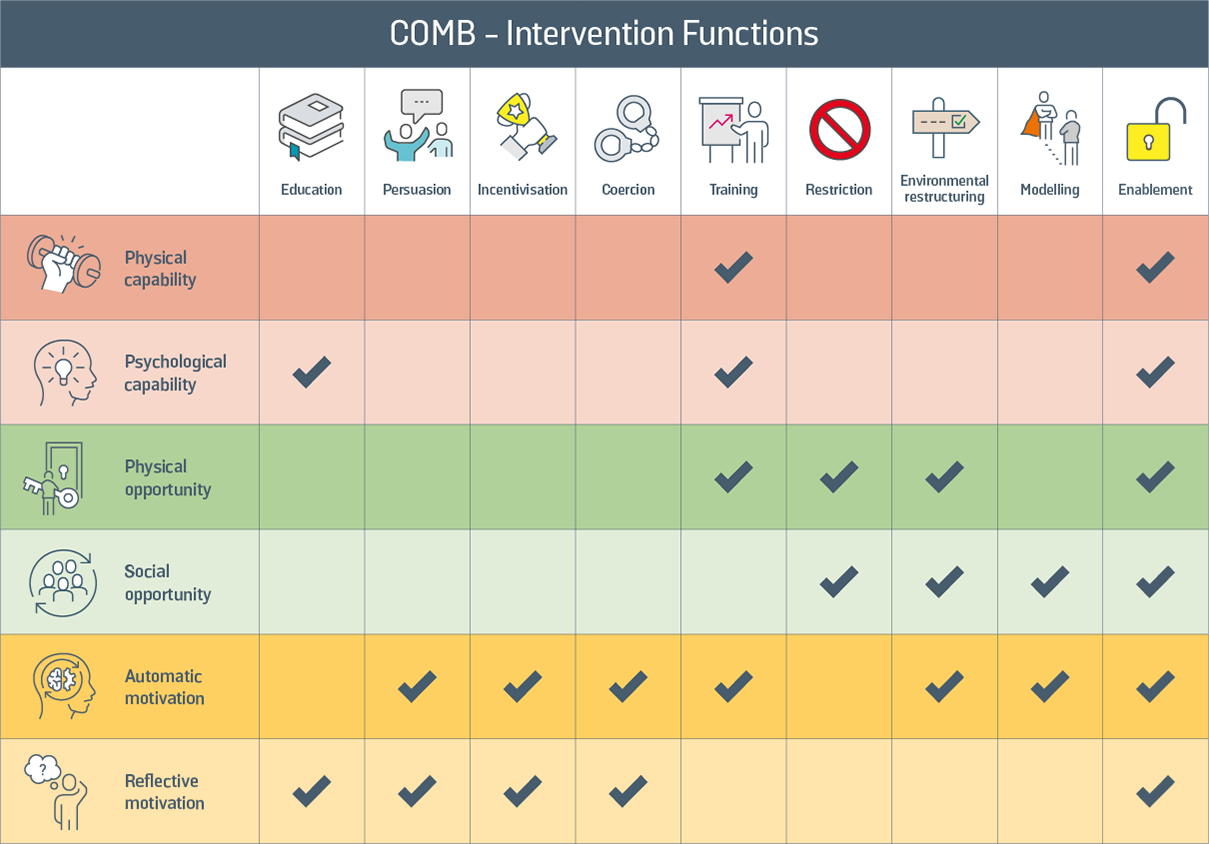
This resource will walk you through the process of identifying effective behaviour change strategies most likely to be effective in support the adoption of desired behaviours based your identification of what needs to change in terms of COM-B. This resource has three parts that needs to be used step-by-step to identify the appropriate strategy and has been adapted and informed by the Behaviour Change Wheel: A Guide to Designing Interventions Book by Lou Atkins, Robert West, and Susan Michie [21]. The first part explores what you need to do after identifying your COM-B Community level behaviour diagnosis; and how to categorize/map the gathered information in a strategic manner to point you to the appropriate intervention function. Part 2 focuses on identifying the relevant behaviour change techniques to further sharpen the strategy and the activity designing. To use this resource, you will need to have completed steps 1-4 in your Behaviour Change Planning Table.
If the information contained in this facilitator resource is something you have not heard of before, please go to the Human Behaviour Change Learning Module.
Approaches for Working with Communities: Community Development Approach, Community Engagement Approach, Societal Outreach and Campaigns Approach
Behavioural Drivers (COM-B): Behaviour Change Diagnosis and Planning
Project Support: Facilitator Resources, Training, Documentation and Reporting
Part 1: Identifying Effective Behaviour Change Intervention Functions
The behaviours we observe people exhibiting occur because of three, often interacting conditions or drivers: 1) capability, 2) opportunity, 3) motivation, commonly referred to as COM-B. These three components of behaviour are defined below, along with their subcomponents:
Capability: individual’s psychological and physical ability to enact or engage in the behaviour, and includes having the necessary knowledge and skills
1. Physical capability (C-ph) – physical skill, strength, or stamina
2. Psychological capability (C-ps) – knowledge, cognitive and interpersonal skills, memory, attention, and decision processes, behavioural regulation
Opportunity: factors which fall outside the individual which make the behaviour possible or prompt it
3. Physical opportunity (O-ph) – physical environment and resources, opportunities afforded by the environment involving time, resources, locations, cues, physical ‘affordance’
4. Social opportunity (O-so) – social influences, opportunity afforded by interpersonal influences, social cues and cultural norms that influence the way that we think about things
Motivation: reflective and automatic mechanisms/cognitive processes that activate or inhibit the behaviour including habitual processes, emotional responding, as well as analytical decision making
5. Reflective motivation (M-Re) – professional/social role and identity, optimism, goals, processes involving plans (self-conscious intentions) and evaluations (beliefs about what is good and bad, about capabilities)
Through your consultations with communities, ideally through COM-B diagnosis which helps you to identify the barriers and motivators (e.g. Facilitator Resource No. 11 Behaviour Change/COM-B Diagnosis Community Guide Question), you should have some degree of understanding of factors related to the target actors’ capability, motivation, and opportunities causing the undesirable behaviours underlying observed animal welfare issues (Refer to completed Step 3 column of theBehaviour Change Planning Table.
You can then use the table below to identify the most effective type of intervention functions to consider implementing to promote adoption of the desired behaviour based on yourCOM-B Diagnosis of what needs to change for the desired behaviour to be adopted [25]. It is not uncommon for each behaviour to have numerous drivers, and each may therefore require numerous types of interventions be undertaken to effectively change the behaviour, as shown in the figure 13a below.
Each of the types of intervention function are further defined in the table below [25]:
Intervention Functions
Definitions
Examples
Education
Increasing knowledge or understanding
• Providing information to promote better care for equids and create understanding about consequences. • Raise awareness of animal husbandry practices that support positive welfare states
Persuasion
Using communication to induce positive or negative feelings or stimulate action
• Using imagery and/or respected messengers to motivate increase in the feeling of how important your equid is.
Incentivisation
Creating expectation of reward
• Having a system that rewards practising the desired behaviour, such as being celebrated as the owner of the healthiest equid.
Coercion
Creating expectation of punishment or cost
• An animal owning community-based organization adopt bylaws that include financial consequences for members who mistreat their animals • Working with law enforcement officers to punish those who mistreat or do not take good care of their equids.
Training
Impacting skills
• Providing trainings on how to communicate with the equids without whipping. • Provide training on handling or farriery techniques
Restriction
Using rules to reduce the opportunity to engage in the target behaviour (or to increase the target behaviour by reducing the opportunity to engage in competing behaviours)
• Prohibiting using equids to carry loads over a certain weight, in relation to the equid weight to avoid overloading, or not using the equid without equid-friendly harness.
Environmental restructuring
Changing the physical or social context
• Printing posters (even billboard) and pinning them in the environment as a reminder for the need to practice the desired behaviour. • Encouraging equid owners’ associations or local administration to create/facilitate animal shelters at marketplaces to allow animals to rest comfortably after transporting goods to market
Modelling
Providing an example for people to aspire or imitate
• Identifying and using leaders or community change agents, who already practice the desired behaviour for others to copy them.
Enablement
Increasing means/reducing barriers to increase capability or opportunity.
• Providing social support groups, for people to feel part of similar group doing the same action or behaviour. • Supporting animal owning groups to form groups to do bulk purchase of feed for their animals.
Table 13a - Examples: Providing information to promote better care of animals, raise awareness of animal husbandry practices that support positive welfare states
Part 2: Identifying Complementary Policy Categories
Once you have identified the intervention function, the next step will be to explore if there are relevant Policy Categories that you can use to sharpen your strategy to help you embed the desired behaviour. The policy category can be used as part of your asks in the message you will craft when you are using this approach to identify gaps or to anchor your interventions direction even if you are not going to directly engage in policy advocacy work.
[25]
Part 3: Identifying Behaviour Change Techniques Relevant to Selected Intervention Functions
Once you have identified the appropriate intervention functions and policy categories for each behaviour, create a table like the example below, and refer to the table of behaviour change techniques (BCTs) related to each intervention function provided below, and select the behaviour change techniques most likely to be appropriate to the community context in which you are working.
You can download the free Behaviour Change Techniques Taxonomy v1 application (BCTTv1) to support your identification of the most used behaviour change techniques relevant to each intervention function, or refer to the table below which provides definitions and examples behaviour change categories with examples.
S.N.
Intervention Functions Definition
Behaviour Change Techniques* *All BCTs could potentially be considered for any intervention type, however the BCT’s listed here are those which have been most used and evidenced as effective for each type of intervention function within the behaviour change science literature.
Education: Increase knowledge or understanding
· Information about social and environmental consequences · Information about consequences of inaction/not adopting desired behaviour e.g., to animals and/or their owners Feedback on behaviour · Feedback on outcome(s) of behaviour · Prompts/cues · Self-monitoring of behaviour
Persuasion: Use communication to induce positive or negative feelings to stimulate action
· Credible source · Information about social and environmental consequences · Information about consequences of inaction/not adopting desired behaviour e.g., to animals and/or their owners · Feedback on behaviour · Feedback on outcome(s) of behaviour
Incentivization: Create an expectation of reward
· Feedback on behaviour · Feedback on outcome(s) of behaviour. · Monitoring of behaviour by others without feedback. · Monitoring of outcome(s) of behaviour without feedback. · Self-monitoring of behaviour.
Coercion: Create and expectation of punishment or cost
· Feedback on behaviour. · Feedback on outcome(s) of behaviour. · Monitoring of behaviour by others without feedback. · Monitoring of outcome(s) of behaviour without feedback. · Self-monitoring of behaviour.
Training: Impart skills
· Demonstration of the behaviour. · Instruction on how to perform the behaviour. · Feedback on behaviour. · Feedback on outcome(s) of behaviour. · Monitoring of behaviour by others without feedback. · Monitoring of outcome(s) of behaviour without feedback. · Self-monitoring of behaviour. · Behavioural practice and rehearsal · Instructions on how to perform the behaviour
Restrictions: Use of rules to reduce the opportunity to engage in the behavior
There are no BCTs identified as ‘most frequently used’ for Restriction because BCTs are focused on changing the way people think, feel, and react rather than the way external environments limit their behaviour.
Environmental Restructuring: change the physical environment
· Adding objects to the environment. · Prompts/cues. · Restructuring the physical environment.
Modelling: Provide an example for people to aspire to or emulate
· Demonstration of the behaviour
Enablement: Increase means or reduce barriers to increase capability (beyond education or training) or opportunity (beyond environmental restructuring)
· Demonstration of the behaviour. · Social support (unspecified). · Social support (practical). · Goal setting (behaviour). · Goal setting (outcome). · Adding objects to the environment. · Problem solving. · Action planning. · Self-monitoring of behaviour. · Restructuring the physical environment. · Review behaviour goal(s). · Review outcome goal(s).
Table 13b Intervention functions (IFs) and frequently used BCTs
Next, use the APEASE criteria also provided in a table below to help you narrow your selection of behaviour change techniques. Although the APEASE criteria provides a structured way of narrowing appropriate BCTs, it is important to draw on local knowledge and your own expertise when selecting the most appropriate intervention functions and BCTs to be implemented in each context. When narrowing your selection, it is also helpful to consider the BCTs used most frequently before considering those used less frequently [21].
Once you have completed the activity, use the identified BCT’s which meet the APEASE criteria to inform the development of effective community engagement activities to address the barriers and motivators identified as needing to change. List community engagement project activities within the Step 5 column of the Behaviour Change Planning Table provided within the facilitator resources.
Criteria
Description
Affordability
Acceptable in terms of project budget. It does not matter how effective or even cost effective it may be if it cannot be afforded. An intervention is affordable if within an acceptable budget it can be delivered to, or accessed by, all for whom it could be relevant or of benefit.
Practicability
Extent to which it can be delivered and designed through the means intended to the target population and ease of adoption by the community given the means available to them. You know, or have great cause to believe, that the barriers to adoption of behaviours hoped to be addressed by the intervention are not beyond the scope of project to address
Effectiveness and cost effectiveness
Effectiveness refers to the effect size of the intervention in relation to the desired objectives within the local context. It is important when weighing intervention strategy options to the extent to which the intervention will have a direct, significant impact on solving/reducing the severity of observed animal welfare issues and promote the adoption of desired behaviours, and whether it has potential to affect change in many welfare issues/behaviours, and/or have spill over/generalizability to other behaviours and people. Cost Effectiveness refers to the ratio of cost to effect. If two interventions are equally effective it is always recommended to pursue the more cost-efficient strategy. If one option is more effective but less cost effective, then other criteria such as affordability should be considered.
Acceptability
Acceptability refers to the extent to which an intervention strategy will be judged as appropriate by relevant stakeholders. Acceptability may be different for different stakeholders.
Side effects/safety
Side effects/safety refers to the extent a particular intervention may have unwanted side-effects or unintended consequences. Consider whether interventions may cause harm to animals, people, or the environment before deciding whether to proceed.
Equity
An important consideration is the extent to which an intervention strategy may reduce or increase disparities in standard of living, health, or well-being for different sectors of society.
Table 13 c APEASE Criteria - adapted from [21]
The table below provides an example of a completed behaviour change intervention functions and behaviour change techniques identified based on COM-B diagnosis findings for changing whipping behaviour in Kenya. Consider creating a similar table to support your own behaviour change intervention planning using the human behaviour change intervention planning approach outlined in this resource.
Behaviour Change Statement: Guiding donkeys using verbal and body communication whenever donkeys are required to move.
Most Relevant/Recently Used Behaviour Change Techniques (BCT)
Does BCT meet the APEASE Criteria in the context of the desired behaviour?
Education
Psychological capability
Providing information about the consequences of whipping.
Yes, it is affordable, practical, acceptable, with positive side effects on improving and knowing what is needed to improve the health of the donkey
Persuasion
Reflective Motivation
Using dram/skits to highlight the benefits of guiding a donkey without whipping to elicit emotional response.
Acceptable, practical, not so costly and can reach a wide audience of people depending on the delivery mode.
Environmental Restructure
Social Opportunity
Putting cues/leaflets in visible places to remind the donkey users and the community on how to treat their animals
Yes, affordable, acceptable and may lead to other additional benefits such as awareness on donkeys health and how to guide them
Training
Physical Capability
Teaching the owners how to guide without whip, by using body language
Acceptable, practical, socially acceptable but may not be affordable as it requires one on one training of an individual
Table 13d Example of Completed Intervention and Behaviour Change Intervention Selection for Changing Whipping Behaviour in Kenya
Facilitator's Note:
It should be noted that this guidance focuses on identifying intervention functions from the behaviour change wheel, however the behaviour change wheel can also be used to identify policy categories to support the intervention. However, if barriers to the adoption of desired behaviours are identified amongst communities that may require policy level change, you may wish to consider conducting this activity using the behaviour change wheel’s policy categories as well, to identify those which best support delivery of the intervention functions [21].
Consider downloading the BCTTv1app from iTunes or google play to further help you.
The community engagement (CE) approach is an intermediate approach between the community development approach and societal outreach and campaigns approach, which requires you the community engagement facilitator or a trained community change agent to directly engage with individuals or groups to facilitate behaviour change to improve animal welfare. This approach relies heavily on using recommended tools and techniques in effective communication for behaviour change and adult learning theory and recommends involving communities in the identification and prioritization of animal welfare issues and working with them to identify solutions for achieving desired changes through a collaborative process of inquiry and reflection. In this way, members of the animal owning community are supported to progress through the stages of change with an in a way that aims to promote sustained behaviour change for lasting animal welfare improvements.
While this approach promotes working through community change agents (CCAs), if it is not feasible to work through CCAs, you are encouraged substitute your project’s community engagement staff and adapt the approach as needed to support working in this way. Before deciding, whether to work through change agents or your project’s own staff, consider the benefits and limitations of both ways of working:
Agent of Change
Strengths
Weaknesses
Community Change Agents (CCA)
• Builds lasting internal community expertise in animal welfare beyond the scope of project. • Community change agents knows the community context better and know what is likely to be well received. • Can be more efficient in reaching more people (as accepted as part of community and reduced language barrier)
• Less expertise in behaviour changes and requires training, and skills/lessons may be diluted when transferred. • Requires support, monitoring and management which can take additional time. • May be constraints on change agent time/availability.
Project Community Engagement Staff
• May be more experienced and skilled in core competencies/effective group facilitation.
• Less familiar with local context and may not be as influential/respected by community. • Efficiency/reach limited to project staff capacity and workload on staff.
Table 7: Key Considerations for Working through Change Agents
While the guidance within this approach are based on best practices in participatory community engagement and behavioural change science [31, 21, 66, 20], the steps are not intended to be prescriptive and can be adapted based on need and context.
An overview of the entire community engagement approach, including each intervention phase and its associated step is mapped in the figure below.
Figure 45: Overview of Semi-Intensive Community Engagement (CE) Approach
The diagram below illustrates the general progress through the stages of change throughout the different phases of a project adopting the community engagement approach. However, as change is a process, community members can progress or relapse through the stages of change at any time during the project. As such, it is recommended that community engagement agents pay careful attention to where individuals are in their change process and adapt their engagement techniques as needed to support people’s continued progress through the stages of change. Refer to the Human Behaviour Change Learning Module for an introduction to the stages of change.
Figure 46: The Stages of Change Linked with the Phases of the Community Engagement Approach
An important part of working with communities to improve animal welfare is the consideration and mitigation of ethical issues. An important part of working with communities to improve animal welfare is the consideration and mitigation of ethical issues. Below is an outline of recommended ethical principles important understand and consider throughout any community animal welfare intervention project:
Support Personal/Group Agency
As the only one who can actually change a person’s behaviour is the person himself/ herself, not the facilitator, change agent, or organization, the role of a project is to support people to practice desired behaviours by enabling them to understand (and where possible also experience) the benefits of the promoted behaviours, recognize and believe in their own capabilities, and address those factors that make practicing desired behaviours difficult. It is always important to recognize and appreciate existing positive behaviour as well as start from using locally available resources.
Respect People’s Right to Choose
Projects must always respect individuals’ right to choose (or not) to adopt a particular behaviour (unless it harms or endangers others) and must consider the risks early adopters may face (e.g. disapproval of their community members, incurring initial financial or time-related costs).
Promote Ethical Change
Only seek to change existing behaviours if such change [20]:
has benefits which are perceived by the targeted community members to outweigh the potential costs/losses caused by changing existing behaviours, customs, and traditions.
are proven to effectively address the problems faced by the targeted animal owning community.
are supported by the key stakeholders (such as civil society representatives, ministries)
Practices to Avoid [20]
Avoid changing a behaviour without trying to understand it first e.g. arriving at a community with a plan to change a given behaviour(s) without trying to first understand why people practice it, why they cannot / do not change it.
Avoid using excessive social pressure or victimizing e.g. coercing instead of motivating people; labelling individuals as a bad animal owners or carers/cruel people when they do not follow certain practices while not reflecting on their ability to do so.
Avoid promising more than the behaviour can deliver e.g. exaggerating the real benefits that a behaviour can deliver or downplaying its costs (required time, effort, disapproval of others)
Avoid Promoting a behaviour with unproved effectiveness e.g. asking people to spend their time, effort, or resources on practicing a behaviour (e.g. certain animal husbandry and management practices) for which there is no strong evidence of effectiveness.
Avoid Creating demand without adequate supply e.g. encouraging people to use animal related resources or services which are hard to access (due to costs, poor availability, distance) without helping to improve access.
Avoid ignoring the already present positive behaviours e.g. introducing new practices without assessing and taking advantage of the existing positive behaviours, beliefs, and know-how
Avoid culturally insensitive interventions.
Promote Equality
It is important understand who discriminated and/or vulnerable groups are and ensure equal opportunities for their participation and representation during the design, planning, implementation, monitoring, and evaluation of such projects to mitigate the perpetuation of their discrimination and/or disadvantage. Community animal welfare intervention projects must ensure they do not operate in ways which are blind or exploitative of different social categorizations such as race, class, and gender, disability etc. Such social categorizations often result in overlapping and interdependent systems and patterns of oppression, discrimination, and disadvantage for these groups, a phenomenon known as intersectionality. This may include ensuring policies and standard operating procedures are in place for gender mainstreaming, promoting equality and diversity and inclusion of traditionally marginalized groups in any engagement activities or communications as needed. At the very minimum it is important to strive to promote equality, and measures may be required to promote equity as a means to achieving equality as needed whenever feasible.
Ensure the Capabilities, Safety, and Security of Community-based Workers
Ensure facilitators and/or community change agents have sufficient core competencies to undertake their work with communities in an ethical, effective, and participatory manner, are provided necessary training and support to undertake their responsibilities as needed, and that proper measures are put in place to ensure their safety, security and well-being while working (e.g. to mitigate safeguarding issues and burn out).
Ensuring the Safety, and Security of Community Members
It is important proper policies and standard operating procedures are in place within your organization and project, as well as sufficient capability within your team, to adopt necessary safeguarding measures to work within the local norms and customs in a way that protects and create an enabling environment for potentially discriminated and vulnerable groups.
Recommended Core Competencies for Community Engagement Approach
Excellent communication skills: - Active/reflective listening skills - Two-way communication, open ended questions - Empathy - capacity to see things from other’s people’s perspective, and be understanding and consider their situation, and can read the community’s feelings, cultural norms and adjust as needed to suit situation - Conversations for change: capacity to lead/facilitate discussions to solicit conversations for change and motivate and influence people to change using their own reflections, and good negotiator.
Training of Trainers / Understanding of application of adult learning theory for effective training: having the skill to make an intervention (training or community discussion) interactive using different methods/activities and using of participatory tools.
Understanding of COM-B and stages of change and appropriate strategies of engagement at each stage.
Animal Welfare: good understanding of animal welfare in terms of the five domains framework and their human behavioural equivalents.
Understanding of gender mainstreaming to promote gender equality, as well as intersectionality and implications on vulnerable groups and related implications for planning and implementing projects.
The following C4A tools and resources may be useful to supporting capacity building related to these core competencies:
Recommended readings and external resources that support this approach and the development of recommended core competencies are provided below.
Recommended C4A Readings
Animal Welfare and Communities Learning Module – recommended for gaining an understanding of concepts of the five domains of welfare and how this can be used in raising awareness with communities
Human Behaviour Change Learning Module - recommended for gaining an understanding of behaviour change theory and best practices, the stages of change, and their importance to facilitating behaviour change
Community Engagement and Development Learning Module - recommended for gaining an understanding of the difference between community engagement and community development, and understanding principles and best practices essential to effective community engagement
Extensive Societal Outreach and Campaigns Approach - recommended to complement the community development approach by supporting awareness raising to improve knowledge, change perceptions, and/or develop social norms on a broad scale to support adoption of desired behaviours and improved animal welfare.
Fostering sustainable behaviour: An introduction to community-based social marketing – book and website with useful guidance and resources: www.cbsm.com
Getting Practical: Integrating Social Norms into Social and Behaviour Change Programs - English Guide / French Guide
Webinar series on Social and Behaviour Change (SBC) for Improved Agriculture and Nutrition, by the Agriculture, Nutrition and Health Academy
When initiating any community engagement project, it is important to begin building rapport with the local community where you desire to work. Listen and observe more than talking about the project’s interests and aspirations in terms of animal welfare in these early days, and demonstrate genuine interest in community members, their lives, and what is important to them both generally and in term
ATTENTION!
During this period, which may take up to three months, it is important that no education or intervention activities are conducted because: 1. An intervention started without knowledge of local context, animal owning community, their behaviours and practices is likely to be poorly informed, and unlikely to be appropriate or result in desired animal welfare improvements. 2. An intervention started without a genuine rapport with and understanding of the community is likely to be viewed with mistrust.
1.1.1 Project introductions
It is helpful to begin by initiating contact and building rapport with stakeholders already established within the locale, especially those who may already be working with the animal owning community (e.g. governmental bodies, organizations, local community groups like farmers’ associations, self-help groups, and animal service providers). They are usually a useful point of introductions to the community and can provide you with useful insights about the local context and community, as well as how best to engage members of the animal owning community in your project. Introduce yourself as a field worker from an organization that is interested in supporting and organizing community-based groups to work towards sustainable improvement in animal welfare. Hold meetings with village leaders and talk with all interested individuals, including schoolteachers, religious leaders, and anyone else who can support you from the beginning to organize the community.
1.1.2 Relationship building and understanding the local context
Before beginning to facilitate any specific welfare intervention, it is important to first get a feel for the important issues which might have far-reaching effects on the welfare of their animals. The following activities are helpful to building rapport and getting to know the animal-owning community during the initiation phase of the project.
Ask people about their lives, their problems, local culture, and habits. Get different men’s and women’s daily routines and motivations and gain an understanding the local context and community dynamics, including gender roles and power dynamics.
Strengthen contact with animal owning households, including owners and carers, men, women, and children who may have important roles and responsibilities in the lives of their animals.
Take part in daily or regular activities with people and attend important events at the invitation of the community, such as ceremonies, funerals or celebrations. This will bring you closer with members of the animal owning community, as well as help you understand the community. This is particularly helpful to gaining insights on community dynamics and power relations.
Identify and talk with local veterinary and animal health and resource service providers, and anyone else who works with animals, directly or indirectly.
Visit village shops and meeting places for informal discussions.
Take time to observe and understand how people behave with their animals, as well as how they treat each other, work together or do not, which resources and services they may rely on, as well as the condition of their animals and related animal welfare issues.
Ask people who they think are good leaders and respected in terms of their care and management of their animals. Spend time getting to know these individuals and their practices and interests in terms of promoting animal welfare, and where they are at in terms of their own stages of behavioural change. Through this process you may be able to start to identify who may be interested in working together and potential good candidates as change agents.
1.1.3 Gauge interest and motivation for improving animal welfare
During the rapport building phase, hold introductory community gatherings or informal meetings where you introduce your organization/project and its mission in a transparent, ideally fun and engaging way that is appropriate to the local context, without overselling what your organization/project can offer. It is helpful to provide insights on your organization’s experience, interests, and goals for collaborating with the community to improve animal welfare. Consider showcasing examples from previous work with communities, perhaps using visual media or inviting community members from other project areas, to highlight benefits which accrued to the communities and their animals because of working with your organisation can be helpful to generating interest in the project. If you are undertaking this approach with the Community Development Approach, consider inviting animal welfare champions from existing community-based organizations to share their experiences about making animal welfare improvements.
It is helpful to organize community meetings or focus group discussions, with different stakeholders separately such as men, women and other potentially vulnerable groups. Give them an opportunity to learn about the project and your interest in collaborating with them to design and implement an animal welfare improvement project, and introduce your ways of working [67]. This is an opportunity for you to learn about different groups’ interests and motivations in relation to improving their animals’ welfare as well as gauge their general level of awareness of issues. During these sessions:
Ask what their animal welfare concerns and priorities are.
Ask about when best and how best to engage members of the animal owning community and record the names and any contact information available for individuals expressing an interest of being involved with the project.
Ask about who they perceive could be potential champions of animal welfare and respected potential agents of change within the animal owning community. It is important to be transparent about the project’s desired change agent selection criteria, including protocols for ensuring equal or proportional representation of any potentially disadvantaged or vulnerable groups (e.g. women, minority or disadvantaged classes or castes), and encourage considerations inclusive of all members of the animal owning community.
Observe and take note of any individuals expressing a genuine interest in the project and animal welfare and seem ready for change.
1.2.1 Understand community's existing knowledge, attitudes, beliefs and practices related to animals and their welfare
Before any project can effectively work with communities to change their behaviours to improve animal welfare, it is essential to first understand the animal owning community’s existing knowledge, attitudes, beliefs, and behaviours [31]. Organize more in-depth discussions only once you have established a good rapport and trust within the community. It is recommended you use your knowledge of animal welfare issues based on observations and discussions thus far to gain a deeper understanding of existing knowledge, practices, and beliefs specific to any identified animal welfare issues of concern. As different social categorizations such as race, class, and gender, disability etc. often create overlapping and interdependent systems of discrimination or disadvantage, it is important to take this into account when designing information collection methods, to ensure the perspectives of different social groups within the animal owning community are sought, and they are provided equal opportunity to participate and have their voices heard.
Invite individuals recommended as change agents by their peers and ask them to help you identify and invite their peers within the animal owning community to participate in focus group discussions (FGD), which will also give you an indication of their potential sphere of influence. Local community leaders and other organizations working with members of the animal owning community may also be able to assist you with this. If community members’ or project staff’s time is limited, consider holding these discussions with only change agents and other relevant key informants, taking care to seek out representative insights from all the differing perspectives within the animal owning community (e.g. men, women, owners/carers/users etc.).
During the FGDs, seek to gather deeper insights on:
What the priority motivations/concerns are in their lives?
What welfare issues seem most important to them and why?
What is their general level of awareness of animal welfare issues, and interest to change them, particularly in relation to identified/observed animal welfare issues?
What are the existing animal care, management and/or use practices, particularly those which may be associated with identified animal welfare issues?
Who typically undertakes them?
What is their sense that these practices may be causing welfare issues?
What do they like/dislike about these existing practices?
What is the access and availability of animal-related services and resources?
Different group’s responses during these discussions will also be useful to helping identify which groups to target, getting a general sense of where people are in the stages of change, and how to support change agents to tailor their messaging and activities to achieve improvements in animal welfare later in the planning process. Make sure to take notes on these discussions, and different groups’ perspectives, and consider using a Project Action Tracker to keep track of key findings and support project planning.
Tools and resources helpful to supporting this step include:


![Figure 26: The spectrum of community participation and its relationship to the three C4A approaches for working with communities [44]](http://communitiesforanimals.thebrooke.org/wp-content/uploads/2021/03/A19-Spectrum-Complete.png)


![Figure 28: Gender Equality Continuum with Examples from Animal Welfare Improvement Projects [56]](http://communitiesforanimals.thebrooke.org/wp-content/uploads/2021/04/A20-Gender-Complete.png)