2.3 Develop Community Engagement Strategy

QUICK LINKS
2.3.1 Identify What Needs to Change for Desired Behaviours to be Adopted and Sustained (Behaviour Change/COM-B Diagnosis)
2.3.2 Identify community engagement activities appropriate to supporting adoption of desired changes
2.3.3 Prepare to implement community engagement activities
Tools and resources helpful to supporting this step

2.3.1 Identify What Needs to Change for Desired Behaviours to be Adopted and Sustained (Behaviour Change/COM-B Diagnosis)

Identify What Needs to Change

For your project to support behavioural change amongst animal owning communities, you must first understand the desired behaviours in context to get clear on why the existing behaviours are the way they are, and what needs to change in terms of the person and/or the environment for community members to adopt each of the desired behaviours.

This is sometimes referred to as a barrier analysis, or COM-B diagnosis, which is a process that seeks to understand the specific barriers and motivators to the adoption of desired changes. In this context, barriers refer to what keeps people from practicing a desired behaviour, and motivators or benefits refers to what encourages them to adopt it. Conducting a barrier analysis on each of the desired behaviours to be promoted is highly recommended and widely recognized as the most critical step to designing successful behaviour change projects [21, 20, 31, 74].

The COM-B model of behaviour is a particularly useful framework for helping you diagnose what needs to change for community members to adopt the desired behaviours because it enables you to use evidence based behavioural change science to identify the most appropriate types of intervention functions to support the adoption of each behaviour [21]. As we know that changing behaviours of individuals, groups, or populations involves changing one or more of the following: capability, opportunity, and motivation; it makes sense to use the COM-B framework to diagnose what needs to change for desired behaviours to be adopted.

When collecting information to understand barriers and motivators to the adoption of desired behaviour, it is important to seek insights from as many relevant sources as possible, as the most accurate understanding is gained through the inclusion of multiple perspectives [21]. For example, within the animal owning community, men, women and other marginalized and vulnerable groups can face unique challenges and barriers to change, and have different opportunities available to them. Your understanding of intersectionality within the community context will be helpful to ensuring you create opportunities for different voices and their experiences to be considered in the identification of barriers and motivators to the adoption of the desired behaviours.

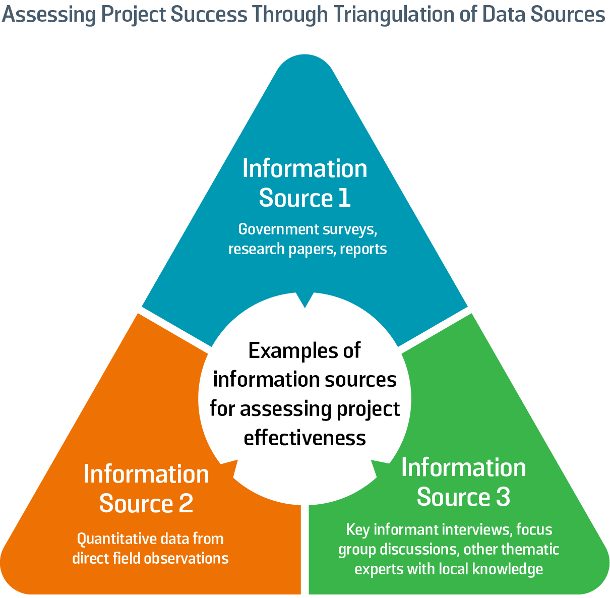
There are many ways to collect this information and using a variety of methods is recommended. You can be more confident in your results when you obtain a consistent picture of the behaviour and factors influencing it from more than one source [21]. Methods may include: KIIs, FGDs, surveys, direct observation, review of reports and literature, and expert opinion, and your choice is likely to be influenced by the time and resources at your disposal.

A Behaviour Change/COM-B Diagnosis Community Question Guide is provided as a facilitator resource to support this process, along with recommendations for additional external resources to support barrier analysis. It is recommended to employ participatory approaches and tools when conducting such assessments. Results from participatory activities and your observations thus far should have generated insights on the local context and animal owning community, which can be used to identify the potential barriers and motivators/benefits for each of the desired behaviours.

Specifically, it is helpful to refer to the following:

  1. The causal factors identified during root cause analysis of welfare issues.
  2. Resources and support identified by target peer group as needed to support their adoption of agreed upon actions from the Community Animal Welfare Action Planning activity.
  3. Information gathered from community consultations and observations during the initiation phase such as:
    • Their priority motivations/concerns both in their lives and in terms of their animals
    • Their general level of awareness of animal welfare issue.
    • Their existing animal care, management and/or use practices associated with the animal welfare issues, and what they like and do not like about them.
    • Gender roles and responsibilities generally as well as in relation to animal care and management.
    • Access and availability of animal-related services and resources, and your project or its partners’ plans to address any identified access or availability issues.

Once you have conducted a COM-B analysis to diagnose each desired behaviour in terms of what needs to change in order for the target group to adopt it, consider creating a table similar to the example below to help you map out what needs to change in relation to each COM-B component (see second column of Table 8 below).

The table below outlines a completed version of this behaviour change/COM-B diagnosis exercise to explore what needs to change for urban donkey cart drivers in Kenya to adopt the behaviour of using verbal and body communication cues to motivate donkeys to move (rather than whipping them).

COM-B Diagnosis Table: Identify What Needs to Change
Desired Change/Behaviour Change Statement (who + what + any relevant details (e.g. when/where/how often/with whom):
Urban donkey cart drivers in Kenya (who) guiding their donkeys using verbal and body communication (what) whenever the donkeys are required to move.

COM-B ComponentsWhat needs to happen (pre-conditions) for the desired behaviour to occur and be maintained?
(List what the target group or environment needs in terms of each COM-B component)
Is there a need for change? (Y/N)
If yes, specify exactly what your community engagement project activities need to achieve in statement as follows:
Increase/decrease/improve/reduce….

Perception that…
Availability of/access to…
The ability to…
Physical Capability
Physical skills, strength, or stamina (e.g. ability or proficiency acquired through practice required for desired behaviour to be adopted)
i. Need to have skills to effectively communicate with the donkeys using body language.i. YES - Increase urban donkey owning cart drivers’ ability to use verbal or body to communicate with the donkeys and train donkeys to respond with desired behaviours without using a whip.
Psychological Capability
Knowledge, cognitive and interpersonal skills, memory, attention and/or decision processes, behavioural regulation (impulses/inhibitions)
i. Urban donkey owning cart drivers need knowledge of alternative positive methods of communication with donkeys which does not involve a whipping.
ii. Urban donkey owning cart drivers need knowledge of where to go to receive training on alternative human handling methods.
iii. Urban donkey owning cart drivers need knowledge of how to use alternative positive methods of communication and humane handing instead of whipping.
iv. Urban donkey owning cart drivers need to understand how whipping adversely impacts donkeys and the benefits they desire from using their animals as well as their core values where appropriate.
v. Urban donkey owning cart drivers need to be able to regulate their use of substances as this can lead to them inhumanely handling their animals with whips.
i. YES – increase urban donkey owning cart drivers’ awareness of alternative methods of communication which do not involve whipping.
ii. YES - increase urban donkey owning cart drivers’ awareness where to go to receive training on alternative humane handling methods.
iii. YES - increase urban donkey owning cart drivers’ awareness of how to use alternative positive methods of communication and humane handing instead of whipping.
iv. YES- Improve urban donkey owning cart drivers’ understanding of linkages between whipping and adverse outcomes for cart drivers and their donkeys.
v. YES – Improve the ability of substance abusing donkey owning cart drivers to regulate their impulses to use intoxicating substances during times they are handling their donkeys.
Physical Opportunity
Environmental context and resources (e.g. time, triggers, resources, locations, or physical barriers etc.)
i. Need safe road conditions to reduce the need for donkey cart drivers to whip their donkeys to respond to the risks posed by vehicles who share the roads.
ii. Need water point access points which enable donkey cart drivers to collect/load water quickly to meet client needs and mitigate challenges with manoeuvring which often results in increased whipping.
i. YES – Improve safety measures to ensure vehicles and donkey carts can safely share the road
ii. YES - Improve ease of access to water points for donkey carts.
Social Opportunity
• interpersonal influences and support, social cues, and cultural norms/expectations
• Support from others
• Social or cultural acceptability
i. Urban donkey cart clients need to value animals’ welfare more than money and time savings and not pressure donkey cart drivers to overload their donkeys and move quickly or threaten taking their business elsewhere as this causes cart drivers to whip their animals.i. YES – Improve perceptions of the urban donkey cart clients that ensuring the welfare of donkeys who are sentient beings is more valuable than potential time and money savings (e.g. create new social norms)
Reflective Motivation
•Personal / professional / social roles and identity, beliefs about capabilities, beliefs about consequences, attitude/optimism, intention, goals
i. Urban donkey owning cart drivers need to believe that donkeys are not stubborn and able to learn without whipping.
ii. Urban donkey owning cart drivers need to believe that donkeys are sentient beings.
iii. Urban donkey owning cart drivers need to have compassion and empathy for their donkeys.
i. YES - Decrease the perception of donkey owning cart drivers that donkeys are stubborn and only respond when whipped.
ii. NO – Already exists amongst cart drivers
iii. NO – Already exists amongst cart drivers
Automatic Motivation
• Reinforcement (habit or routine), Emotion (emotional response to current or new practice)
• What habits or routines need to be created/modified/eliminated?
i. Urban donkey owning cart drivers need to develop new routines related to the use of alternatives to whippingi. YES - Increase the ability of donkey owning cart drivers to understand and implement new routines for motivating/communicating with their donkeys.

Table 8: COM-B Behavioural Diagnosis – Identifying What Needs to Change for Desired Behaviours to be Adopted

2.3.2 Identify community engagement activities appropriate to supporting adoption of desired changes

Once you have specified what needs to happen for the target group to adopt the desired behaviour based on your understanding of barriers and motivators to change, identify what needs to change, or where the gaps are, within the third column of the COM-B diagnosis table.

Look at what you have listed as needing to be in place for the target group to adopt and sustain the desired behaviour within the second column of the table above and identify which of the elements listed are not currently in place/require change. For every element identified as needing change, craft specific statements about what the project needs to achieve to make sure it is addresses and desired behaviours can be adopted. You should be able to specify exactly what the project aims to achieve in one of the following ways [20]:

Increase/decrease/improve/reduce

+ perception that…or
availability of/access to… or
the ability (knowledge/skills) to

For example:

  • Increase men’s knowledge of where to obtain quality animal health services
  • Decrease women’s perception that feeding animal before working them is harmful.
  • Improve the availability of low-cost welfare friendly animal harness for men and women animal owners.
  • Improve the ability of women and children to prepare feed in ways that help prevents colic

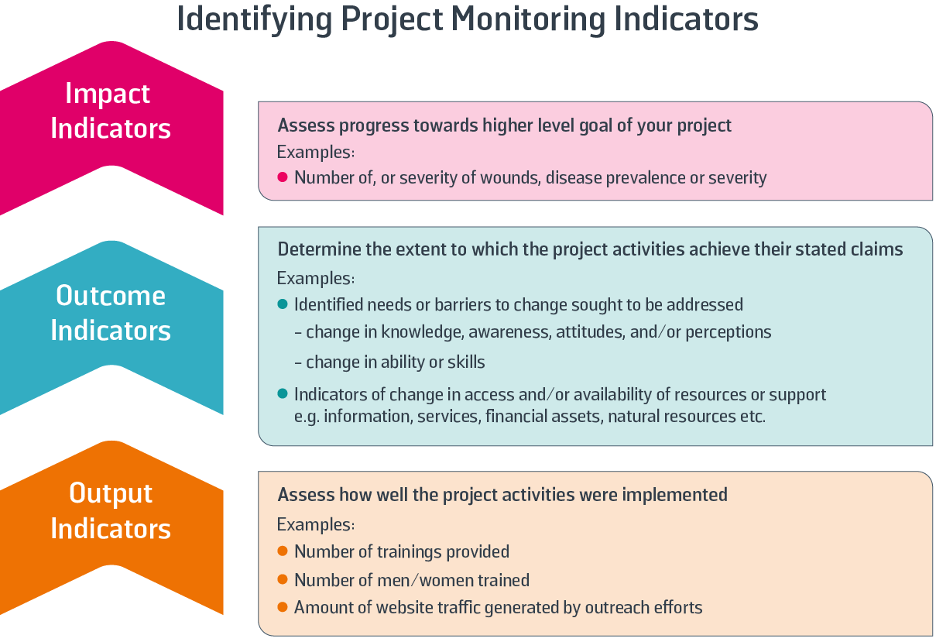
These statements should not be written with specific activities already in mind, as these will be identified in the following steps, and it is important to remain open to all options you can use for addressing the barriers/motivators [20]. It is useful to consider the phrasing of these statements can help you to define your project’s outputs within your log frame and will be used to develop output indicators in later steps.

If you find you are unable to complete any parts of Table 8 above, it is highly recommended you conduct a structured discussion with community stakeholders or key informants at the very least, to better understand their perceptions related to barriers and motivators to their adoption of the desired behaviours. Your ability to complete Table 8 above is also a useful check point to make sure that any barriers to adoption which are identified can be addressed through the work of CCAs and/or the broader project. If not, you may wish to reconsider whether it is ethical and effective to promote the adoption of the behaviour if the project is unable to take action to address the barriers to its adoption.

Once you have completed your own table for each of the behaviours the project seeks to promote, input relevant information about what needs to change (e.g. barriers and motivators) and what your community engagement/project activities need achieve to address them within the Behaviour Change Planning Table (see step 3 and 4) provided as a facilitator resource.

After diagnosing what needs to change for the desired behaviour to occur using the COM-B framework, it is possible to identify the type of intervention functions which will be most effective at achieving the desired change. It is recommended to use the behaviour change wheel to support the identification of intervention functions and behaviour change techniques (BCTs), as it provides a systematic and theoretically guided method for identifying the most effective strategies to implement to support adoption of a desired behaviour. Follow the guidance in the facilitator resource Guidance on Identifying Effective Behaviour Change Strategies Based on COM-B Diagnosis to select the most appropriate intervention functions and BCTs based on the COM-B behavioural diagnosis of behavioural barriers and motivators the project has identified need to change in the previous step. Once you have identified the BCTs that are effective for addressing the identified barriers and motivators, use the APEASE criteria to narrow your selection. Once you have selected the BCTs which meet the APEASE criteria, identify project activities in line with the selected BCTs and include these within the final column of the “Behaviour Change Planning Table” template provided in facilitator resources . The aim is to develop a mix of activities that address all (or as many as possible) of the “changes your activities need to achieve” (Step 4 of the Behaviour Change Planning Table), recognizing the same activity can address more than one of the changes that need to be achieved [20].

Consider incorporating the following participatory tools as part of your community engagement activities, if they support the type of intervention strategy selected and have not already been implemented:

Depending on the results of your COM-B diagnosis of barriers and motivators for the desired behaviour and identification of BCTs, consider whether a Societal Outreach and Campaigns Approach would be useful to supporting your community engagement activities to increase awareness, capacity, or changing social norms.

Spending a few weeks to design your community engagement activities using the behaviour change framework detailed in the above-mentioned steps is a worthwhile investment as it can significantly reduce the risk of you and your team wasting energy, time, and resources on activities that do not deliver the results you hoped for [20]. At the same time, it is recognised that you may not have the time and resources to follow all the recommended steps in this process for all the behaviours you desire to promote [20]. In such cases, it is recommended to at the very least use the following advice based on research from The Behavioural Insights Team about what makes behaviour change activities most successful, by checking that any behaviour change activities you decide to implement are designed to make doing the behaviour EAST: Easy, Attractive, Social and Timely [20]:

  • Easy: Learn what makes practicing the behaviour difficult and help your priority groups to make it easier – involving less hassle, time, or money. If you promote a complex goal, break it down into smaller actions.
  • Attractive: People are motivated to do something when it brings them what they want most, such as income, peace of mind, happiness, or good health. Ensure that your activities help people experience the benefits of practicing the behaviour by, for example, letting them test it (e.g. experience using a new type of welfare friendly equipment); sharing successful examples (e.g. of an animal owning family who reduced the incidence of animal illness by adopting the promoted prevention techniques); and using appealing messages that engage people’s emotions.
  • Social: People are heavily influenced by what people around them do. So, let’s take advantage of it! Showing that some people already practice the promoted behaviour, using the power of social networks (e.g. peer-to-peer), or encouraging people to commit to someone to practice a behaviour often works well!
  • Timely: The same campaign conducted at different times can have drastically different levels of success. Schedule your campaign for when people are most receptive (e.g. promoting the purchase of latrine after harvest when people have money; or posting hand washing messages in kitchens).

2.3.3 Prepare to implement community engagement activities

After identifying community engagement activities to support desired behaviour change, the next step is to refine the initial ideas with CCAs and work with them to develop a plan of implementation. IT is important to consider CCAs time commitment to the project, the size of their target peer groups, their geographic spread, and whether change agents will be engaging their peers through home visits or group activities to ensure project activities can be delivered within the time available to CCAs. It is also helpful to plan activities with an understanding of the stages of change, anticipating that peer groups are likely to be in contemplation and preparation stages of change early on, and thus activities related to raising awareness of benefits of behaviour change, increasing social pressure, and capacity building are likely to be more appropriate early on in project implementation. Refer to Techniques for Supporting Progress through the Stages of Change in facilitator resources for support with this. However, if your project/organization prioritized animal welfare issues and behavioural change priorities itself, it is likely that individuals may be in the pre-contemplation stage of behaviour change, and that CCAs may need to undertake additional work to first raise awareness of issues by supporting their peers to come to their own realizations about welfare issues and their related behaviours.

This can be supported by:

  • Reviewing and discuss the animal welfare transect walk results of the target peer household to enable target peers to self-evaluate their animals’ welfare condition.
  • Seeking to understand their peers’ values, listening to their feelings about welfare issues, and helping them to frame the change process in their own terms.
  • Supporting their peers in assessing the impact of their behaviour and create dissonance between their values and current practices and help them internalize the alignment between desired behaviour changes and the things that they value.
  • Developing their peers understanding of animal needs and cultivate compassion their animals, which can be supported by the PLA tools recommended at the end of this section.

As relapse is possible at any point, it is important to encourage CCAs and their action plans to be flexible so they can tailor their engagement with target peers based on where they are in their stage of change as needed. Consider crafting CCA action plans with a limited focus on shorter interim intervals (e.g. quarterly) and limited focus to promote flexibility for accommodating peer groups’ progress through the stages of change and are more manageable. A Community Change Agent Personal Action Plan template is provided for use in the facilitator resources.

It is important that CCAs understand and agree to undertake the community engagement activities and are provided opportunities to feedback to you to ensure their action plans are realistic and achievable. When making the CCA action plan, it is also important to identify the resources and support needed for CCAs to implement activities (e.g. posters, role play scripts, linkages with local animal health service providers etc.). Once identified, you can begin developing or securing identified resources. Refer to the facilitator resource Guidance on Effective Outreach Messaging for guidance on development of outreach resources.

These planning discussions are also a good time to discuss how they plan support their peers and implement community engagement activities in a way that promote equality and participation, regardless of gender or other status (e.g. migratory status). For example, scheduling home visits or trainings at times convenient to different groups, and taking travel time, distance, and potential risks associated with participation and modes of travel to ensure safeguarding and safe transit.

Once community engagement activities are agreed in CCAs personal action plans, identify CCA capacity building needs and training implementation schedule, and update the CCA training plan. If feasible, it is recommended to conduct exposure visits with CCAs to other project sites if available so they can learn from the experiences of other peers.

In addition to building CCA capacity, it is important to provide CCAs with ongoing mentoring and support throughout the implementation of the project and develop a process and schedule for CCA’s to regularly report their activities and progress back to you. Consider using the Community Visit Record and Report Template to support CCA progress reporting and discuss when and how they can seek support and escalate matters to you. It is also recommended to set a meeting schedule for ongoing CCA support and mentoring.

Scheduling regular support meetings with CCAs is highly recommended to:

  • Review their community engagement records and gauge and support their progress in relation to their Community Change Agent Personal Action Plan
  • Gauge their understanding of their peers’ stages of change, general support needs, and ideas and plans for addressing them.
  • Support them to adapt their action plans and community engagement strategies as needed.
  • Provide follow up trainings as needed to build their capacity and support their continued progress.
  • Bring CCAs together to facilitate their collective reflection of their own progress through the stages of change, what helped them, what was challenging, and support them to apply these lessons to strengthen their engagement with their target peer groups.
  • Create opportunities for change agents to build a peer support network amongst themselves and learn from each other. This is also useful because it creates opportunities for the perspectives of CCAs representative of different genders and other vulnerable or discriminated groups to be heard and understood by CCAs of other groups. This will also help generate understanding and greater empathy for these different groups, and improve how CCA’s engage with them. This can have further knock-on benefits when community leaders, through their own deeper understanding of others, begin modelling new ideas, norms, and behaviours in relation to community members with different identity or gender backgrounds and socio-economic status.

Developing mechanisms for peer support by convening CCAs through regular progress meetings, trainings or other mechanisms is highly recommended to encourage CCAs mutual support of one another during and beyond the project duration. This is important to supporting the outcomes of the project as well as to promoting the long-term sustainability of CCAs in their roles as community leaders, thereby contributing to the broader promotion of equality within communities beyond the scope project.

It is also recommended to discuss with CCAs your planned frequency of visits to the community to meet with their target peer groups and observe their animals’ welfare condition.

Scheduling regular site visits is important because it enables you to:

  • Observe CCAs community engagement skills, provide mentoring support, and identify training support needs.
  • Support CCAs in addressing any reported implementation challenges as needed.
  • Verify reported progress of behaviour change and animal welfare improvements by CCAs target peer groups, as well as CCA’s personal progress and related effectiveness as role models to others.

Link to References Cited


1.1 Identify Priorities for Change

QUICK LINKS
1.1.1 Identify animal welfare improvement priorities
1.1.2 Identify the target audience
1.1.3 Identify Desired Behaviours of Target Audience to Improve Animal Welfare
1.1.4 Identify target behaviours feasible for the project to address

1.1.1 Identify animal welfare improvement priorities

Before implementing the SOC approach, first identify the priorities of the outreach or awareness-raising campaign in terms of improving animals’ welfare, and explore the root causes underpinning identified issues, including any identified resource access or availability issues. You may already have an issue of importance in mind based on your initial scoping process or review of existing data e.g. animal disease/disease prevention, or from working with communities already. If you are not yet familiar with the welfare conditions of the animals, consider conducting a preliminary assessment of animal welfare using methods and tools you feel appropriate to your projects’ identification of animal welfare needs. Alternatively, consider using community collected data obtained through participatory tools such as the Animal welfare transect walk (T22) if available or feasible to collect. Social surveys can also be used to identify community perceived animal welfare improvement priorities, although these may not reflect animals’ welfare needs and rather the issues communities are most concerned or impacted by.

Next, explore the root causes of these animal welfare issues with focus groups and/or representative key informants to better understand the broader context in which they occur. Root cause analysis uncovers the deeper underlying causes of these welfare issues, which can help you refine the list of priority welfare issues to those which would may be most effectively addressed through a societal outreach or awareness raising campaign project (e.g. issues caused by low awareness, knowledge, motivation, social values/beliefs etc.). Alternatively, if you find your SOC project unlikely to be effective in addressing the real root causes of an issue, you may wish to reconsider whether it is ethical and effective to continue with the project without working with communities to find solution to other root causes.

Consider categorizing the welfare issues in terms of the five domains of animal welfare and alternative desired welfare states. Use Pairwise ranking (T8) or Matrix ranking and scoring (T9) to aid in the prioritization of the issues, and Problem Animal (T25) or Animal Welfare Cause and Effect Analysis (T26) to support root cause analysis. Whenever feasible, select a target issue which reflect the priority welfare issues of the communities as this can improve their interest and motivation on working to address them. Then, once identified and prioritized, you can proceed to the next step.

During these initial discussions, listen for change talk to gauge the stage of change of individuals from different groups related to any animal welfare issues/improvements discussed. Understanding where people are in the stages of change can give insight on how best to frame communications as you develop your outreach messaging in later steps. Refer to the following facilitator resources for further guidance: 3. Guidance on Listening for Change Talk, 6. Techniques for Supporting Progress through the Stages of Change. While insights gained from a representative few are not necessarily accurate representations of the diversity of people and perspectives within a target audience, they provide vital insights to different perspectives and ensure projects are not solely based on assumptions and unlikely to support desired change.

To support the documentation of key findings and insights, consider using or adapting the Project action tracker template provided in facilitator resources.

1.1.2 Identify the target audience

Once you have a clear idea of the project’s animal welfare improvement priorities, you next need to identify the target audience or audiences within the community who can affect change in the welfare issues identified. Seek to understand the demographics, and roles and responsibilities of actors influencing observed welfare issues. When directly meeting with communities is not feasible due size or scale of reach, consider conducting focus group discussions (FGDs) or key informant interviews (KIIs) with representative and knowledgeable community stakeholders, including local veterinary and animal health service and resource providers, and anyone else who influences animal welfare, directly or indirectly.

Engage in discussions to identify who can affect desired changes in each of the welfare issues identified. Rainbow diagrams (refer to Figure 51) are useful tool for visualizing stakeholders and identifying potential allies, targets, detractors, and those who may be least or most impacted by the project. Consider using a diagram like the one illustrated in Figure 51 below, with key informants from animal owning communities. Place cards representing the stakeholders most affected by the issue, or who have the strongest influence on it, on the inner segments. This helps us to explore, notice and try to address any undesired impacts/unintended results we might face at a later stage. It might also help us to identify potential backlashes, resistance or safeguarding issues that we might need to be aware of.

You can also change the headings to ‘allies’, neutral parties’, ‘opponents’ and so on. Cards representing those who are the least affected, or have the least influence, are placed on the outer segments. You can use differently coloured cards for different types of stakeholders or vary the size of the cards. This process can be useful to decide on your targets for the outreach or awareness campaign process and can also aide in identifying key community members or stakeholders who would be useful in delivering outreach messaging [75].

Figure 51: Rainbow Diagram of Stakeholders Affecting/Affected by Desired Change

Figure 51: Rainbow Diagram of Stakeholders Affecting/Affected by Desired Change

If time and resources permit, consider using the following participatory tools to generate deeper insights on influential stakeholders, and daily activities and roles and responsibilities of different community members related to their animals, as these can also be helpful to understanding who to target or involve in your project: Venn diagram (T3), Daily Activity Schedule (T4), Gender Roles and Responsibilities (T5).

Through these discussions, identify the target actors whose behaviour or practices are most likely to be influencing each of the identified welfare issues. Remember to document key findings and insights gained through discussions and activities to identify target actors and consider using or adapting the 20. Project action tracker template provided in facilitator resources.

1.1.3 Identify Desired Behaviours of Target Audience to Improve Animal Welfare

Once you understand the potential target actors responsible for influencing animal welfare, the next step is to specify the desired behaviours of target actors that will bring about animal welfare improvements for each of the priority animal welfare issues identified.

If reliable information already exists on the impact of behaviours on animal welfare – perhaps from previous interventions undertaken by your organization or from existing good quality literature, then this can be used to identify potential behaviours to address for further discussion with focus groups and key informants in this part of the process.

Consulting with key informants and other knowledgeable representatives from the target audience/actors through FGDs or Key informant interviews (KII) is recommended to assist in identifying target behaviours that can be promoted to address identified welfare issues. Consider inviting animal welfare experts to participate in these discussions as well to advise on proposed behaviours’ potential effectiveness in improving animal welfare issues or potential risks to animals. Begin by discussing the priority welfare issues and current practices and gaps in animal welfare practices of target actors and identify the alternative practices/behaviours that could be adopted by target actors to address the animal welfare.

If you have not already done so, consider categorizing the welfare issues in terms of the five domains of animal welfare and alternative desired welfare states, and then brainstorm with representatives of the target audience desired practices/behaviours that could be adopted to address. Consider populating creating your framework like the Example of Five Domains of Animal Welfare for Donkeys Linked with Human Behaviours provided in the facilitator resources. Doing this can both aid you in identifying potential target behaviours that are locally appropriate and more likely to be adopted, as well help generate a list of all the potential alternative actions which could be promoted to achieve the desired animal welfare improvement. This may be helpful to revisit if you find the barriers to the adoption of target behaviours to be too great and need to reconsider which target behaviours the project should focus on.

The goal is to define a list of potential target behaviours which could be promoted by the outreach programme or campaign to improve the welfare issues. For each of the priority target actors, identify two behaviours simultaneously: 1) the desired behaviour and 2) the problem behaviour. It is important to think about and list relevant behaviours that need to be performed by the target community as well as those of existing competing problem behaviours; both are needed to frame messages and design interventions. Using FGD, KII or administering surveys can help to identify the reasons actors do or do not perform desired or problem behaviour.

For example, if we take the example of handling animals in the context of behaviours to be encouraged and discouraged, a common area of concern is aggressive, punishment-based handling techniques. These techniques use aversive equipment such as whips and sticks to hit an animal with the aim of getting them to move and comply with what the person wants. The behaviours associated with whipping behaviour might include picking the whip up to use, carrying the whip, or waving the whip at the animal to evoke a fear response that makes the animal move, this chain of behaviours may then lead to the behaviour of whipping itself if the animal does not react as the person wishes. Whipping may be done in different ways and thus is includes different behaviours – for example, someone may hit the animal once with a short sharp tap or use their whole body to gain momentum and force with the whip, some may repeatedly whip several times, people might hit the animal on different parts of their body (e.g. head, side, hindquarters). It is important to understand and breakdown the behaviour to be discouraged to understand what is needed regarding the behaviour to be encouraged. For example, considering the behaviours that may precede whipping and hitting (such as picking the whip up to use), this could be replaced with picking up reward-based equipment such as food to encourage the animal to act in the desired way rather than whipping. This would build the foundations for a change in handling behaviour. We might want to replace the whipping behaviour with welfare promoting behaviours, for example using the voice, body language including positioning, or guiding tools that reduce the need for direct contact with the animal. The more we can understand and breakdown both the behaviours to be discouraged and the behaviours to be encouraged, the greater insight we must feed into our intervention approach.

In addition, it is important to remember that for behaviour change to be possible, behaviours you identify need to be as specific as possible (non-divisible) and reflect the end-state behaviour. Non-divisible behaviours refer to actions that cannot be divided further, whereas end-state refers to the behaviours that produce the desired outcome. A simple way to determine whether a behaviour is end-state is to ask, “Will engaging in this behaviour produce the intended animal welfare improvement?” If communities need to engage in another behaviour before the desired welfare improvement is achieved, the behaviour you have identified is not an end-state behaviour [31]. It is likely that there will be a chain of behaviours that need to occur for the end-state behaviour to result in the animal welfare improvement.

ATTENTION! It can be useful to write a behaviour change statement to clarify the desired behaviour. A behavioural statement outlines a population (e.g. people who live in a certain community or who own horses for transport), motivation (e.g. who want their horses to be healthy), set of limitations (e.g. as long as they have the knowledge and equipment), desired behaviour (e.g. will provide water for their horses when they are tied up during the day), and a way to measure it (e.g. to be measured by observations during village walks regarding how many horses have access to water during the day).

Throughout these discussions with community members, listen for change talk to gauge different actors’ stages of change (pre-contemplation, contemplation, preparation, action, maintenance, or relapse) about the animal welfare issues prioritized for change, documenting any insights. See the facilitator resources 3. Guidance on listening for change talk and consider using the Project Action Tracker to document key findings.

1.1.4 Identify target behaviours feasible for the project to address

Once you have identified a list of potential behaviours to bring about desired welfare improvements, the next step is to select those which are felt to be feasible for the project to address as potential targets. It is important to narrow the potential targets to 1-3 behaviours as this will help you focus your efforts to understand the target audience and their behaviours in the next steps, so it is manageable.

Use FGDs or Key informant interviews (KII) with members of the target audience and other knowledgeable community stakeholders including opinion leaders or animal welfare experts to gauge public opinion and inform the prioritization of desirable behaviours to target. They will have insider knowledge about the likelihood behaviours may be adopted and potential barriers that might influence adoption of new desired targeted behaviour and abandoning the conflicting behaviour. The inclusion of knowledgeable community leaders and influencers at this stage can help generate buy-in or desired outcomes which they may support disseminating communications about and aid the development of trust between the project and the target audience.

To prioritize potential desirable behaviours or actions for the project to focus on promoting, consider using the following criteria adapted from the Behaviour Change Wheel: A Guide to Designing Interventions to guide your discussions and prioritization of behaviour change targets [21].

  1. How much of an impact adopting the behaviour would have on improving the overall welfare state of the animal in terms of the five domains.

    This can be done by assessing the impact of these behaviours on animal welfare, if reliable information already exists on this – perhaps from previous interventions undertaken by your organization or from existing good quality literature. In the absence of information then use individuals with expertise in animal welfare to assist with rating the behaviour in a five- point scale of ‘0’ (no impact) to ‘5’ (most impact), avoiding group rankings and averaging out the individual’s results. When looking at more than one impact use the information gathered to guide towards the change of behaviours, which will show the greatest impact overall.
  1. How likely it is that the target behaviour (or group of behaviours) will have positive or negative impact on other related behaviours. Creating a diagram/relationship web to map and visualise the interactions between different behaviours/actors can help you identify the higher priority behaviours, which are the root cause of other behaviours.
  2. How likely it is the target behaviour can be changed and adopted by this community. When considering the likelihood of change being achieved, think about the barriers and motivators to change in terms of capability, opportunity, and motivation to change of those who perform the behaviour). In general, higher/broader level outreach activities should focus more on those behaviours for which knowledge, social opportunity and motivation are issues rather than focussing resources on skills building unless modelling or visuals can be provided. This is due to the time and resource needed to develop skills. It is important to note that this is less effective, and retention will be low if materials are only read or watched and not practiced. Refer to the box below for suggested alternative methods for assessing likelihood of target audiences adopting target behaviours.
  3. Determine participation in the behaviour that already exists within your community – how well adopted is this behaviour already? If some members of the community are already performing the behaviours it shows that it could potentially be adopted on a wider scale within the community and that cultural or societal norms may not prove to be a barrier. These early adopters could be key to supporting your project, disseminating messaging, and creating sustainable behaviour change. Refer to the box below for alternative suggested methods for assessing existing levels of participation in target behaviours.
  4. How easy it will be to measure the behaviour. You will need to identify the behaviour you want to measure, then decide what it is you want to measure – will it be frequency or rate of adoption, how well the behaviour is performed or some other value of measurement?

The Behaviour Change/COM-B Diagnosis Community Question Guide provided within the facilitator resources may be useful to supporting this process.

Alternative Methods for Assessing Target Behaviours’ Likelihood of Adoption and Extent of Current Practice

You may wish to consider using one or more of the following methods to help gather insights on the likelihood desired target behaviours’ will be adopted by target audience, and the extent to which behaviours may already be practiced.

Alternatively, you may wish to incorporate these as part of your audience insight assessment in the following steps (refer to section 1.3):

  1. Consider adapting one or both of the following participatory tools for use in focus group discussions with key target audience demographics:

    a. Animal Welfare Practice Gap Analysis (T21): can aid in identifying extent to which welfare promoting practices are already being practiced and generate understanding of gaps and related barriers to their which can help identify behaviours to target for change.

    b. Three Pile sorting (T23): can aid in exploring target audiences understanding and perspectives on different desired behaviours proposed to improve animal welfare issues.
  2. Spending time directly observing behaviour is always recommended if feasible to evaluate whether some people within the community are already performing the target behaviours, or even parts of the target behaviour, as most actions are comprised of numerous smaller actions. In addition, observe the behaviour you aim to dissuade people using – in all instances try to observe discreetly to avoid influencing the behaviour of the person being observed (ensuring that such observation is done in an ethically appropriate manner).
  3. Consider conducting a survey amongst a representative sample from the target audience to assess -

    a. their likelihood of adopting potential desired behaviours

    b. the extent and frequency people already engage in the target behaviour

    Using a scale of ‘0’ (no likelihood) to ‘4’ (very likely) ask the community members to rate very specific questions over a range of options, such as:

    • How likely are you to worm your animal if you must work out how to do it yourself and then purchase the wormer to do it?

    • How likely are you to worm your animal if you are given the wormer but with no help in how to administer it?

    • How likely are you to worm your animal if you are helped to source the wormer and are shown how to give it to your animal and then if you practice how to administer it?

Although the responses you receive may be inflated and probably slightly inaccurate, if you compare the relative rates with each different target behaviour, you will be able to find the behaviour perceived as most likely to be adopted, and you can then test this perception to see if it holds true. This process will enable you to reduce the number of target behaviours to those that are most likely to be adopted.

  1. Look at past programmes targeting the behaviours may wish to prioritize to further evaluate which behaviours may have the most chance of success.

    Key points to evaluate in past programmes:

    How effective were the activities in encouraging behaviour change, how many people adopted the behaviour change and was this sustained over time?

    What was the approach used?

    Where was the community – context is extremely important here. If the community was very different, such as a different country or climate, there will be other pressures that would affect the success of a programme such as social norms, culture, access to resources, differences in husbandry.

    Costs of delivery of the programme - Ideally you will be able to evaluate a few different programmes that will give you a good overview of programmes that have successfully targeted behaviour change in the areas you have identified and will give you some idea of which approaches may be most appropriate for your community.

Through this process, you may find you do not have extensive information informing all the criteria for prioritizing behaviours and it is ok to rely on the best available information and insights from key informants from the target audience to help make a preliminary determination of priority behaviour change targets at this stage. Document any information gaps identified through this process, as you’ll want to further explore this during the audience research step which follows. In addition, record any other key findings and insights related to the target audience and their barriers and motivators to change which may emerge from discussions or activities conducted during this step. Consider using or adapting the 20. Project action tracker template provided in facilitator resources to support your documentation of findings and any follow-up actions that need to be taken.

It is important to understand and be sensitive to the context within which you are working and decide on behaviours accordingly. You may find it helpful to adapt the Matrix ranking and scoring (T9) tool using the criteria outlined above to aide your prioritization of target behaviours.

Link to References Cited


1.2 Research the Target Audience and Their Behaviour

QUICK LINKS
1.2.1 Assess target audience’s behaviours and potential barriers and benefits to adoption of desired changes
1.2.2 Understand the lives of the target audience and context of the behaviours targeted for change
Tools and resources helpful to supporting this step

1.2.1 Assess target audience’s behaviours and potential barriers and benefits to adoption of desired changes

Now that you have identified the priority animal welfare issue(s) and target actors and have an idea of desired behaviours you are interested in promoting, it is essential to better understand your target audience(s) and the context of their behaviours before planning your outreach strategy.

It is extremely important throughout this process to override your own or others’ theories about people’s behaviour and avoid bias by retaining an open mind and allow the barriers and benefits to become apparent as you investigate with your community members. Remember every context and situation is different. This stage may will increase the likelihood of a successful campaign if adequate time and care is taken [21].

When collecting information to understand the target audience and their barriers and benefits to the adoption of desired behaviour(s), it is important to consider the following:

  • Seek insights from as many relevant sources and social groups within the target audience as possible, as the most accurate understanding is gained through the inclusion of multiple perspectives [21]. For example, different sectors of the animal owning community, such as men and women and other vulnerable groups can face unique challenges and barriers to change and have different opportunities available to them. Your understanding of intersectionality within the community context will be helpful to ensuring you create opportunities for different voices and their experiences to be considered in the identification of barriers and motivators to the adoption of the desired behaviours.
  • Consider using volunteer groups willing to participate in identifying issues, providing information, and sharing their stories and views on what the barriers are for them and others. This could be radio listeners groups, or groups established for different reasons or by different organizations so that they become the sounding board to shape the outreach and campaign messaging and modes of delivery in the long run.
  • Use a variety of methods and sources to collect this information to ensure that you can be confident in your results [21]. Methods used may employ participatory approaches, where appropriate, such as when conducting audience research, and the PLA tools used will be dependent on the time and resources at your disposal. These may include:

If you feel FGDs would be too daunting for some communities, or you feel the target audience might speak more freely individually, consider house-to-house surveys or semi-structured interviews.

Use results from participatory activities (if undertaken) and your observations throughout the initiation phase to provide useful insights for understanding the context of behaviours and the target audience during this step, including:

  • The causal factors identified during root cause analysis of welfare issues
  • Priority motivations/concerns both in their lives and in terms of their animals.
  • General level of awareness of animal welfare issues
  • Existing animal care, management and/or use practices associated with the animal welfare issues
  • Gender roles and responsibilities generally as well as in relation to animal care and management.
  • Access and availability of animal-related services and resources, and your project/organization’s or its partner’s plans to address any identified access or availability issues.
  • Stakeholder influence mapping
  • Assessments of target behaviours’ likelihood of adoption and extent of current practice

1.2.2 Understand the lives of the target audience and context of the behaviours targeted for change

In addition, depending on the type of SOC approach, the following participatory tools can be used with representative demographics of the target audience as part of a gender analysis to help understand people’s lives, daily routines, general availability, and potential burdens and challenges they may face to participation and behaviour change.

Consulting key informants and other knowledgeable members of the animal owning communities and target audiences will assist you to gauging public opinion, and understanding trends in practices, beliefs, cultural influence, and attitudes. Understanding the perspectives of relevant stakeholders, including those that are rendered voiceless for lack of access to or power to voice their issues is important to informing your development of effective outreach messaging in later steps.

Ensure you frame questions properly, for instance, asking “who are your community leaders” may be more usefully approached by asking “who do you turn to when you need help or when there are issues within the community” this way you will start to gain insight about who the respected and potentially the most influential people within the target community might be.

Through these discussions, seek to explore the following if you have not already gained these insights elsewhere:

  • Attitudes and behaviours of the community towards those target behaviours you want to encourage as well as those you want to discourage. Understanding why certain behaviours/practices are prepared or considered as normal even if understood as harmful to animals’ welfare can be useful to informing your outreach strategy.
  • General awareness and interest in changing animal welfare issues, and the general stage of change in relation to the adoption of the new behaviour. You can do this by listening for change talk and posing open-ended questions to provide an indication of where the target audience’ is in their stages of change related to the animal welfare issues the project is seeking to address. Understanding where people are in their stage of change can enable you to tailor your outreach strategy and messaging to support progress more effectively through different stages. Refer to the following facilitator resources for more information: 3. Guidance on Listening to Change Talk and 6. Techniques for Supporting Progress through the Stages of Change.
  • Their priority values and motivations. Understanding what people value and why is important because it enables messages to be framed in terms of what matters to the target audience.
  • Forms of communication most utilized by target audience – where and when do they get their information, who are the trusted and influential sources or gatekeepers?
  • Understanding any factors preventing the target audiences’ from practicing the desired behaviours in terms of capability, opportunity, and motivation, including influencing groups that make sustaining the desired behaviour easier or difficult. This may be where you seek to explore gaps in your understanding identified during the COM-B diagnosis. Refer to example discussion questions within the facilitator resource 11. Behaviour Change/COM-B Diagnosis Community Questions Guide for ideas on questions to structure this discussion.

To support the documentation of key findings and insights, consider using or adapting the Project action tracker provided in the facilitator resources.

Link to References Cited


2.1 Identify Outreach Strategy

QUICK LINKS
2.1.1 Finalize selection of priority target behaviours based on audience understanding
2.1.2 Define what outreach activities need to achieve to support target audience’s adoption of desired behaviours
2.1.3 Identify communication strategy/activities for reaching target audience and supporting their adoption of desired behaviours
2.1.4 Develop monitoring plan
Tools and resources helpful to supporting this step

2.1.1 Finalize selection of priority target behaviours based on audience understanding

Now that you have gained deeper understanding of the target audience in relation to prioritized target behaviours, make a final selection of the target behaviour this SOC will focus on. You can revisit results from your original prioritization of target behaviours and reassess the behaviours to see if priorities may have changed based on insights gained from your target audience assessment. Alternatively, if through your target audience assessments, you have identified barriers to change which are unlikely to be addressed through an outreach campaign, you may wish to consider:

  1. Revisiting the full list of behaviours originally identified and select new alternative actions/behaviours to target using criteria for prioritizing behaviours based on understanding gained from audience insight assessment (refer to criteria in section 1.1.4.)
  2. Identifying other projects or stakeholders, addressing any identified barriers to behaviour change, and/or consider partnering or integrating your outreach project within the work of others to address critical barriers to change beyond the scope of your outreach project to address
  3. As part of the process of finalizing the selection of the target behaviour, consider organizing a workshop to share and validate your understanding of audience insights. It is useful to engage other stakeholders to be part of this validation process (e.g. community-based organizations (CBOs) or other likeminded national and international organizations). This can enable sharing of useful insights, avoid duplication of efforts, and identify potential opportunities for collaboration or partnership which can strengthen the project and support delivery of outreach messaging. Engaging stakeholders early in the planning phase can help improve joint ownership of project aims and outcomes, and better mitigate potential risks and challenges. Engaging these different stakeholders can also bring valuable insights and expertise regarding safeguarding and promoting gender equality considerations expertise.

A Behaviour Change Planning Table has been provided in the facilitator’s resource which you can update with selected target behaviours, target audience, and COM-B barriers to change identified from previous steps (Steps 1-3 in the table).

2.1.2 Define what outreach activities need to achieve to support target audience’s adoption of desired behaviours

You now understand the barriers and benefits of the behaviours you want to encourage and discourage. Next, you will need design an effective strategy for how to tackle each behaviour. Activities must be carefully planned to avoid unnecessarily reinforcing inequality or doing harm to people in your community. Ensure attention to gender mainstreaming considerations throughout the planning process (refer to the facilitator resource 1. Gender Mainstreaming Checklist for further guidance).

For your SOC strategy to support behaviour change, you must bear in mind the stages of change from awareness to action when planning the timing and sequencing of messages. First, identify whether the target audience is ready to change and design activities to engage them only when they are ready. Next, identify the types, timing, and series of activities needed to move audiences step-by-step towards behaviour change goals.

Theory of change, in this case using the COM-B framework, helps to determine the most effective ways to influence target audiences. Describe in a few simple sentences or on a chart what your outreach or campaign is intending to achieve and how. This will enable to you manage expectations about what the project can and cannot do for the community. In addition, it is recommended to design this with representative members of your target audience and discuss with people who know nothing about your project, to check the logic for how change can be achieved and ensure it is clearly understood and hasn’t missed something or relied on misinformed assumptions. See diagram below to guide the process.

Figure 52: Example Theory of Change for changing animal health care service seeking behaviour to address preventable animal disease and death (adapted from [76])

Figure 52: Example Theory of Change for changing animal health care service seeking behaviour to address preventable animal disease and death (adapted from [76])

As behaviour change is rarely a simple process and behaviours usually comprise numerous sub-behaviours look to designing a step-by-step communication approach that can move people towards the desired action incrementally. Begin with behaviours that have minimal skill requirements and are relatively easily attainable for your target community then gradually build in further steps that require more complex effort.

For sustained use of the new target behaviour, you will need to think about using behaviour specific prompts to remind and engage people, particularly if the target behaviour is repetitive and not just a one off. So, ensure the prompt is noticeable and self-explanatory – perhaps a pictorial prompt, which could be placed in a stable or barn, for instance to remind owners about giving sufficient clean water. Alternatively, think about ways in which the target behaviour can be linked to an existing habit or routine behaviour.

Social norms influence community behaviour, they are the rules and beliefs governed by peer-to-peer interactions. Ensure any recommendation included in your messaging are connected to the community’s social norms, encouraging respected influencers within the community to act as early adopters and enlist community leaders or well respected and influential members of the community who can help spread the message via social diffusion. To do this find members of the target audience who are keen to be involved and are influential within their own community, for instance, animal owners are more likely to observe and adopt similar practices if they see other animal owners practicing the target behaviour and showing positive results from doing so [31].

Asking for a commitment from early adopters to practice the target behaviour and in addition speak to their peers about what they are doing and why, is effective for longer term sustainable change. For social diffusion to work well the behaviour must be visible to others, so start with target behaviours where others can see what is being done, for instance changes to harnessing equipment or erecting a shelter. Using influencers within the community can increase confidence in what is being suggested and lower barriers to the adoption of the target behaviours.

2.1.3 Identify communication strategy/activities for reaching target audience and supporting their adoption of desired behaviours

After diagnosing what needs to change and having identified what your outreach activities need to achieve make that change it should be possible to identify the communication strategy that will be most effective at achieving the desired change. It is recommended to use the Behaviour Change Wheel to support the identification of intervention functions and behaviour change techniques (BCTs). The Behaviour Change Wheel provides a systematic and theoretically guided method for identifying the most effective strategies to implement to support adoption of a desired behaviour. Refer to facilitator resource 13. Guidance On Identifying Effective Behaviour Change Strategies Based On Com-B Diagnosis based on the behaviour change wheel.


Gender mainstreaming and safeguarding considerations are extremely important and different target actors may require different considerations, channels of communication and methods, and design of activities. Evaluate how to best promote equal access to communication, and when selecting representative messengers ensure equality in representation (e.g. not just men or non-marginalized groups etc.). Most importantly do no harm; when employment in a particular role may force actors outside the social norm you must socialize acceptance of this more broadly, or it could cause communications to be poorly received and cause fallout/backlash to them or the project.

Once you have identified the intervention functions, and related BCTs use the APEASE criteria, adapted from [21], to narrow your selection to those BCTs which meet the criteria to identify those most effective:

  • Acceptability: Is the outreach/campaign suitable for the target audience?
  • Practicability: Is the outreach or campaign appropriate for this context and are resources sufficient for implementation?
  • Effectiveness: How effective is it likely to be when considering the aims and objectives?
  • Affordability: Are the financial resources sufficient to support the SOC approach at the scale intended?
  • Side-effects: How likely is it to lead to unintended adverse or beneficial outcomes?
  • Equity: Does the approach ensure safeguarding, avoid discrimination and have you ensured it is not gender blind / gender exploitative? Sometimes consequences can be unintended (e.g. further legitimizes or exacerbates gender inequalities).

Developing behaviour change activities

Once you have selected the BCTs that meet the APEASE criteria, identify outreach/ campaign activities in line with the selected BCTs and include these within the final column of the Behaviour Change Planning Table template provided in facilitator resource.

Use your understanding of your target audience to develop relevant activities that will appeal to them and be understood. Engage key influencers and leaders within your target community to help guide which activities will be most appropriate to reach the target audience. The aim is to develop a mix of communication activities that address all (or as many as possible) of the “changes your activities need to achieve” (see Step 4 of the Behaviour Change Planning Table), recognizing the same activity can address more than one of the changes that need to be achieved [20].
It is important to note that for any one behaviour targeted for change, a variety of methods and communication messages may be needed to promote desired changes and address animal welfare practice gaps amongst different target audiences and their access to different modes of communication are considered (guidance on developing messaging provided in section 2.2.1).

When developing behaviour change activities, it is recommended to at the very least use the following advice based on research from The Behavioural Insights Team about what makes behaviour change activities most successful, by checking that any behaviour change strategies you decide to implement are designed to make doing the behaviour EAST: Easy, Attractive, Social and Timely [20]:

  • Easy: Learn what makes practicing the behaviour difficult and help your priority groups to make it easier – involving less hassle, time, or money. If you promote a complex goal, break it down into smaller actions.
  • Attractive: People are motivated to do something when it brings them what they want most, such as income, peace of mind, happiness, or good health. Ensure that your activities help people experience the benefits of practicing the behaviour by, for example, letting them test it (e.g. experience using a new type of welfare friendly equipment); sharing successful examples (e.g. of an animal owning family who reduced the incidence of animal illness by adopting the promoted prevention techniques); and using appealing messages that engage people’s emotions.
  • Social: People are heavily influenced by what people around them do. So, let’s take advantage of it! Showing that some people already practice the promoted behaviour, using the power of social networks (e.g. peer-to-peer), or encouraging people to commit to someone to practice a behaviour often works well!
  • Timely: The same activity conducted at different times can have drastically different levels of success. Schedule your activities for when people are most receptive and available (e.g. scheduling activities so they don’t occur when people are busy with work or engaged in special events, promoting preventative animal health checks after harvest when people have money; posting feed preparation messages next to where animals’ feed is prepared).

When planning and budgeting for behaviour change activities, It is recommended to build in some flexibility to project work plans and budgets to enable you to address (at least some of the) barriers, which might not have been thought of earlier [20].

When thinking about behaviour change activities, it is also useful to ask - What are the channels of communication and methods or techniques that are most likely to effectively reach the target communities you are trying to engage with? While you may have limited direct contact or time with your target audience, involving your target audience to the extent feasible increases the likelihood of success of your outreach.

Consider the following recommendations for increasing community involvement in your outreach activities:

  • Generate two-way communication, discussion, and dialogue amongst the target audience to the extent feasible by selecting channels of communication effective for reaching your target audience which support interactive activities (e.g. face to face, radio, TV, or social media). One-way communication using posters, booklets or leaflets alone is not enough to stimulate behaviour change to improve animal welfare.
  • When designing activities, use communication methods that enable people to feel and express their experiences related to the problem behaviour and animal welfare issue, and its potential solutions. Seek to involve and stimulate interaction with your target audience as much as possible, as well as the sharing of experiences and learning between them.
  • Identify role models and champions to share their stories over interactive programs (TV, radio, larger community events, etc.). Other people can hear from those who are performing the behaviour, feel self-efficacy and excitement, create social norms. Using them as champions will also help them further maintain their behaviour as it helps them to be acknowledged and recognized and feel good about their animal welfare improvement efforts.
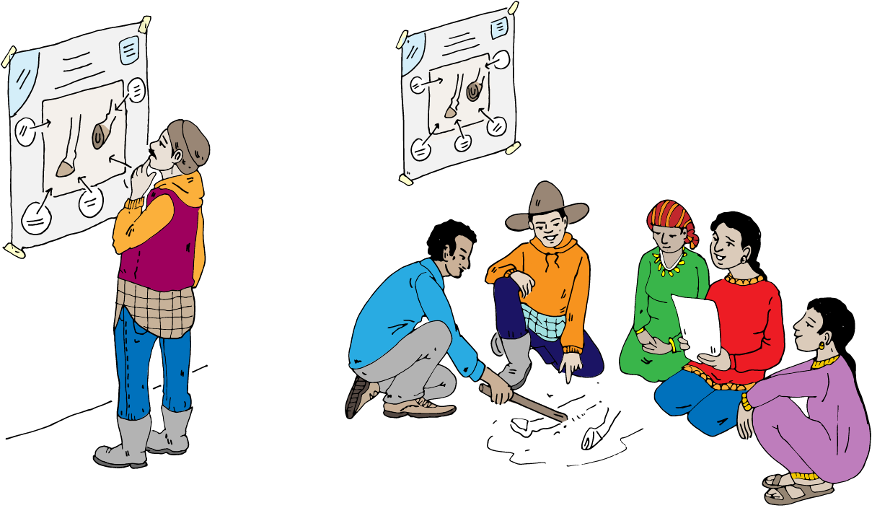
Figure 53: Understanding approaches that work best – two-way communication on the right in the picture is much more engaging and effective than the one-way communication pictured on the left in the image.

Figure 53: Understanding approaches that work best – two-way communication on the right in the picture is much more engaging and effective than the one-way communication pictured on the left in the image.

Whenever feasible, consider methods and tools that meaningfully involve people (e.g. through experiential learning, participatory approaches, using Motivational Interviewing principles, and values-based communication). For example, a cat population control national outreach campaign in the UK seeking to increase cat neutering rates effectively used values-based communication to frame their messages to reflect the human characteristics and behaviours owners often attribute to their cats to help appeal to people about the well-being of the cat.

The following section provide an overview of commonly used communication channels and outreach methods for consideration when designing your outreach activities.

Channels of Communication for Community Outreach

Channels of communication refers to the platform or technology through which messages are delivered (e.g. what, or where). You should have identified during your audience insight assessment the most relevant channels of preferred by your target audience(s) including understanding how they prefer to receive messages, what routes of information distribution they trust and the most effective format. If this has not yet been identified, discuss this with representative members of your target community and observe when and where they get different kinds of information that is useful to them:

Examples of communication channels include:

  • Interpersonal channels: one-on-one contact, opinion formers/influencers/thought leaders who support delivery of messages and act/model desired changes
  • Modern media channels: radio, TV, internet such as social media
  • Traditional media: story-telling and traditional cultural performances
  • Community-oriented - using existing social networks
  • Special occasions: In some countries animals are used during special occasions, such as religious pilgrimages, festivals, and weddings in India. These may provide an opportunity to set up animal welfare camps or events together with a local organization or institution.
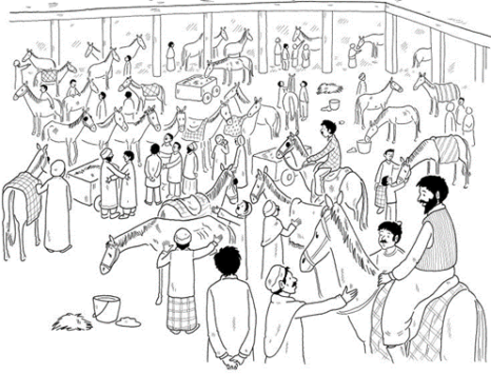
  • Exhibitions, fairs, and field days: These could be fairs attended by animal owning communities or where animals are traded, or annual exhibitions organized by the local authority on trade and agriculture. Exhibitions and fairs can be used as a platform for sensitizing animal owners and users, traders, government and wider society to welfare themes and good practices.
Figure 54:  Community Animal Market

Figure 54: Community Animal Market

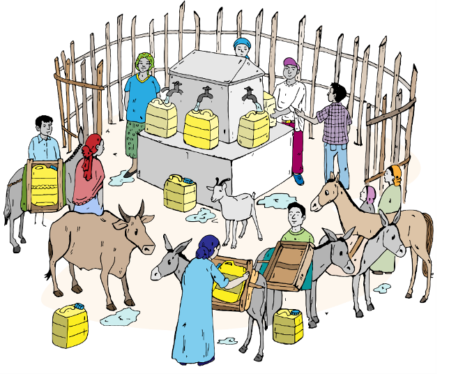
Figure 55: Watering points as social/animal congregation hotspots

Figure 55: Watering points as social/animal congregation hotspots

  • Congregation or social gathering points: such as marketplaces, washing areas, feed stores and water points. It should be noted that it can be quite challenging at times to work with animal owners and users at congregation points during their working day or social gathering places if they have little time and opportunity to be actively engaged. In such circumstances, the desired outcomes of engagement need to be carefully considered to determine the most appropriate method of communication for such places. In addition, you should assess whether this channel of communication and identified methods of communication are appropriate to the situation and best suited to the achievement of desired outcomes.
  • Awareness campaigns: Awareness or communication campaigns are one of the most important channels for delivering messages to large target audiences. However, the messages selected, mode of transmission, media of transmission and timing consideration are determining factors. Linking campaigns with other appropriate events can be even more effective in enabling them to achieve their intended aims.

Community Outreach Methods

Outreach methods refers to the strategies or activities through which messages are delivered (e.g. how messages are communicated). There are many methods of communication that you could use to deliver your outreach messages. Consult individuals from representative demographics within your target audience to aid in selecting the best method. Wherever possible, involve them in creation of the media and messages as well (see section 2.2.1. for more information on developing messaging). Examples of commonly used outreach methods are provided below, with more detailed guidance on the variety of different communication methods provided in the Recommended Readings and External Resources section of this approach.

  1. Using Key Influencers as Messengers: Engaging influencers, who people respect and can relate to, as agents of change and key messengers is always helpful as this can give voice to lived experiences of people to better highlight why the desired behaviour change is needed and how that change has helped them.
  2. Contests and competition: These can be very effective for engaging animal owners and users, whether they are children, youth, or adults. The key to effectiveness is people’s full participation in deciding the criteria for winning and then selecting the best-kept or happiest animal. Competitions can be organized within a village or between villages.
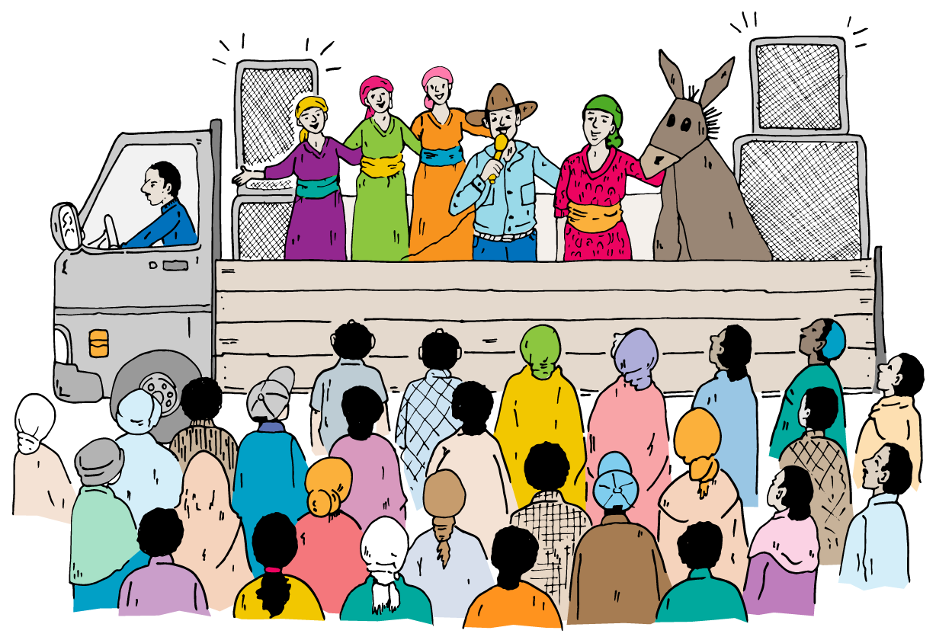
  3. Community mobile shows: This group of effective methods includes talking, storytelling, song, dance, theatre, and puppet shows. There are many ways of using these to create awareness about animal welfare, either by involving animals directly in the drama or by using the drama to enact and stimulate discussion on a local animal welfare issue. Community drama enables animal owners, users, carers, and other stakeholders to participate by outlining their fears, needs and aspirations about their animals. See external resources for more details.
Figure 56: Mobile Community Theatre

Figure 56: Mobile Community Theatre

  1. Recorded songs or stories are often very popular and can be played using low cost, low-tech communication systems such as car batteries or a generator. During meetings, public gatherings, fairs, and exhibitions, recorded materials can be used as part of interactive discussions in large forums. These recorded programmes can focus on specific animal management practices or cover more general welfare themes. Material can be recorded with the help of professional teams, or by the community itself. An example of community-generated recording is the use of Participatory Videography, (see the further reading and reference list for a good manual on participatory video).
  2. Radio Programming: Organizing interactive radio programmes is good and this can also be supplemented with radio listeners groups if this SOC approach is being used to complement CD approach. Moreover, enabling the journalists to invite experts in the studio for an interactive segment might be good. Another element is to facilitate working to visit by journalists or radio program drama writers to different areas to enhance the program is grounded on people’s reality and by enabling them to interview different people’s experiences or challenges or more particularly those who can be described as models or early adopters of the desired behaviour will give colour to the radio program and enhances audience’s engagement. However, it is important to note that journalist may not have an animal welfare background and they might need an initial training as well as support in the crafting of messages and program sequencing. Another element to consider is the value for money of radio programmes in terms of prime-time vs budget required; and the social responsibility of media houses behind this to ensure appropriate messaging by the radio station. (At least they need to have a do no harm in their other programs) to ensure they are credible source of information.
  3. Posters, murals, leaflets, and newsletters: Posters should be used for brief animal welfare messages and work best if the message is visual. Leaflets may be used to communicate more technical information. Make sure that you know the literacy level of your target group when making leaflets. Community members in some communities may not be literate so written leaflets may not be best for them, although they could be very effective in promoting good welfare to agricultural outreach staff.
  4. Murals or billboards highlighting various issues have often been used by advertising agencies to pass messages to people from all walks of life. They normally integrate visuals to help imprint on people’s minds. They should have relatively simple, catchy, and appealing visuals, conveying a particular theme and message, and be strategically placed in high use areas such as near main roads, churches, schools, watering points and at market centres.
  5. Newsletters can be useful for literate audiences and are used for a variety of reasons including:

    Sharing success and learning between animal-owning groups within a district, inspiring and developing an element of competition and pride between these groups by:
    • providing evidence and stories of success,
    • providing public recognition of success which increases the self-esteem of group members,
    • providing technical information and promote indigenous technical knowledge.
  1. Involvement of Schools: Schools can be the broadest channel for disseminating knowledge and helping communities to develop healthy attitudes and practices. Teachers are in regular contact with school children and their parents. They are also influential and respected members of their communities. With guidance from their teachers, school children can also become welfare messengers within their own families and communities, for example, establishing animal welfare clubs through schools can raise student awareness on animal welfare issues so that children serve as change agents influencing their parents. To attain these objectives, first and foremost engaging directors and teachers is important and through them bringing attitudinal changes of students is possible. The following considerations and tasks are important in the process of engaging with schools.

    These include (but not limited to):
    • Identifying schools used by the target community.
    • Train school club members, provide additional coaching support to school clubs and more particularly to girls and/or children from vulnerable/marginalized animal owning families.
    • Select candidate schools for disseminating animal welfare messages by setting criteria (such as student population, availability of equipment for message dissemination, animal population in the school surrounding communities, willingness of the school administrators to work on animal welfare issues).
    • Allowing for and agreeing on sufficient time, locations, and staff members to take part in initial engagement and training on animal welfare messaging to be disseminated.
    • Understanding potential safeguarding needs of students and ensuring measures are put in place to mitigate safeguarding issues.
    • Inviting selected school community for sessions to provide engagement and training on animal welfare messaging to be disseminated.
    • Conducting the engagement and facilitating discussions on animal welfare issues.
    • Assessing the capacity of each school to undertake animal welfare promotion activities and identifying the supporting resources needed to implement it and potential sources for obtaining them.
    • Preparing small action plans and signing memorandum of understanding. The plans may include (but not limited to): animal welfare club establishment, preparing animal welfare messages by talented students, disseminating the messages both inside and external to the school environment, preparing follow up and monitoring mechanisms.
    • Designing joint follow up and reviewing mechanisms and reporting modalities.

Depending on the project’s aims, target audience, channels of communication, and outreach methods, you might wish to consider use of the following participatory tools as part of your outreach activities:

Animal Welfare Snakes and Ladders Game (T16)
‘If I were an animal’ (T17)
Thriving not surviving (T18)
Animal Feeling Analysis (T19)
Story Telling (T24 a, b, c)
Animal Welfare Conversation Tool (T32)

To help ensure the effectiveness of your activities, consider referring to the SOC approach’s recommended readings and external resources section related to your chosen communication channels and methods for additional guidance before developing or implementing your outreach activities and communication materials.

2.1.4 Develop monitoring plan    

Now that you have developed your outreach strategy, you must determine how best to assess its success by developing a monitoring plan that includes indicators of success, sampling parameters including size and representation of different demographics, monitoring methods and related data collection tools, as well as frequency of monitoring. It is helpful to design your monitoring framework and indicators in a participatory manner with the some of the target audience and any other users of the information as they can provide useful feedback to help inform and adapt your monitoring plan and generate support for your outreach or campaign by the relevant stakeholders.

As sometimes behaviour change is a dynamic journey that faces backlash, resistance, and relapse; it is best practice to devise a group or supporting organization that can easily monitor such subtle changes frequently (e.g. monthly) to ensure ease of recall; capturing this may not necessarily be in a written report but captions, photos, video, and so on. Photos are a great way to facilitate participatory monitoring and generate content for outreach materials/discussions/viewing on digital or video platforms.

Identify Indicators of Success

The first step in developing your monitoring plan is to identify indicators of success now that you have identified what your outreach activities aim to achieve. Indicators may be quantitative or qualitative but need to be measurable which you can ensure by designing them so that they are SMART – specific, measurable, achievable, realistic, and time-bound.

What indicators enable you to assess the success of your SOC project? Think about driving a car – you don’t have to know what each part of the engine is doing; you just need to know the key elements that mean the car is working. The dashboard, therefore, doesn’t include 100 or more different measures of how the engine is performing, it just gives you an indication of the key things – fuel, oil, etc. and a big red light usually comes on if you really need to stop! This is like the approach to measuring progress of our outreach work. You cannot monitor every single element but must focus on monitoring what you expect will change because of your outreach project. Above all keep things simple and develop a small number of indicators to capture changes. Ensure indicators you select can support disaggregated analysis of results by target audience demographics relevant to your project (e.g. men, women, marginalized groups, urban/rural etc.). This will enable you to assess how successful the project was in equitably reaching different demographics and help identify when you may need to adapt your strategy to better reach some groups.

When thinking about what to assess, consider the following:

  1. Impact Indicators: indicators allow you to assess progress towards higher level goals. Impact level indicators may be focused on how animal welfare has improved because of the project by assessing the following:
    • Indicators of animal welfare that reflect what you would expect to improve due to the project e.g. number of, or severity of wounds, disease prevalence or severity.
  2. Outcome Indicators: outcome indicators should enable determination of the extent to which project activities achieved their stated aims. This will include indicators of behaviour change for SOC projects designed with an aim of changing behaviour. Cognitive variables such as attitude and knowledge change among individuals and in wider society are also commonly used indicators for assessing outreach and awareness raising campaigns’ success. Outcome indicators are also often related to the identified barriers to behaviour change which the project is seeking to address. Consider assessing changes in perceptions (attitudes) or awareness, ability (e.g. knowledge, skills), availability of/access to information/communications/support e.g. “XX% of women animal owners who know where to seek quality animal health services” (refer to Behaviour Change Planning Table step 4) [20].
  3. Output Indicators: indicators related to output should enable assessment of how well the project activities were implemented, as opposed to measure the resultant changes that emerge because of activities.
    • Refer to project activities you listed in the Behaviour change planning table (step 4) and develop indicators for each activity. For example:
      • Total number of male/female animal owning community members attending educational event.
      • Total number radio programmes delivered
      • Total number of educational posters or murals displayed publicly
      • Amount of traffic increase on a website after outreach

When behaviour change is the aim of your project, it is also helpful to assess the following in addition to behavioural indicators outlined above [20]:

  • Why people practice the promoted behaviours? - such findings provide extremely useful lessons for further promotion of these behaviours
  • Why do people not practice the promoted behaviours? - such findings are crucial for understanding factors which may be undermining success of your project, and help you re-evaluate and/or adapt your strategy.

Once identified, update the Behaviour Change Planning Table with selected indicators (see step 6).

Figure 57: Identifying Project Monitoring Indicators

Figure 57: Identifying Project Monitoring Indicators

Identify Monitoring Methods and Tools

Once you have identified monitoring indicators you can then select the data collection method of data collection (e.g. KIIs, FGDs, Surveys, secondary sources of data, photos etc.) and develop appropriate data collection tools as needed, as well as define your sampling parameters. Consider the following when determining the methods and tools to measure success:

  • Think about where you may be able to rely on existing data sources or use participatory monitoring methods e.g. website traffic; radio broadcast demographics/reach; records of treatments or observations of animal health service providers,
  • Feedback from members of the target audience can be used for monitoring and evaluation purposes. Consider establishing feedback mechanisms or proactively reaching out to different demographics within your target audience or engaging a small group of proactive engaged target audience for their opinions and suggestions about the content and value of communications, and effectiveness of the project and whether it has affected their animal care and management practices.
  • If considering self-reporting methods for capturing attitudes and attitudinal change (i.e. members of the target audience report on change), responses may be distorted by the respondents’ wish to give socially acceptable or desirable answers. To overcome this, you can triangulate data by obtaining information from 2 or 3 sources and use observation to give a broad perspective of the effectiveness of the programme.
  • Ensure whatever monitoring methods and tools you select will enable you to collect data from/about relevant demographics within the target audience so you can assess the extent to which your outreach activities have equally reached and been effective proportionately across demographics. This is particularly important to assess to ensure your project has effectively understood and tailored its approach to address the different realities of target group demographics, and not further contributed to the marginalization of particularly vulnerable
  • SOC projects often aim to reach large numbers of people often indirectly, so it is important to strike a balance between sufficient sample size to evaluate project success, ensuring inclusion of relevant representative demographics within the target audience (e.g. men, women, marginalized groups), and not overburdening the project. Think about how data will be used and by whom and aim to sample sufficiently to suite your purposes. For example, the understanding needed by your project requires a differently level of data reliability and certainty than would publishing results in a scientific paper.
  • Applying a mix of quantitative and qualitative methods of data collection gives a more in depth understanding for evaluating project success.
Figure 58: Examples of Triangulating Data Sources to Assess Project Success

Figure 58: Examples of Triangulating Data Sources to Assess Project Success

Determine Monitoring Timelines and Responsibilities

Once you have identified your monitoring methods and tools, decide how often you are going to collect data on the different indicators, who is responsible for collecting and analysing it, and how will the results be shared, including both unexpected and undesirable outcomes.

Consider the following recommendations when deciding when to collect data [20]:

  1. At the project’s start: conduct a baseline survey of the projects’ selected impact and outcome indicators
  2. At the end of the project: conduct an end line assessment to measure the animal welfare indicators and percentage of priority group members who practice the promoted behaviours and compare this to the results of your baseline assessments. It is recommended the end line assessment also assess the main reasons why people (did not) adopt the promoted behaviours.
  3. 6 months- 2 years after the project: replicate the end line assessment of impact and outcome indicators to assess the extent to which changes have been sustained after the project.

Link to References Cited