Specific Topics: Outreach and Communications; Compassion/Empathy; Community Change Agents
2a. Promoting Effective Interpersonal Communication through Emotional Intelligence
The most important skills that can improve a community facilitator’s ability to be a catalyst for change and influence behaviour change are effective inter-personal communication skills, which are comprised by the skills people use to exchange information, feelings, and meaning through verbal and non-verbal messages.
Emotional intelligence (EI) is a foundational competency in effective inter-personal communication defined as the ability to recognize and manage our own feelings, and recognize and respond effectively to those of others [94]. Emotions are one of the aspects to lookout under automatic motivation as positive or negative feelings can either encourage or discourage a particular behaviour. Emotional intelligence can enable community facilitators to respond to challenging situations in ways which improve rather than hinder collaborations and better support communities’ in changing their behaviour.
EI is comprised of four competency domains related to understanding and managing one’s self (personal competencies), and relationships with others (social competencies) including: self-awareness, self-management, social awareness, and social skills. The figure below illustrates emotional intelligence in terms of these four competency domains, demonstrating how they influence each other and ultimately the community facilitators’ ability to be successful in their work [94, 95]. Emotional self-awareness is a precursor to the other three competencies, as the more we are aware of our feelings the easier they are to manage and in turn effectively interact with others.
RELATIONSHIP BETWEEN EMOTIONAL INTELLIGENCE COMPETENCIES AND THE WORK OF COMMUNITY FACILITATORS - Diagram adapted from [95, 94, 96]
2b. Transactional Analysis - Using Human Psychology to Improve Communications
Effective interpersonal communication and relations can be improved through an understanding of the concept of transactional analysis (TA) [97]. Transactional analysis is psychological model developed by Eric Berne to make sense of how people interact with one another (referred to as transactions) based on their feelings influencing their actions [98]. TA has proven a useful method for increasing emotional intelligence by helping one become aware of one’s emotions, exert greater self- control which are essential to ensuring the effectiveness of communication and associated positive interactions with others [98].
The key assumptions of TA are as follows [99, 98]:
People are OK: all people are good and worthy when they enter the world.
All people can think: every person has the capacity to think, and are therefore responsible for the decisions they make.
All people can change: as everyone is responsible for their decisions, change is possible and decisions need not be determined by one's past.
Key Influences on Inter-personal Communications
1. Ego States
TA defines the different “ways of being” or “personalities” people adopt in their interactions with others, and refers to these as ego states. Our interpersonal communications can be classified as falling into one of the three following ego states: the child ego state, the parent ego state, and the adult ego state [98]. Each of these ego states are comprised of consistent feelings and behaviours, and these activate (unconsciously) in our interactions. By enabling you to identify which ego state is activated when interacting with others, TA can help better manage your emotions and respond in ways which promote collaboration and improve your ability to influence behaviour change in others. The three ego states of parent, adult, and child are further described below [100]:
Parent Ego State: the parent ego state is rooted in the past, and contains the attitudes, feelings, and behaviours taught/learned fromour parents or other significant authority figures. It involves responding as one of our parents would have: saying what they would have said, feeling what they would have felt, behaving how they would have behaved. It can take one of two forms: 1) the critical parent (criticizing, censoring, punishing authority-based judgments or rules e.g. “You should”, “You must”), and 2) the nurturing parent (protective, loving, and encouraging). The parent state can negatively hinder our interactions when experienced as being judgemental, dominant, punishing, condescending, smothering, overprotective or stifling. Other examples which may indicate the unhelpful parent ego state is activated include: impatient body language, anger, judgemental comments, criticisms, providing unsolicited advice, ordering others, raised eyebrows, arms folded across chest, blaming others.
The concepts of ego states and life positions are discussed below as they are key influencers on our inter-personal communications.
Adult Ego State: the adult ego state is the only ego state rooted in the present and contains the attitudes, feelings and behaviours we have learned to help us interpret reality based on our rational, objective appraisals. A person behaving or interacting with their adult ego will properly seek information and use their reasoning skills to evaluate it before making decisions. Interacting from the adult ego state is always the ideal as it promotes clear, effective communication because responses are logical and appropriate to the situation or present, and this ego state is able to keep the parent and child ego state under control. A good way to know if your adult ego state is activated is to examine whether your questions/comments are fuelled by compassion and curiosity, or irritable emotions, the desire to blame, criticize, and/or prove a point. Other example indicators the adult ego state is activated may include: being/feeling relaxed/composed, calm, open, reasoned statements, unemotional, thoughtful, leaning in to listen/look, clear confident tone, taking responsibility, focused on facts not opinions, discussing alternatives or results, seeking information, evaluating pros-and-cons, questioning: “why?, how?, who?, what?, where?, how?”
Child Ego State: the child ego state is rooted in the past, and contains the attitudes, feelings, and behaviours we feltin our childhood related to avoiding perceived painful experiences or pursuing pleasurable experiences. It involves responding instinctually in the present as we would have as a child seeking to meet its basic needs: saying what we would have said, feeling what we would have felt, and behaving how we would have behaved as a child. The child ego can present in one of two forms: 1) the adapted/rebellious child (defiant, complaining, compliant, and/or passive). 2) free child (curious, creative, spontaneous, affectionate and fun-loving). The child ego state may negatively hinder interactions when anger or despair dominates an individuals’ reasoning. Other indicators the unhelpful child ego state is activated may include: feeling/being resistant, defensive, uncompromising, withdrawn, disengaged, helpless, dejected, sullen, manipulative, subservient, obstructive, destructive, wanting one’s own way, feeling like a victim/persecuted, shoulder shrugging, irritable, monotone, fidgeting.
In TA, interactions are referred to as complementary when the ego states of the interacting parties are the same/sympathetic to one another (e.g. child-child, adult-adult, parent-parent). This means there is alignment between what an individual says and expects to receive as a response, and what they actually receive as a response, and results in more clear and effective communication [100]. Alternatively, when transactions occur between individuals communicating with each other from different ego states (e.g. parent-child, adult-parent etc.) they are referred to as crossed transactions, which can lead to breakdowns in communication, misunderstanding, and associated conflict.
Examples 1 (top) and 2 (middle)
Examples 3 (left) and 4 (right)
Examples of complementary transactions:
Parent-Parent (See Example 1): “What a terrible meeting!” - “One of the worst I’ve been to!”
Adult-Adult (See Example 2): “I noticed you weren’t able to take action since we last spoke, can we talk about what’s been going on for you?” - “You’re right, I’ve been really busy with illness in the family, however plan to take action now that things have calmed down”
Child-Child “I’m not going to try these recommendations as the people who made them don’t even understand our lives!” - “Yeah, I’m not going to bother trying any of them either.”
Examples of crossed transactions:
Parent-Child (See Example 3): “You should be careful or your animal won’t be able to continuing to earn money for you” - “What do you care?”
Adult-Child (See Example 4): “We haven’t spoken for a while and I’d be interested to hear your experiences trialling the solutions we discussed when we last met.” - “I feel like giving up as nothing is working!”
Adult-Parent: “I noticed you attended the training, what were key learnings for you?” - “They should have provided that training ages ago when we really needed it!”
The goal of TA is to have all parties involved converse in the idealized state of adult-adult because these are the only interactions informed by rational appraisals of reality in the present (vs feelings or learnings from the past), and thus result in clear and effective communication, decision making, and problem solving. However, as we go about our daily lives, we move from one ego state to another in reaction to different interactions without any thought, and our (perceived) ego state can also elicit different ego states in others that can either help or hinder communications and relations. Operating in the idealized adult-adult state can therefore be challenging, particularly when we are faced with emotionally difficult situations or interactions with people who have not yet developed an ability to manage their emotions and behaviours.
The following example illustrates how ego states inform the nature of our transactions:
When a community member feels like their needs are not being met e.g. does not feel understood, or like they are being judged by the community facilitator, their “child” ego state of mind may intervene to influence their interaction causing them act uncooperatively in defiance. This child ego state response may in turn arouse frustration in the facilitator, arousing an annoyed “parent” ego state response which can further break down relations as a sense of disdain takes over their interactions. This example illustrates how the parent and child ego states interact to create crossed transactions and undesirable outcomes. However with an understanding of TA, the community facilitator can identify ego states activated in themselves and others, and manage their emotions to effectively communicate from their adult ego state without undermining relations with community members that can hinder desired behaviour change and animal welfare improvements.
2. Life Positions
In addition to the ego states that define our personality state in any given moment, TA also defines “life positions” which are the basic beliefs about ourselves and others which act as the frame of reference through which we experience our interactions with others [101]. These beliefs refer to our sense of feeling “OK or “not-OK” about ourselves and those we’re interacting with, and ultimately influence the nature of our social interactions. In this context, being “OK” refers the innate value, goodness, worth, and equal right to live and meet needs we perceive ourselves and other parties in the interaction to have. The TA model assumes that everyone is born viewing themselves and others as “OK”; however it also recognizes our childhood experiences shape can change our perception of ourselves and/or others as “not OK”. Life positions therefore may change and adapt throughout life as we learn in develop, and can also be influenced by our/others’ states of being (ego states). As we interact with others, we take one of four life positions, which in turn result in one of four specific social interaction reactions or outcomes as illustrated in the below matrix and described further below [102, 99, 103, 101]:
Life Positions and their Influence on Social Interaction Outcomes adapted from Franklin Ernst’s OK Corral
I am not OK with me (-) (e.g. I don’t feel good/worthy/equal)
You’re OK with me (+) (e.g. I feel you are good/worthy/equal)
I am OK with Me (+) (e.g. I feel good/worthy/equal)
Helpless/One Down Position I’m not OK, You’re OK
Interaction Outcome: I get away from you
Healthy Position I’m OK, You’re OK
Interaction Outcome: I get on with you
Hopeless Position I’m not OK, You’re not OK
Interaction Outcome: I get nowhere with you
Better than You/One Up Position I’m OK, You’re not OK
Interaction Outcome: I get rid of you
You are not OK with me (-) (e.g. I don’t feel you are good/worthy/equal)
Healthy Position = I am OK, you are OK
This is the healthiest position, with people occupying this position holding the belief they and anyone else in the interaction are innately worthy and valuable. This position is grounded in the belief in one’s own abilities, and is characterized by mutual respect and seeing the best in the other person, thereby allowing parties to find a constructive approach to issues. This healthy position is expressed in the adult ego state, and results in the individual wanting to continue interacting with the other party (I get on with you).To adopt this way of thinking requires self-awareness and the ability to manage one’s emotions (automatic motivation). In addition, this position benefits from having positive beliefs about self (reflective motivation) e.g. confidence, self-esteem, self-efficacy, perceived competencies, sense of empowerment, and behavioural control. It also requires feeling one’s role and identity are valuable, even in the face of factors which may render one disadvantaged or marginalized. As such, this position may be a challenge for community members to adopt, particularly if they are marginalized and lack this self-belief. However, by communicating from this position using the adult ego state, community facilitators can demonstrate their belief in community members’ worth and value, which can contribute to improving community members’ own belief in their ability to make desired changes.
Better than you/One Up Position = I am OK, you are not OK
In this position the individual is at an advantage or feels superior or right (“I’m OK”) and projects anger, disgust, or disdain onto the person with whom they are interacting who they perceive to be wrong, inferior, or a scapegoat (“You’re not OK”). As a result of this projection of anger, blame, and/or criticism, the other party may get angry in response. This position can be expressed in the critical parent or rebellious child ego state, and results in an individual blaming or feeling hostile towards the other party (I get rid of you). When community facilitators operate from this position they can undermine community members’ self-efficacy when they don’t seek to understand community members’ lived experiences or recognize them as experts in their own lives and instead act as the expert or limit their meaningful participation, which can give the impression they don’t believe community members are capable of change or finding solutions to their own issues.
Helpless/One Down Position = I am not OK, you are OK
In this position, the individual feels disadvantaged, helpless and disempowered in comparison with others they are interacting with and may experience themselves as victims. This position is often expressed in the rebellious child ego, and creates a sense of wanting to withdraw from others in the interaction (e.g. I get away from you) due to not feeling as worthy as others in the interaction, often as a result of existing limiting self-beliefs (e.g. individuals who are marginalized or discriminated against may not believe they have anything valuable to contribute, or believe in their capability to affect change).
Hopeless Position = I am not OK, you are not OK
In this position, the individual perceives themselves and the other party as not good, worthy, or having equal rights. It is essentially a hopeless and frustrating situation where effective communication is very difficult. This position if often expressed in the rebellious child ego, and results in the individual feeling that their interactions with the other party are futile (I get nowhere with you). For example, individuals who have experienced discrimination may have developed limiting self beliefs as well as a lack of trust in others/social systems, which cause them to feel hopeless about working with others or trying to affect change.
In the previous example where the community member interacts from a child ego state and community facilitator from their parent ego-state, the community member perceived the interaction from a hopeless life position as they don’t feel “OK” about themselves or the community facilitator, which results in their child ego state influencing the community facilitator’s to perceive the interaction and respond from a Better than you/One up life position. As this example shows, it is important to understand how your ego state and life positions may be triggered when faced with emotional situations and interactions with community members, as well be aware their ego states, so you can manage your feelings, thoughts, and actions and respond in ways that not to hinder your influence and ability to collaborate. Additional examples of how TA can aid your role as a community facilitator include:
It is important for community facilitators to understand that different communities and social groups may respond or behave differently as a result of their unique social and cultural experiences and learnings influencing their ways of being (ego states) and relating (life positions). TA can help you understand, appreciate and accept this diversity amongst community members, and help reduce unconscious bias from hindering your efforts to promote inclusivity, diversity and equality, and achievement of desired behaviour change outcomes [104].
When one is exposed to situations where the welfare of animals or people is compromised, community facilitators can experience negative feelings such as anger and hostility which can be challenging to manage (e.g. child or parent ego state). When these negative emotions influence community facilitator’s perceptions of, or are directed towards community members, the ability be an effective community servant can be compromised as rapport and trust break down [104]. Being aware of how and when your ego state and life position influence your interactions in these situations can enable you to regain control of your feelings, thoughts and actions so you can respond appropriately from your adult ego state.
How to Apply Transactional Analysis in Practice
Two models which help to understand how our roles in social interaction, which are influenced by our ego states and life positions, can produce ineffective and effective communication are referred to as the Drama Triangle and Winner’s Triangle which are illustrated in the figures below.
The Drama Triangle is a model which describes conflicted or drama intense relationship transactions [105]. The drama triangle defines the three unconscious roles people take on (and can switch between) in stressful, emotional, or high conflict situations. When two people enter an interaction in one of the three roles on the drama triangle, their interactions will be characterized by drama, stress, conflict, or rescuing people from their responsibilities to solution problems for themselves. These interactions are unhelpful, and interfere with problem solving and effective communication. The three roles of the drama triangle which are further described below are Victim, Persecutor, and Rescuer; and people are likely to have a preference for playing one of these roles.
VictimRole: people who play this role feel oppressed, hopeless, and helpless. They may complain of unmet needs, and be unable to make decisions, solve problems, take pleasure in life, or achieve insight. The payoff for individuals who take this role is that they can avoid dealing with things that are unpleasant or difficult. The problem with the victim role is that individuals discount themselves, and typically seek out a persecutor and a rescuer who they think will save them but who in fact just disempowers them by perpetuating the victim’s negative feelings and/or creating dependency e.g. nothing is my fault, I’m not capable, poor me. The victim role is aligned with the hopeless (I am not OK, You are Not OK) or helpless/one down life positions (I am not OK, you are OK). Characteristics commonly associated with the victim role include: complaining, being helpless, withdrawing, catastrophizing, pretending to be incompetent.
RescuerRole: people who play this role tend to be enablers, will feel guilty if they don’t come to rescue, can be over-helpful, self-sacrificing. The payoff of this role is to be needed, wanted or liked. The problem with the rescuer role is that rescuing discounts others’ ability to think for themselves, keeps those in the victim role dependent, and gives the victim permission to fail e.g. you need me, let me help. The rescuer role is very prevalent amongst helping and caring professions, and is aligned with better than you/one up position (I am OK, you are not OK). Characteristics commonly associated with the rescuer role include: fixing, telling, giving solutions, taking over, martyrdom.
Persecutor Role: people who play this role tend to blame, criticise, and can be oppressive, controlling, rigid, authoritative, angry, and unpleasant. The payoff for persecutors is that they get what they want. However the issue with this role is that they tend to discount others’ value and integrity, don’t enable others to show their full potential, and keep the victim feeling oppressed by their demanding and inflexible behaviour. Persecutors will seek to control and criticize while failing to solve any problems or help anyone else solve the problem e.g. its all your fault, you got it wrong, and people tend to want to get away from them whenever they can. The persecutor role is aligned with the better than you/one up life position (I am OK, you are not OK). Characteristics commonly associated with the persecutor role include: criticizing, blaming, labelling, putting others down, feeling inadequate.
While the Drama triangle describes the above roles in their most extreme form, we often encounter milder versions of these roles in our work and personal lives. When people are caught up in a drama triangle, they will switch roles, and a rescuer may become a victim or a victim may become a rescuer, and these roles can change as the dynamics of the interactions change and develop.
As an alternative to the problematic drama triangle, the winner’s triangle was developed as a model for more productive social interactions that lead to a win-win situation for everyone involved [106].The roles within the winner’s triangle reflect the positive aspects of the three drama triangle roles and include: Assertive (vs. persecutor), Caring (vs. rescuer), and Vulnerable (vs. victim), which are further defined below [106, 107]:
Vulnerable Role: people who play this role may be suffering however express their real feelings, accept themselves, use their thinking and problem solving, and take action to care for themselves.
Caring Role: people who play this role have genuine concern for people which they demonstrate by: giving help when asked, trusting the other person has their own answers, accepting and encouraging others’ to think for themselves, actively listening (without trying to solve the problem), having clear boundaries, doing their share, and not doing things they don’t want to do (unless absolutely necessary). They are caring, understanding, and don’t need to be needed by others.
Assertive Role: people who play this role are aware of their own feelings, needs and wants, and act in their own best interests by: asking for what they want, saying no to what they don’t want, being flexible in order to get their own needs met, and don’t punish or others feel wrong. They often use “I” statements (vs. you statements), are non-judgemental, and accept others’ value and integrity.
The drama triangle can be transformed into the winner’s triangle through development of one’ self-awareness, managing one’s emotions, and communicate effectively [107]. Once we understand these drama patterns and become aware we are no longer operating in the adult ego state, we can break free and choose to step off the drama triangle and consciously seek to operate from our adult ego state.
As facilitators of behaviour change, it is therefore helpful to understand which role you tend to play on the Drama triangle. For example, as a community facilitator you may have a tendency to step on to the drama triangle in the role of rescuer, or potentially persecutor, and perceive community members as the victim who either are to blame for the welfare issues of their animals or who need your help to address observed welfare issues. Or you may perceive other community members or stakeholders within the role of persecutor, for example the animal health service provider who provides poor treatment and puts animals at risk may be perceived as the persecutor. These roles may then change if after your initial interactions, you find community members are not following your advice on how to improve animal welfare and are instead following the advice of the poorly trained animal health service provider. In this example, you may find yourself moving from rescuer to persecutor and start feeling negative feelings towards the animal owner. These feelings and associated responses and interactions are unhelpful to problem solving and achievement of the goal for improved animal welfare. Alternatively, if you perceived the animal health service provider in the role of persecutor, this would be similarly unhelpful to promoting a collaborative approach to addressing animal welfare issues.
When our professional interactions don’t seem authentic, or when we find ourselves confused or frustrated by conversations with others, we probably we have entered into one of the roles on the drama triangle. So how can you become free of all that could be holding you back so you can relate to people with congruence and authentic influence?
Use the following steps when interacting with community members to support effective inter-personal communication to promote collaboration and improve your ability to influence behaviour change:
Notice how you feel: the first thing to do when you feel a sense of confusion, irritation frustration, or helplessness is simply to notice this is actually happening. Ask yourself the following questions to improve your self-awareness:
Are we frustrated, confused, irritated, do we feel it's somebody else's fault?
Does that mean that we might be operating from a parent or child role?
Are we feeling “not ok” about ourselves or the other person?
Do we feel as if we're in our adult ego state?
Are we experiencing crossed transactions (where either our and/or another person’s non-adult ego state is operating).
Think about what might be happening for you, and also for the other person?
Listen - in order to communicate effectively we first need to listen (for additional guidance re to section on active listening below)
Move to your adult ego state
Soothe the child or parent ego state (yours or the other’s)
Enabling someone to move to their adult ego state so they can communicate from their best self is easily done by giving a few meaningful and positive comments e.g. empathetic responses or positive affirmations (for additional guidance refer to sections on empathy and active listening below). For example, you can say “That must be difficult for you”, “I understand how stressful that is for you”, “I know its frustrating when things don’t go as you believe they should” which helps the person then move back to their adult ego state so you can interact in a congruent adult-adult ego state.
Feel/show: it is important to authentically feel, and to show qualities of respect, vulnerability, authenticity, and empathy.
By understanding TA and being aware of the different ego states, you can learn not to respond based on unhelpful ways of being (e.g. from parent or child ego states, unhealthy life positions), and instead choose to respond consciously to improve communication, collaboration, and your ability to influence human behaviour change. TA therefore lends itself to strengthening emotional intelligence and inter-personal communication in the following ways:
Improves self-awareness through enabling identification and understanding of our/others’ emotional state and how this is influenced by/influences inter-personal interactions
Enables self-management as we can learn to keep our emotions under control once we are aware of them, thereby enabling us to choose to react consciously and in ways which are congruent with our values and objectives even in the face of challenges
Improves social awareness by enabling us to understand how others are feeling and why they reacting as they are,
Increases social skills by enabling us to respond effectively and with empathy, based on an understanding of our self and others, which also helps mitigate potential for conflict and break downs in interpersonal relations.
2c. Key Communication Skills
Empathy: Understanding Others’ Perspective
Empathy is a foundational skill which underpins emotional intelligence. The ability to communicate (send and receive messages) and lead by understanding others' thoughts, views, and feelings (being empathetic) is one of the most important means through which community facilitators enhance the quality of their interactions with community members to influence transformation and change.
Definition of Empathy: empathy is the ability to see things from another person’s point of view or from their frame of reference and feel what they feel. It involves understanding, being aware of, being sensitive to, and vicariously experiencing the feelings, thoughts, and experience of another person without making judgements [108]. In terms of communication, being empathetic involves communicating your sense of the other person’s experiences and feelings from your understanding of their perspective.
Benefits of Being Empathetic
Empathy involves being able to understand what a person is feeling in a given moment and also why their behaviours or actions make sense to them and we can use these insights to appropriately frame our communications with others, build trust and strengthen our relationships, and ultimately be more effective leading and inspiring desired change. The benefits of empathy are further described below:
Rapport Building: when facilitators express understanding of community members’ experience and feelings, and community members in turn feel they are accurately understood, accepted, and feel secure, rapport is built which is critical to a facilitator’s ability to influence behaviour change.
Improved Understanding and Awareness: responding with empathy provides community facilitators the opportunity to better organize and reflect back the meaning of the information community members are processing and communicating. This enables the facilitator to:
Demonstrate and check their own understanding of community members’ experiences and feelings, and
Evoke community members’ own reflections to support them in identifying problematic behaviours and solutions for themselves, as opposed to telling them or providing personal opinions or judgements which can cause defensiveness and a break down in relations. This is helpful to facilitating community members’ to move through the stages of change.
Guidance on Being Empathetic
Factors Influencing Empathy: People tend to be more empathetic toward some people and less so toward others [108]. As acommunity facilitator, it important to understand some of the factors that may influence your empathy so you can mitigate them and ensure your empathy is consistent across people you interact with. Factors influencing empathy include [108]:
How you perceive the other person
How you attribute the other individual's behaviours
What you blame for the other person's predicament
Your past experiences and expectations
You can mitigate these factors’ potential negative influence and improve your ability to be empathetic through an understanding and application of transactional analysis, particularly in relation to its assumptions, ego states, and life positions. Furthermore, the following points provide suggestions for how to be empathetic with others [109]:
Actively listen: effective listening must be active, which requires listening attentively to a speaker, understanding what they're saying, responding and reflecting on what's being said (refer to section below for guidance on active listening). It can also be demonstrated by providing appropriate feedback through body language e.g. nodding, smiling to encourage them continue, leaning forward, eye contact etc. Active listening encourages both the listener and speaker to remain actively engaged in the conversation.
Imagine yourself in the other person’s situation and accept their interpretation of it: By Imagining being in same situation as the person enables you to connect with their emotions and perspective and help ensure you don’t draw incorrect conclusions, comment and/or judge from your perspective without knowing the full details of what a person is experiencing e.g. “this is no big deal”, “you should try harder”, “you’re overreacting” etc. It is important to accept their interpretation of their experiences/situation without judging it, even if you do not agree and have a different interpretation.
Show care and concern: when someone tells you about their challenges or issues, show care and concern by asking how they are doing, if they would like your support, and/or let them know you are there to listen and support them in the ways you can/as appropriate.
Acknowledge the person’s feelings: it is important to validate people’s experiences and feelings as a means to build trust and rapport before working with them to address issues. Acknowledging means to recognize the importance of how they are feeling. Ensure you do no brush off or dismiss their feelings, avoid the topic, say something irrelevant, or attempt to move the conversation on before acknowledging and respecting how they feel.
Ask questions: ask people questionsto learn more about them and their lives and help encourage people to share more (refer to section below on open questions).
Don’t Rush the Conversation: a common mistake in community facilitation is trying to rush conversations to reach a certain end point or achieve a predetermined objective. When someone is sharing about their situation or issues, glossing over what they are feeling to rush towards the desired end point without acknowledging their feelings is invalidating and undermines the potential for collaboration. The more empathetic thing to do is connect with them based on their current emotional state by understanding their perspective and how they feel, and then seek to move them forward with questions. For example, a conversation like this may flow like this: “That sounds really frustrating” → “What happened that made it so difficult?” → “How are you feeling about it now?” → “What are your ideas about how to move forward?”. You can better build rapport by pacing the conversation and matching a person’s emotional state rather than trying to rush a conversation to a specific end point.
Don’t Judge: it is important to not to express judgement on an issue or person, nor form one before you understand the situation. Instead always give people the benefit of the doubt and understand they are doing the best they can and likely have their own justified reasons for their decisions, thoughts, and actions. It is also important to remember that all people have the ability to change and to uphold this belief regardless of their current actions.
Mirroring: mirroring is about connecting authentically with others by imitating their nonverbal signals as a means to build rapport e.g. their gestures, speech patterns, or attitude etc. The goal is not to copy someone’s mannerisms blindly but rather to adjust your behaviour to match their tone and vibe to create a sense of congruence with them.
Show emotional support: emotional support means giving people your trust, affirmation and encouragement (refer to section below on affirmations). Let them know that you will support them in whatever they choose to do and do not judge them. An example of a supportive statement is: “Knowing you, you always consider things very carefully. You know your situation best and I am supportive of whatever you choose to do.” Sometimes, what people are looking for is not answers or not solutions, but rather are looking for empathy and support.
In addition to the above, other things you can do to strengthen your empathy skills include [108]:
Work on listening to people without interrupting.
Pay attention to body language and other types of nonverbal communication.
Seek to learn more about how others feel to strengthen your connection with them.
Seek to identify your biases to understand and mitigate how they affect your perceptions of others.
Look for ways in which you are similar to others versus focusing on your differences.
Be willing to be vulnerable and open about how you feel.
Engage in new experiences to improve your understanding of how others in that situation may feel.
Examples of Responding with Empathy
Example Scenario: a community member expresses the following: “I’d like to meet my livestock’s welfare needs and am worried that I won’t be able to continue to rely them to earn a living if I don’t; but I don’t know what I can do given how busy I am and how limited my resources are. It’s overwhelming.”
Examples of empathetic responses:
“You rely on your animals and care about their wellbeing, and face challenges in meeting their needs which leaves you feeling very overwhelmed and not sure what to do.”
“It is understandable that you are worried about your animals and your livelihood which depends on them, and feel a sense of powerlessness.”
“There’s a looming uncertainty and risk if you don’t meet your animals’ welfare needs, and it feels like there’s a wall in front of you which prevents you from being able to take action to improve their welfare.”
“So, on the one hand, you want to take action and improve your animals’ welfare, but on the other, you worry you won’t be able to do anything even though you have the desire to.”
Applying Empathy to Improve Communications
When you are communicating it is important to adapt your communication to what will be most effective for the interaction from the perspective of the person you are engaging with. The following two step sequence outline how you can take the concept of empathy and apply it to your communication practices [110]:
Attribution: attribution is the act of gathering information concerning where your audience or recipient is and how they will best receive your message. You can do this by seeking to understand the perspective of the person receiving your communication and see the world from their eyes and understand how they feel. This will enable you to make some “attributions” about where they are, what they want, and how they may need something conveyed to them.
Accommodation: once you have taken into account the perspective of the person receiving your communication, you will then need to accommodate their perspective and feelings by adapting your behaviour and communication to their perspective. Adapting to a context and speaking empathically doesn’t mean you have to tell people whatever they want, but rather when you know where people are at, you can be more effective in compelling them into a different future. To help you adapt your communications to be empathetic, consider the following questions from the perspective of your audience [110]:
What communication do they need to hear (e.g. choosing the right words that make the most sense in the situation to fit their perspective)?
How do they need to hear it?
Where do they need to hear it?
What is the style they need to hear it in?
Why they are interested in hearing it in the first place?
Active Listening - open ended questions, affirmations, reflective listening, summarizing
The core skill associated with effective communication is active listening which includes: asking open questions, and providing affirmations, reflections and summaries. This can be remembered by the acronym OARS.
Listening is different to hearing what someone says. It is a very active process and can achieve the empathy, deep curiosity and exploration of someone’s perspective needed in the change process. This can also be vital to overcome any challenges regarding the interpersonal relationship between listener and speaker.
OPEN QUESTIONS
Open questions are questions that encourage more than a yes or no answer. They elicit understanding, encourage talking and facilitate abstract thinking skills.
The goal: use more open than closed questions.
Open Question Examples:
“How are you today?”
“What’s made you speak to me about this?”
“Can you tell me more about that?”
“Why do you want to make this change?”
Additional tips for framing open-ended questions to be authentic and situationally appropriate:
During initial discussions, ask questions which first seek to identify a person’s own understanding of situation/problem e.g. ask what they know about the issue. This will enable you to focus your discussion with them on areas where they may lack understanding or awareness.
Remain curious to learn and focus on evoking more change talk through open ended questions and reflections.
Keep in mind which stage of change a person is in at a given point in time, and tailor your questions depending on their stage of change/how they respond. For example you can tailor questions or elicit change talk in pre-contemplation, contemplation stage, or tailor questions to evoke ideas about how to plan/solutions in preparation stage. How to use open ended questions within the four facilitation processes for facilitating progress through the stages are described below:
Process of Engagement: use open ended questions when starting to build a foundational relationship to gain sense of what is important to community members and help build rapport
Process of Focusing: after rapport has been built, use open ended questions to begin identifying the priority issues community members are interested in to set a clear direction for working together moving forward.
Process of Evoking: use open ended questions here to elicit change talk change talk and draw out their own reasons and motivations for change.
Process of Planning: once community members are aware of the issue and have expressed a desire to change to behaviour, use open ended questions to ask about what they think they can do/what solutions they can implement to achieve desired change.
AFFIRMATIONS
Affirming means to actively listen for a client’s positive strengths, skills, values, efforts, accomplishments, aspirations and traits, and to reflect those to the client.
The goal: be in a mind-set of consciously ‘looking out for’ these positive qualities, and, if genuinely appreciated, to reflect them back to community members.
Affirmation Examples:
“You came up with a lot of great ideas to address your animal’s welfare needs. Great brainstorming today.”
“It’s important to you to be a good animal owner.”
“You are the kind of person who takes their responsibilities seriously, and want to do the right thing.”
“You’re investing a lot of effort and really trying to make this change.”
Additional tips on giving affirmations:
Affirmations should be framed in terms of “You” and never include the word “I”. This is because “I” reflects your opinion rather than affirms an innate quality or strength in the person e.g. “You clearly have through about this care a lot” vs. “I think you care a lot.”
Focus affirmations on reflecting a person’s efforts rather than their results as a means to encourage and motivate them and promote their self efficacy and confidence.
Avoid using words like good, bad, great etc. when making affirmations as they imply judgement. When such positive words are used they act more like praise rather than affirmations e.g. “It is good you are supporting your animals” (praise) vs. “Caring for your animals is important to you” (affirming).
Focus affirmations on positive aspects as a means to express empathy for what and why they want to change e.g. focusing on their strengths, efforts, who they are as a person/animal owner etc.
REFLECTIONS
Reflections are statements rather than questions, and are based on having listened to what someone said, and making a guess as to what they meant. Often a question statement can be turned into a reflection by removing the inflection at the end and any query words at the beginning. Reflections can be simple or complex. Try to use complex reflections at least half of the time.
The goal:
Remember that what we think a speaker means may not be correct, and that we must ‘hypothesis test’ our thoughts with reflections to ensure common purpose
Reflect more often than you ask questions.
Reflection Examples: Consider the statement: “If I was happier monitoring my animal’s welfare, I would do it”. Possible reflections include:
“You would like to be more confident in monitoring your animal’s welfare.”
“You feel unsure about whether you’re monitoring your animal’s welfare correctly.”
“Observing your animals’ welfare issues is upsetting for you.”
SUMMARIES
A summary is a special type of reflection that brings together content from two or more statements made by someone. They encourage us to listen very carefully to what a person says throughout a session, and, when offered, show a person that you remember and value what they say. They also give the person we are speaking with an opportunity to point out if we have missed something important in the discussion, so they can fill in the gaps.
The goal: listen attentively to a person’s thoughts and feelings throughout, ready to use a ‘basket of reflections’ to thoughtfully collect, link or transition client statements as needed. For example, you may wish to form a collecting summary to bring together all the reasons for change someone has offered in an interaction.
Summary Example:
“So one thing you hope will be different a year from now is that you will have some better buildings on the farm, that will help make your daily routine easier and be more positive for the cows. You’ve been finding it easier to keep on top of the shelter cleaning recently, and you’d like that to continue. You also said you’d like to learn a little more about nutritional feed composition. What else comes to mind when you think of where you’d like things to be a year from now?”
The table below provides a summary of general guidance for community facilitators to support working with community members to progress through the different stages of change. It includes definitions of each stage of change with examples in the context of animal welfare, along with the process for community facilitators to focus on when individuals are in each stage, as well as recommended tools and techniques helpful to harnessing people’s own motivations and rationales for change, and building their confidence and commitment to take action and sustain change.
Approaches for Working With Communities: Community Development Approach, Community Engagement Approach, Societal Outreach and Campaigns Approach
Behavioural Drivers (COM-B): Motivation
Stages of Change: Stages of Change, Pre-contemplation Stage, Contemplation Stage, Preparation Stage, Action Stage, Maintenance Stage
Project Support: Facilitator Resources, Training
Specific Topics: Outreach and Communication, Community Change Agents
Stage of Change
Processes for Change / What to Focus On
Recommended Tools / Techniques to Use in Each Stage of Change
Pre-contemplation:
Individuals do not recognize the need for change or are not actively considering change.
Consequences/cons of change are felt to outweigh the benefits/positives.
For example, a person doesn’t think it is a problem if they do not provide their animals with access to water to drink throughout the day.
• Build Rapport – show respect and empathy by recognizing individuals’ expertise in their own lives/situations, their intentions for acting informed by their expertise and lived experiences, support their autonomy in decision making rather imposing your expertise.
• Evoke individuals’ reasons for change by connecting behaviour change to the things the individual cares about.
• Elicit change talk/their rationales for change by bringing their attention to their rationales for change and minimize attention and discussion focused on exploring rationales for sustaining their current practices.
• Consciousness Raising: Support individuals to seek out new information to gain understanding and feedback about the problem behaviour to help improve their awareness of the problem (e.g. facts, leaflets). You may wish to consider undertaking a Societal Outreach and Campaigns Approach as a first step.
• Dramatic relief: Support individuals experience and express feelings about the problem behaviour and potential solutions, encourage self-evaluative process that enables individuals to assess/understand the negative impacts of the current behaviour and potential benefits of change.
• Environmental Re-evaluation: help raise doubt and increase the person’s perception of the risks and problems with their current behaviour e.g. guided discussions with others, testimonies, storytelling that promote learning and reflection about how their actions affect their animals/themselves/others.
If individuals continue not to recognize or accept there is a problem, focus on continuing to build rapport through active listening, asking open ended questions, using reflections and summaries about what they community and show empathy so they feel understood. Ensure they understand change is ultimately up to them and not being pushed on them. Consider asking to schedule a time when the discussion can be revisited, perhaps after they take time to reflect or seek out additional information.
Recommended Tools/Techniques:
Use OARS to elicit change talk, build rapport, show empathy, and:
• Open ended questions to invite individuals to tell their story in their own words, and provides an opportunity to learn more about what the person cares about e.g. their values and goals.
• Affirmations: Can take the form of compliments or statements of appreciation and understanding that recognize a person’s strengths and acknowledge behaviours / qualities / characteristics that encourage the direction of desired positive change, helps build rapport and their confidence in their ability to change.
• Reflective listening: Involves rephrasing a statement to capture the implicit meaning and feeling of a person’s statement, encourages and helps people understand their motivations more, and helps amplify or reinforce individuals desire for change.
• Summarize what you have heard individuals, highlighting in particular any recognition of the problem, their concerns about the issue, their intent to change, or their optimism about their ability or outcome of making change.
Provide Feedback using Ask – Offer – Ask approach:
• Ask permission to discuss behaviour to show respect, Ask what they already know before offering feedback / advice / information about the issue, Ask permission to offer information they may not know.
• Offer information or feedback if granted to permission to do so.
• Ask them to reflect on the feedback/information you have provided.
Individuals recognize the problem related to their behaviour and are considering change.
They are weighing the pros and cons of change but are ambivalent and/or uncertain, and may feel the negatives of change still outweigh the positives.
For example, a person doesn’t take preventative measures against animal disease despite being concerned about the health risks diseases pose.
• Guide their internal motivation by continuing to elicit change talk / their rationales for change to strengthen their commitment to change.
• Self re-evaluation/Re-evaluating self-image: work to facilitate changing their beliefs and attitudes by (Davis Jr. 2010): - helping them recognise the difference between their values and behaviour/creating cognitive dissonance, - values clarification activities or discussions, - contact and discussions with role models, - guided imagery (where people imagine themselves in the new situation [e.g., animal experiences good welfare and they feel good about practicing desired behaviour]
• Support individuals to choose change through weighing up the pros and cons of change to resolve their ambivalence/tip the balance between the pros and cons by: - exploring ambivalence and alternatives, - identifying reasons for change/risks of not changing, - increasing the persons confidence in their ability to change.
Highlight/promote awareness of success stories/those who have made and sustained similar change to encourage others to follow their example and improve their confidence in their ability to change.
Recommended Tools/Techniques:
Strengthen commitment to change through use of OARS (see above):
• Elicit change talk by asking open-ended questions related to: disadvantages of the status quo advantages of change optimism for change their intention to change.
• Use reflections to amplify or reinforce individuals desire for change.
• Use affirmations to help build individuals confidence in their ability to change.
• Use summaries to point out discrepancies between the person’s current situation and future goals.
Individuals are motivated to change their behaviour/see the benefits of change, and are intent upon taking action.
They believe the positives/benefits of change outweigh the costs, however are considering what to do.
For example, a person is convinced of the benefits of addressing a particular welfare issue, but lack the understanding of what to do about it.
• Goal Setting - support individuals to identify a specific target for change / goal.
• Making a commitment to change.
• Support them to explore options for making the change and select appropriate strategies for taking action e.g. identify time to act, who/what will help.
• Recognize/reiterate individuals’ choice and control over any decisions or change they make.
• Develop a realistic plan for taking action.
• Discuss potential problems/challenges and solutions to help reduce their perceived/real barriers that may make the behaviour more difficult to adopt e.g. how to acquire the necessary knowledge or skills, or ideas for reducing costs.
• Create social conditions to support individuals in making the change as needed (Davis Jr. 2010): - work to change community norms to favour change - draw attention to those who have made a change - organize events or create opportunities for individuals to make their commitment to change publicly or in front of others for greater accountability
Recommended Tools/Techniques:
• Continue elicit change talk to strengthen individuals commitment to change. • Write down individuals goals for change and change plan.
Individuals have initiated change and start practicing the new behaviour, experiencing its benefits as well as costs, such as time, effort, money, opinions of They are taking steps towards change, however haven’t fully stabilized in the process.
For example, a person has begun sheltering their animals at night, however may find that this now requires extra effort to regularly keep it clean.
• Support individuals to implement action plans and take steps toward change based on the plan they developed and revise as needed.
• Work to
• Recognize/reward successes: provide encouragement and feedback on positive steps taken towards desired behaviours, praise and recognize individuals efforts.
• Support individuals to overcome challenges e.g. skill building, assisting with solving problems, identifying and removing/avoiding problem behaviour triggers.
• Consider mechanisms for supporting accountability to help maintain individuals motivation and commitment e.g. self-monitoring, public sharing of achievements/proud moments, give praise and recognition of efforts, facilitate peer-peer support networks.
Recommended Tools/Techniques:
Affirmations can be used to recognize individuals’ strengths and efforts in taking action to change.
Individuals are practicing the new behaviour and making necessary adjustments to sustain the change. The benefits or positives of change are clearly outweigh the costs/negatives. new behaviour is sustained for at least 6 months.
For example, despite efforts to require to learn how to train their animals using positive reinforcement rather than harmful punishments, a person continued guiding their horses without whipping for at least 6 months.
Ensure preconditions for sustainability of change.
Support individuals to develop processes and skills for maintaining change.
Support individuals to identify and use strategies to prevent return to prior behaviour.
Continue to promote individuals’ motivation and confidence in abilities to sustain change through:
• Regular discussions and reflection, and sharing of success stories by those who have made and sustained change, and recognize people’s efforts to change and encourage others to follow their example.
• Continue positive reinforcement and establish mechanisms of rewards and recognition for maintaining behaviours e.g. acknowledge individuals efforts, commitment, and achievements, encourage individuals to be role models for others, public sharing of their successes, continued self-monitoring and reflection on their positive efforts and achievements, as well as benefits of change.
• Encouraged utilization of support systems e.g. peer support networks, linkages with local organizations/extension agents etc.
Establish accountability mechanisms that encourage individuals to sustain change e.g. self-monitoring and sharing of results, peer-peer support and sharing of progress.
Recommended Tools/Techniques:
Affirmations can be used to recognize individuals’ strengths and efforts in maintaining change.
This PLA may be conducted to assess change in a variety of contexts, and this tool includes guidance for two different versions, including: a) changing trends analysis, and b) before and now change analysis.
T11a: Changing Trend Analysis
A changing trend analysis helps the community to identify changing trends over time, for example over generations. Here, a ‘generation’ refers to people born and living around the same time e.g. ‘grandparents generation’, ‘parents generation’, ‘present generation’ etc. Through discussion of present and past situations, this tool enables participants to identify the significant changes that have occurred over time, promoting a greater understanding of the current situation.
Tool purpose:
Time needed:
• To reflect on changes to the lives of animals and animal-owning households within a community over time: - animal populations - reliance and use of animals - animal husbandry and management practices - disease patterns - availability and use of health services and resources - climate or other environmental factors • To generate discussion about significant changes over time and reasons for any perceived negative changes that have occurred
2 - 3 hours
Materials needed:
Cards, pens, markers, coloured powder, chalk, sticks, tree leaves, coloured cards or other locally available materials.
Keyword Search Tags
Project Phase: Initiation Phase
Approaches for Working With Communities: Community Development Approach, Community Engagement Approach
Project Support: Participatory Learning and Action Tools
Specific Topics: Animal Husbandry and Management; Animal Welfare, Feelings and Needs; Animal Health and Services; Livelihoods; Vulnerability / Resilience
Changing trend analysis
Figure T11A-1 Changing trend analysis matrix (analysis criteria on vertical axis, generations on horizontal axis)
Figure T11A-2 Changing trend analysis of changes affecting potters and their working animals over four generations
The completed matrix above is the result of a changing trend analysis carried out with a group of animal-owning farmers. It was used as part of a community needs assessment and shared vision. It shows changes in work type and land ownership, quantity, type and cost of animal feed and fodder, grazing land accessibility and availability, average household income and expenditure, availability of and distance to travel for water, human and animal disease prevalence and treatment options, and changing political situation. As a result of this exercise, farmers were able to identify opportunities to mitigate the trends they identified as negatively impacting their lives and the related welfare of their animals.
Changing Trend Analysis
Step 1
Start by explaining that the purpose of the exercise is to understand how the situation in the community has changed over time, and that the group will start with the present and then look at the past. Then ask the group what changes they have experienced in their lives as compared to the past?
Examples:
• Income-generating activities for men and women (separately) • Household income • Household expenditure
Other human aspects, such as food consumption, health and illness, education, and social groups, such as religious groups, self-help & savings/loaning groups, women’s groups. Access & availability of natural resources, such as water, wood, soil, land, etc.
Then ask about changes they have experienced related to their animals.
Examples include:
• Types of animals • Animal work types • Feed practices • Health/illness • Treatment
Ask the community helper to write all identified changes on cards using words or drawings. Make sure that each criterion is specific, for example if participants say ‘water’ clarity if they mean ‘access and availability of water’. Once all changes have been identified, ask participants to select the cards representing the changes which are most important to them. It is the facilitator’s job to ensure that the ones most important to the project are included.
Step 2
Then ask participants to define a timescale for their analysis. It may be based on generations, such as ‘in our grandparents’ time’, ‘in our parents’ time’ and ‘in our time’, or other important activities, events, or years.
Ask the community helper to draw a matrix on the ground and show the chosen time scale on the horizontal axis along the top of the matrix and place the cards with the trend criteria identified in step 1 down the vertical axis (figure T11A-1).
Step 3
Next, explain to the group that they will complete the matrix and decide with the group how they wish to display the situation for each trend criteria. For example, by scoring criteria that can be measured using seeds or stones (0 to 10 for income/expenditure), and/or drawings, symbols, or words for lists of objects etc. As the group defines the scenario for each trend criteria, ask the helper to represent the situation on cards using the chosen means of display.
Step 4
Once the matrix is complete, record the trend analysis by adding a column labelled ‘analyses to the matrix.
Use the following guiding questions to facilitate a discussion about changes over time:
• What are the significant trends or changes that have occurred over time? • Are these trends/changes positive or negative? • What caused these trends/changes to occur?
In the ‘analysis’ column, write whether the change has been positive or negative and have participants expand on the negative changes. Explore the possibility and interest in taking action to address the identified negative changes.
Step 5
The matrix produced should be left with the community. Take a picture or copy and add it to your project action tracker for future reference and to assist with intervention planning.
Facilitator’s Notes: Changing trend analysis
Include a broad cross-section of animal-owning household members of all ages. Invite 10-20 people to participate in this exercise (e.g. youth, adults, elders).
If it is not possible or locally appropriate to do the exercise collectively with both sexes, conduct the exercise separately with men and women. Each may recall different events and changes due to the impacts that resulted in their lives.
Do not lead participants into identifying changes that are not important to them. While asking probing questions, emphasize identifying changes that they perceive to be important. Events or perceived changes should not be included simply because the facilitator inquiries about them.
Clarify any doubts to understand people’s perceptions about changes over time by reaching consensus amongst participants.
Next Steps
As part of a community needs assessment and shared vision, this activity might accompany one or more of the following tools to get a full picture of community dynamics and needs for project planning:
T1 Mapping to understand which resources and services are important to the community.
T2 Mobility Map to understand where people spend most of their time and how long it takes to get places.
T3 Venn Diagram(T3b Social Networking Venn diagram) to identify key individuals, groups and actors perceived to be most important to people and their animals.
T12 Dependency Analysisto understand animal-owning households’ level of dependency on external actors and their implications on resources and services important to ensuring animals’ welfare.
T11b: Before and Now Analysis Changing Trend
The before and now analysis helps the community to identify changes from the beginning to the end of an animal welfare improvement project. This tool may be used to analyse many different aspects of peoples’ lives and the lives of their animals, including changes in people’s reliance/use of animals, animal care practices, animal disease patterns and related impacts on people, availability and use of animal-related health services and resources, climate or other environmental factors affecting animals and people.
Tool purpose:
Time needed:
• To reflect on perceived changes in the lives of animals and animal owning households within the project period • As a learning and reflection tool to assess perceived changes in animal welfare and people’s behaviours as a result of community/project activities • To determine if there are remaining areas of improvement that can be addressed
2 hours
Materials needed:
Cards, pens, markers, coloured powder, chalk, sticks, tree leaves, coloured cards or other locally available materials.
Keyword Search Tags
Project Phase: Exit & Evaluation Phase
Approaches for Working With Communities: Community Development Approach, Community Engagement Approach, Societal Outreach and Campaigns Approach
Behavioural Drivers (COM-B): Motivation
Stages of Behaviour Change: Maintenance Stage
Project Support: Participatory Learning and Action Tools, Monitoring and Evaluation
Specific Topics: Animal Husbandry and Management; Livelihoods; Vulnerability/Resilience
Owners know what to look for when animals being treated by LSP
7
LSP access
Previously free services
Availability better – now have LSP phone numbers
7
Beating
Everyone used to beat their animals
No more beating
6
Figure T11B Before and now results from a group of animal owners in Faisalabad, Pakistan
The matrix in figure 11B was produced by a group of animal-owners at the end of a five year project as part of the community’s self-evaluation. They wanted to determine whether the human and animal welfare changes within their community could be sustained over time without the intervention team. The group compared the situation before the intervention to the present state, analysed what the differences meant and whether they thought that they had the skills, knowledge and tools needed to continue to improve on their own.
The group identified six key areas where change has been observed since the beginning of the animal welfare improvement project: food provision (dietary diversity), water provision (daily increase), local service providers’ skills (improvement), owners’ knowledge of good animal welfare, access to local service providers (LSPs) and beating of animals. After scoring the extent to which the majority of the community had made positive change, the group determined that more work was needed to improve LSP skills, owners’ knowledge of animal welfare, access to LSPs and beating of animals. They added the actions that they would take to the community action plan and set a date for the next meeting to focus on beating, which scored the lowest amongst the positive changes.
Before and Now Analysis
Step 1
Start by explaining to the group that they will be reflecting on changes in the lives of animals and their own community members within the project period, comparing how things were before the project to now.
Step 2
Ask the group about the present situation relating to animals’ care, use and their own livelihood status. Have the group compare the present situation to the past.
Ask:
• What are some of the changes that have resulted since project/community action plan activities were implemented? • How have things changed since the beginning of the project?
As the community comes up with the present situation, have the community helper write the changes with words or symbols on cards.
Examples of change categories might include:
• Men’s/women’s work types • Animals’ usage • Household income, expenditure, credit (group formation) • Land access & usage • Animal and human diseases and treatments • Community dynamics (more cohesion amongst group) • Climate change situation (water/feed storage) • Political situation (changes to laws, by-laws) • Environmental change (infrastructure improvements, increased availability of resources)
Please note: If the community comes up with more than 10 changes, ask participants to select the cards representing the 8-10 changes which are most important to them.
Step 3
Ask the community helper to draw a matrix on the ground or large sheet of chart paper. Label three columns ‘change in project’, ‘before’ and ‘now’. Have the helper place the cards representing the most important changes down the first column under ‘change in project’.
Then, facilitate a discussion on how the present situation has changed since the project started. The past and present situations will be defined by the community through this discussion. As each situation is defined for each of the changes, have the community helper write the results on cards and place the past scenario in the ‘before’ column and the present situation in the ‘now’ column.
Step 4
Have the community helper add a fourth column and label it ‘score’. Ask the community to score out of 10 the proportion of the community who meets the ‘now’ criteria. For example, a score of 10 = everyone has changed; 0 = no change.
Step 5
Once the matrix is complete, discuss the results of the activity with the group.
Follow the discussion by asking:
• Does everyone agree with the results? If yes, why? If no, why not? • What needs to change for everyone to achieve the desired result? - Can you achieve the desired results without our intervention? - If yes, do you feel that you have skills, knowledge, and resources to continue without the intervention team?
If the group determines that not all the project objectives have been met and wish to continue with the project, have the community helper add any identified priorities to the community action plan for later discussion and further planning.
Step 6
The matrix should be documented through photos or recreated on paper. Copies should be made and distributed to the group for their records, future reference and/or action planning. Add a copy to your project action tracker.
Facilitator’s Notes: Before and now analysis
If possible, invite 10-15 people to participate in this exercise.
If it is not possible or locally appropriate to do the exercise collectively with both sexes, consider conducting the exercise separately with men and women. Each may recall different change criteria due to the impacts that resulted in their lives.
Do not lead participants into identifying changes that are not important to them. While asking probing questions, emphasize identifying changes that they perceive to be important. Perceived changes should not be included simply because the facilitator inquiries about them.
Have the community’s original shared vision available for reference during the final discussion.
Next Steps
If the community determines it is satisfied with the changes it has achieved:
Consider using T28 Group Sustainability Mapping tool to help participants in planning to sustain their welfare improvements independently once support from the facilitating organization has ceased.
The facilitating organization may use the qualitative before and now findings of project successes to support project reporting or future funding proposals.
If participants indicate the project activities have not achieved the desired changes, update the community action plan and project action tracker with any new agreed actions. Re-evaluate persistent issues using any or all of the following tools:
T21 Animal Welfare Practice Gap Analysis to identify actions people can take, either individually or collectively, to address gaps in animal husbandry and management to improve animal welfare
This resource is to support project teams in structuring their regular meetings with animal owning community members/change agents so as to promote reflection and learning, generate motivation for change, support community members’ progress through the stages of change, and generate opportunities for peer-peer learning.
Keyword Search Tags
Project Phase: Implementation Phase
Approaches for Working With Communities: Community Development Approach, Community Engagement Approach
To maximize on the meetings with the community, the community change agents can follow the following ideas and adapt as they go along.
For meetings involving community change agents:
Start the meeting with each person having a chance to talk about what is going well – this starts you out with a positive tone.
Have people pair up and spend 5 mins each talking about 1) what goal they set for last period and status of achievement, and 2) about their experiences and critical learnings over the past month without being interrupted and without being given advice (This provides people a period to follow their own train of thought from beginning to end). Each person who listened must summarize interesting points to share with group when finished (1 minute summary, use timer for cut off) (good for promoting listening).
Use the following questions to guide group discussion:
What have you accomplished in the last month? / What’s happened since we last met regarding…
What has worked for you in terms of motivating people to change their practices/adopt new behaviours?
What is the status of your target peers? – Stage of change, what are they succeeding with – why?/where are they facing challenges - why?
What things have you been asked that you don’t know answer to or have found challenging in carrying out your role?
What support or knowledge/skills would support you in being able to address this?
Where do you experience difficulties affecting change? - greet failure as an opportunity to build understanding, and focus on affirming the effort rather than the result
“If we consider failure to be unacceptable, then learning is not possible – and then failures will continue.”
Ask for group input on how they have dealt with similar challenges successfully
Discuss solutions to trial
Negotiated behaviour change – what are things people are resistant to changing despite your/their best efforts? – why do you think this is?
If no change is believed possible, discuss potential alternative behaviours that could be promoted/adopted instead to meet their animals’ welfare
Discuss skills/capacity building need requests for next meeting – vote on priority
After trainings - make action plan for applying lessons learned.
In follow up meetings, reflect on the experience of applying previous training to address specific issues/challenges discussed, and
Set action plan and goals for next month – can do as group and/or individually if different, ensuring they share back to group if done individuals.
The figure below provides key areas that the community facilitators can harness to engage the community and promote lasting behaviour change.
For meetings involving change agents + their peer groups:
Start by asking for community members to share testimonials about their/others behaviour change experience. Consider focussing on sharing one or more of the following topics:
RELATIVE ADVANTAGE: how advantageous/disadvantageous is new behaviour
COMPATIBILITY: how is this ask/new behaviour compatible with personal or societal values and beliefs, availability of resources (time/fits w/in routing, money, equipment)
COMPLEXITY: what is the level of real or perceived difficulty - how overcome?
TESTABILITY or OBSERVABILITY: provide first-person experiences or first-hand knowledge/experiences have you observed
Compare results of Animal welfare transect walk (T22) – highlight most significant change, no change – discuss why successful, why no change, and identify motivation/barriers to adoption if not known (consider brainstorming activity). If this tools is not used by all but other tools have been commonly used, alternatively depending on the specific welfare issues/owner’s behaviour they have been following up, compare results using that.
Discuss solutions – what can people change, set new goals as group
If no change is believed possible, discuss potential alternative behaviours that could be adopted instead to meet their animals’ welfare needs (refer to the five domains)
Prioritize new indicators for action if some already addressed
Individual changes – changes in level of awareness, attitudes, behaviour
Societal level changes – aggregate changes, most significant change, less outbreaks of disease, infrastructure installed/improved/managed, collective actions
An adaptation of a traditional transect walk [48], this animal welfare transect walk can be used as part of a participatory animal welfare needs assessment of the welfare status of animals. It encourages participants to make direct observations of the animals themselves by looking at the animals, the resources in their environment and the owner’s, user’s, carer’s handling and management practices. This is a useful tool for exploring animal welfare conditions and the realities of resources available to animals within a community.
The findings from this exercise, coupled with analysis from the contributing root causes for any welfare problems (T21, T25and/or T26) can be used to prepare animal welfare improvement plans for individual or groups of animals. It can also be used to monitor changes in animal welfare over time if conducted at different points in time, and recorded observations compared to assess change.
Tool purpose:
Time needed:
• To identify which animals are in the best/worst condition and have the best/worst welfare. • To identify the most common animal welfare problems within the community • To understand which welfare issues owners, users, carers prioritize. • To inform community action planning and target capacity building activities to address community-identified priority welfare issues. • To identify which owners, users, carers may be good candidates to target as animal welfare champions in the community, when used in conjunction with the results from T1. Using these two tools together should identify individuals with the highest potential to be exemplary champions and potential mentors to others.
5-10 minutes for each animal in the walk + 1 hour for discussion
Materials needed:
Sheets of paper, pen, coloured markers (red, yellow, green)
Project Support: Participatory Learning and Action Tools, Needs Assessment, Monitoring and Evaluation
Specific Topics: Animal Welfare, Feelings, and Needs, Animal Husbandry and Management; Community Change Agentsnts / Resilience
Animal welfare transect walk
The animal welfare transect walk gives a more complete and detailed view of animal welfare because the animals are present for the group to examine, whereas the previousanimal welfare mapping exercise (T1) or body mapping exercise (T20), only gives an overall ‘bird’s-eye’ view of the animal conditions in a community, as described by their owners without the animals present. In this way, the transect walk can strengthen or triangulate the information from these mapping exercises.
An animal-owning community carried out an animal welfare transect walk using a green, yellow, red traffic light system to score 25 animal welfare indicators that they had identified during their previous discussions and exercises, including 5 that directly relate to owner and carer behaviour (environmental factors). In this example, environmental factors were included because participants’ had a good understanding of animal welfare issues at the activity was carried out. However, it is also possible to modify this tool by using only animal condition indicators, which may be helpful in when participants have not yet gained a good understanding of factors contributing to good animal welfare.
Figure T22a Animal welfare transect walk recording sheet using traffic light signals
After the walk, the owners sat down together and analysed the score for each individual animal by summarizing the vertical columns on their recording sheet. In this example, Ahmad’s animal was found to be in the worst condition, with 11 red (‘bad’) and 2 amber (‘medium’) marks, followed by Walia’s animal which had 6 red and 2 amber welfare issues. After looking at all the individual animals, the group then summarized the horizontal rows to find out which welfare issues were most common in their village. Shelter cleanliness was the biggest issue in the community, with five of eight animals marked red. The group followed this exercise with a root cause analysis (consider using T25andT26) and inserted the results in the community action plan for action by individual owners and collectively.
Animal Welfare Transect Walk Using Traffic Light Signals
Step 1
Explain the purpose of the animal welfare transect walk to the group and involve all participants in the process of decision-making about which indicators of good and poor animal welfare are going to be observed. Create a safe learning environment at the start of this activity if this tool is being used as entry at Initiation phase to nurture positive motivation for further engagement.
To facilitate discussion and identification of observable animal welfare indicators, consider referring to the outputs of one or more of the following tools if already conducted:
Depending on participants’ understanding of animal welfare issues at the time this activity is carried out, it may be appropriate to focus only on indicators of animal body condition and consider adding indicators related to environmental/owner practices as the tool is used repeatedly and community participants’ understanding of animal welfare improves.
Alternatively, as the facilitator, you have an important role here: to check that the list represents all aspects of animal welfare as sometimes we find that the owners’ checklist only contains signs of physical welfare. If you notice this, it may be helpful to ask probing questions to encourage them to think about observable indicators of their animals’ welfare in terms of the five domains of animal welfare (e.g. nutrition, health, environment, behaviour, and mental state). After the group has finalized their list, sit together with them and check whether all aspects of welfare are covered.
Discuss the agreed animal welfare indicators thoroughly with all members of the group as well as the animal owners and carers from each household visited and agree a score for each one.
Step 2
Once the group has decided which observations to make, agree how the observations and discussions will be captured or recorded and who will take responsibility for this. Ask the community to decide what symbols will be used to record the result of each observation.
Examples include:
• Traffic light signals: good/best animal condition shown with green dot, moderate issues with animal condition with amber/yellow dot, worst condition with a red dot. Sometimes just red and green are used. • A tick/check mark might be used for good and a cross for bad. • Instead of a traffic light system, numerical scores might be assigned. For example: Red/cross = 0, Yellow/amber = 1, Green/tick/check = 2. If only red/green are used, then Red = 0 and Green = 1.
Step 3
Decide whose animals will be visited and the route of the transect walk. Fix a time when the group will go on the walk. It is essential that the owner and family of each animal visited are present when the group is visiting his or her animal and the surroundings.
Step 4
The community group should walk the route together, visiting all the households where animals are kept and the surrounding areas to look at each animal carefully. The group will often wish to make additions and alterations to the agreed observations. Any animal welfare issues which have emerged from other tools and exercises may also be discussed with the group during the walk.
Step 5
After returning from the walk, ask the group to summarize and analyse their record sheets:
• Have the participants add up the scores or numbers of red, yellow/amber, and green dots vertically to give a summary of the welfare problems of the animals. This can be used by the group to formulate individual action plans for owners. • Adding up the scores or dots horizontally will give a score for the whole community or group for that welfare parameter and add identified welfare issues to the “issues” column of the Community Action Plan. • Come to a consensus on the animal welfare successes and problems and discuss possible contributing factors. Discussion questions might include: - What welfare indicators are most in need of improvement and which are best performing? What are the reasons? - Why did some participants score higher than others? What are they doing differently than others who had lower scores? - What are the implications of these welfare issues on their animals’ physical and mental state, and on the lives of different household members? For example, do these welfare issues impact women, men, boys, or girls differently? - What could feasibly be done to improve their animals’ current welfare situation and replicate successes?
Record any identified ‘actions to be taken’ in the relevant column of the community action plan and have participants agree on a frequency to animal welfare transect walk activity to monitor progress (monthly, quarterly, etc.).
Facilitation Notes
If there are large numbers of animals, carry out the same exercise over several days so that all animals or a representative number of animals and households are covered.
This exercise can take considerable time, so discuss this in advance with the group and agree a suitable time to set aside for doing it.
If this exercise is planned to be undertaken in the project initiation phase or to support rapport building, it is imperative to create a safe and learning environment and build understanding about why scoring is part of the exercise.
It is helpful for participants to have a general understanding of animal welfare and related animal husbandry and management best practices prior to conducting this exercise. Consider conducting the following activities to raise awareness of animal welfare, feelings and needs, and help inform the identification of animal welfare related indicators to use during the transect walk:
T17 ‘If I were an animal’: raises awareness of what animals’ need and how they depend on people experience positive welfare states
T19 Animal feelings analysis: helps promote understanding of animal feelings and related physical expressions and behaviours indicative of those feelings.
T20 Animal body mapping: helps identify animal-based indicators of welfare status which can be used in the transect walk, and can serve as a useful sensitization exercise improve understanding of indicators of good and bad animal welfare.
Decide with the community in advance whose animals will be visited and the route of the transect walk. Fix a time when the group will go on the walk. It is essential that the owner and family of each animal visited are present when the group is visiting his or her animal and surroundings.
Animal welfare transect walks may be repeated at regular intervals and the results compared with previous walks. This enables participants to monitor and evaluate changes in the welfare status of individual animals, and changes management practices and availability of animal-related resources.
Next Steps
Once the participatory animal welfare needs assessment is complete, you can prioritize issues to address using one of the following tools:
Alternatively or in addition, you can explore the causes and effects of welfare issues by following the transect walk up with one of the following activities
Project Phase: Planning Phase, Implementation Phase, Exit and Evaluation Phase
Approaches for Working With Communities: Community Development Approach
Stages of Behaviour Change: Preparation Stage, Action Stage, Maintenance Stage
Project Support: Facilitator Resources, Documentation and Reporting
Specific Topics: Group Formation/Strengthening
The community will go through a process of identifying the different animal welfare issues, prioritizing them, and using the template provided below to document the results of their reflections and decisions.
Facilitation Notes:
The table can be filled after
· After communities identify and ranked them in order of importance, pick the prioritized animal welfare issue. Document the identified major root causes and let them discuss and identify the actions/behaviours or solutions. Such actions need to be owned by the community members to tackle them at community/group level or at each group member’s household level. Ensure appropriate participatory process of exploration, learning and reflection takes place before coming into agreement and developing/populating the community action plan. The developed action plan needs to be monitored, and members should be encouraged to be accountable and also express challenges they encountered.
It is important to note that some of the proposed actions may have been tried out previously by the equine owners with minimal or no success, hence the facilitator should probe further to ensure participants reflect through any previous actions and what was the gap and settle on the actions with greater chances of realising the changes anticipated.
· This document will serve as a living document to plan action as well as to continue to re-prioritize actions to be taken by the group on their own or in conjunction with other external stakeholders that will support them to execute the actions they have identified. It is thus important for facilitator’s to frequently remind community members to review developed action plans and report back or adapt them based on emerging needs and changes.
· *one prioritized issue can have more than one action; so add rows to identify and each action can be monitored by different stakeholders and have different success indicators
· * Actions – could include a specific behaviour/actions they agreed to take individually and/or collectively.
· *frequency could include community members checking/supporting each other as part of peer support to provide practical or/and emotional support to one another
· Timeline – when the identified action is done and when it needs to be reported
· *who is responsible is taking the action and they need to report back when the group meets again/in the group meetings; this could also be used as a behaviour change technique of monitoring each other’s practice of a desired behaviour
The purpose of the implementation phase is to help community members either build on existing community-based organizations (CBOs) or start to build their own CBOs to implement their community action plan, monitor it regularly and reflect on their findings and experiences together.
3.1.1 Community Based Organisation Formation and strengthening
At this point you will have found several people with shared interests in improving their animals’ welfare who have taken part in activities together. Ideally it is easier to facilitate and encourage already functioning CBOs as they have already developed their own systems of working together towards the achievement of a shared goal, and their relationships and procedures will already be in place. Group stabilisation and strengthening is an ongoing process using the resources 14. Overview of community group formation process, and common challenges and factors influencing group success, and 15. Templates for supporting community group governance can aid development of community groups as they contain useful templates and checklists for guidance. The use of facilitation resource T28 Group sustainability mapping can be used to support group strengthening.
It is recommended that CBOs show the following:
Fair leadership
Good governance
Are inclusive both in terms of promoting gender equality, and not discriminating against marginalised community groups
If CBOs exist which do not meet the above criteria, you may wish to explore opportunities for strengthening these groups to address any identified gaps. If no functioning CBOs exist amongst the community members you are working with, you will need to facilitate the formation of new CBOs, this a crucial step, which needs your support and experience. The CBO can be composed of men, women and children, or separate groups may be formed as appropriate.
Following the four-stage plan for CBO formation will aid the group development process, as outlined in Figure 40 below:
Figure 40: Stages of Group Development [70]
Key Characteristics of Community-based Organizations:
A CBO is not just any collection of community members. It is those who come together with commitment to improving animal welfare, with shared objectives, goals or purpose and a plan.
Members work together to design plans for collective action to improve welfare.
Communication between members is open, supportive and all voices are heard.
All members are aware about the membership criteria, the rules, procedures, rights, and responsibilities of members.
Regular meetings are held with active participation from members.
The size of the CBO allows all members to participate actively, small enough to not overwhelm and large enough to ensure effectiveness of any collective actions and sustainability of the group. As a rule of thumb, 15-30 members should be considered the maximum membership range for group functioning.
All members understand the reason for the CBO and have a shared sense of responsibility.
There is identified leadership, the members recognise the leadership and the leader/s lead actively.
Leadership is accountable, transparent and is on a rotational or election process.
Promote representativeness (including the leadership) of different CBOs to ensure they are not gender blind/gender exploitative and are inclusive of all people within the community, including those known to be marginalised. The groups must not promote existing systems of discrimination and must uphold safeguarding protection by ensuring they do not promote or engage in any forms of harm to people or the environment. Safeguarding needs to be considered by the project in terms of how they organize meetings and to ensure safety and security of members. Any activities must do no harm, it is essential to ensure there is due diligence so that when encouraging participation and empowering members they are not put at risk. Initial steps may involve working to promote equality and acceptance to mitigate harm that could be caused by sexual exploitation, abuse, harassment and bullying because of their work with the project. Sometimes it can be difficult to initiate collective action by some genders or social groups, in which case organizing CBOs with the opposite gender or other social groups may be easier, as other CBOs will often come together after seeing the success of the first. In some cases, it might be necessary to meet with the men or community leaders before forming CBOs with women or other traditionally marginalized groups, to be sensitive to cultural protocols, and explain the benefits that working with such groups can bring to families and/or the community.
If the experiences or interests of interested members are very mixed, they may not form a strong CBO. In this case, forming smaller groups of similar people) may be more effective than larger mixed groups. These smaller groups can then decide how to associate and network with others to form a larger organization, when they wish to manage broader issues of common interest.
Ask CBO members to select individuals to be ‘animal welfare advocates’ and encourage them to ensure representation of marginalized and vulnerable groups within these key leadership roles, potentially through the adoption of gender quotas as needed to ensure women’s’ representation in leadership roles. ‘Animal welfare advocates can then form a link between the CBO and service providers such as local animal health or resource service providers and may also be trained through the project as change agents, promoting understanding of animal welfare best practices amongst the broader community, and/or to provide basic animal first aid as appropriate. They can also stimulate enthusiasm and action by the group and lead processes such as participatory welfare needs assessments. As time goes on, ‘animal friends can take over some of the roles of the facilitator, which makes the process of withdrawal easier.
This community-led collective action will enable the CBO to sustain animal welfare interventions over long periods of time. A well-organized CBO will continue to function even after the withdrawal of your supporting agency and will provide a strong, stable institutional base from which to meet the requirements of the community and its animals.
Encourage the CBO to frame and review their own set of norms, rules, or by-laws. We find that these usually include:
Membership: who may join the CBO, what the CBO size should be and what happens when a member leaves or their membership is terminated.
CBO structure: how will the CBO be arranged such as chairperson, vice-chairperson, committee and their accountability level, general assembly, board and chairperson accountability and transparency levels.
Meetings: what is a quorum for the CBO, what happens if people are absent from meetings or turn up late to meetings.
Representatives: who represents the CBO, how representatives are chosen, whether they are rotated periodically and if so, how often this occurs?
Sanctions: what sanctions are needed for violation of the rules, and when exceptions may be made?
Common contribution: if membership of the CBO involves a common contribution or savings fund, what is the minimum amount to be contributed, whether withdrawal of savings is permitted, whether and how interest is paid on savings?
Loans: if loans can be taken from the CBO savings fund, how these are prioritised, what interest rate is charged, how the use of loans is monitored, and how defaulters are penalised for overdue loans.
Formalization of the group: when feasible it is recommended as formalization or legal registration of a CBO can enable it to advocate for its rights and needs, and potentially improve access to resources and/or services for the benefit their CBO or members.
It will take several meetings over a period of two or three months for the CBO to have a definite membership and up to a year for a strong and stable group to be established. By sticking to the agreed rules or norms, making collective decisions on a common action plan, and carrying out these actions either individually or together, the CBO becomes increasingly strong and effective.
3.1.2 Empower community based organisations to improve their capability, motivation and opportunity (COM-B) to achieve their vision of improved animal welfare
You should support CBOs to develop their capability, motivation, and opportunity (COM-B) to improve animal welfare. Your role as the facilitator is to contribute to the creation of an enthusiastic atmosphere and enabling environment where the CBO members can help each other with their agreed actions.
This includes:
Regular meetings to review individual and collective activities against the community action plan.
Generation of the resources needed to support their actions, for example through regular contribution of money to a common fund, or by creating links with other agencies, resource providers and government support schemes.
Generation of other external forms of support to implement their activities, if needed
Maintenance of a record or register by the group in which they record all their decisions. At the beginning you might need to initiate this process of recording and gradually hand it over to the group representatives. Where none of the group members are literate, they may decide to ask for help from a literate person or from school children in the village.
It is important to remember that change is a process, and that people can progress and relapse through the stages of change for any desired behaviour at any time. As a facilitator you will need to gauge the CBO’s stage of change with every interaction by listening for change talk, asking open ended questions, using reflective listening, and supporting the change process throughout the implementation phase. Refer to the recommended facilitator resource 6. Techniques for Supporting Progress through the Stages of Change for guidance.
Figure 41: Mechanisms for Supporting Behaviour Change
Harness Commitment to Change
Encourage CBOs to set small, incremental, and achievable goals for action. It is more effective to set short term objectives for action that lead to results rather than setting objectives for achieving the results themselves [71].
Communicate the vision for change in terms of what the community members’ value frequently and consistently to help erode resistance to change [71].
Provide Positive Reinforcement
Develop social networks amongst stakeholder groups as geography permits, or within or between households, by helping them see how their interests and needs are interconnected and encourage them to provide support and encouragement to each other. By putting peers in a position of being accountable for one another, they reinforce their own progress through helping others [71].
Set up a system whereby members compete against a target achievement, and all those who achieve the target “win”. People are more likely to help one another win when they are competing against their own progress as opposed to competing against one another in a system where there is one “winner”, which can generate a lack of cooperation [71]. For example, set a target for individuals to improve their individual animal welfare results when the Animal Welfare Transect Walk (T22) is repeated. Consider providing households with a monitoring results tracker that they can keep, ideally posted someplace they will see it, to provide them with feedback on the impact of their behaviours and enable them to track their progress over time and serve as a motivating reminder for them to continue making progress.
Provide frequent, encouraging feedback to let the CBO members know how they are doing, ensuring people feel praised, supported, and encouraged.
Promote Self-efficacy
Elevate self-esteem by recognizing their attempts and celebrating their efforts to change even if unsuccessful, and ensure they are never made to feel less than or bad.
Role model behaviours helps demonstrate what is possible and helps them to believe they can make the desired changes. In addition, it is helpful to get members to encourage and support each other to harness social diffusion [31].
Draw Attention to the Feeling of Change
Draw their attention to the benefits and positive impacts of the adoption of desired behaviours over the behaviours it replaces based on their direct experiences [71]. Consider using the before and now analysis (T11b) tool to support this process.
Help members to feel change in terms of intrinsic satisfaction by connecting changes with what individuals’ value [71].
Help people connect with the consequences of their choices by telling meaningful stories. Consider using the Closed Ended Story Telling (T24a) tool to promote the adoption of desired behaviours.
It is important to remember that in almost all successful change efforts, emotions rather than facts are the most effective agents of change [20]. It is therefore important that reflection and learning opportunities are created to enable group members to feel something about the changes they are making and experience the benefits that the adoption of desired behaviours brings to their lives and the lives of their animals [20]. We recommend using the adult learning cycle whenever feasible as it focuses on facilitating processes for reflection and learning by focusing on:
Direct Experiences: drawing on participants personal experiences related to animal welfare improvements and behaviour change, and/or by conducting participatory learning and action activities, participatory demonstrations or presentations through which participants experience/feel new information for discussion and learning.
Facilitating Reflection: helping participants think about how experiences make them feel, analyse new information, and develop their own ideas about the specific topic or issue.
Generating Conclusions: encouraging participants to generalize lessons learned to draw broad conclusions for themselves about their experiences.
Promoting Application: enabling participants to visualize how they may apply their experience/new knowledge in their own lives in the future.
Figure 42: Reflection and Learning Process [7]
Incorporating reflection and learning through periodic meetings with the group/s to discuss and reflect on progress and monitoring results is useful for the following reasons:
Promotes accountability and improves community members’ commitment to adopting desired changes. Specifically, seeking voluntary commitments in these public forums and/or seeking group commitments can improve adoption of desired behaviours [31].
Generates peer pressure and peer motivation to influence individual actions, as well as opportunities for building social networks amongst peers to support change.
Generates increased knowledge about actions that work or don’t work in their action plans, leading to corrective action or improvement.
Better understand the barriers and motivators to adopting desired behaviours, and identify additional resources, support, and/or capacity building needs to address them.
Creates a sense of shared responsibility for dealing with challenges.
Promotes greater understanding of their animals’ welfare and their related behaviours that support or hinder its improvement.
3.1.3 Facilitate tiered organization of community groups to support collective action where appropriate
Depending on the number of CBOs, consider facilitating the formation of associations from amongst multiple community groups. This can be particularly helpful to supporting larger collective action, enabling better access to resources and resource providers, greater sustainability of change, and the ability of animal owning communities to advocate for their needs and rights more effectively through a broader unified voice. In some circumstances, a further level of organization may be helpful, with the formation of federations formed from amongst several associations. However, associations and larger federations are only effective when there is sufficient motivation and need to address collective issues of concern, otherwise they can become directionless and inactive and perceived to be a waste of time due to lack of utility.
Brooke Pakistan partners Sindh Rural Support Organization model of group organizing uses a tiered approach to social mobilization around human development priorities. In this approach “Local Support Organization” (LSO) acts much like a federation comprised of smaller “Village Organizations” (VO), which act as associations comprised of smaller Community Organizations (CO) acting as self-help groups. They are effective as they seek to address priority issues of communities, which is not always the case in the context of focusing on animal welfare issues.
Figure 43: Example of Sindh Rural Support Organizations Three Tiered Social Mobilization Approach
In a project in South-East Asia, a community identified that a key reason why their pony carts kept losing wheels, which in turn caused animal welfare issues, was that a key road through their community developed dangerous potholes after each rainy season. A group formed to work together to address this issue. The group organised their members, and others in the community, to each fill the holes in the road outside their dwellings so that all together the road was repaired. This group is convened after each rainy season to coordinate the road repair activities.
There are many examples worldwide where groups of people who give tourists rides in horses and carts have formed groups. Examples of activities of such groups include working together to negotiate the authorities to provide amenities such as shelter for their animals while waiting for customers and water points to allow their animals to drink; and working together to create rules that promote fair competition regarding attracting customers, for example, a queuing system.
In Kenya, Brooke East Africa (BEA), works with partners to engage the community. At the community level, BEA support the communities to form animal welfare groups. The community animal welfare groups then elect a representative to a county/or sub county umbrella group. Kenya is currently divided into 47 administrative areas (called counties). The county umbrella groups engage the county government to ensure county by laws support animal welfare, and resources are also allocated at the county level for improving animal welfare. From the county umbrella groups each county elects a representative to a national coalition (from the 47 counties), which is referred to as the Association of Donkey Owners of Kenya (ADOK). ADOK is responsible for engaging national government, including successfully petitioning the national government to ban donkey slaughter in Kenya.
Creating associations of groups of animals owning community members at levels beyond their immediate locale is an important method of sustaining momentum after you (the facilitator), your organization, or other external forms of support are withdrawn. However, it is important not to wait until the exit phase to begin work in establishing such associations as they will require time and capacity building to establish and are most sustainable when they are linked to supporting prioritized collective action or benefits for all.
3.2.1 Participatory monitoring of animal welfare and human behaviour change
Getting communities to monitor their progress is important to show tangible results for their efforts which in turn will encourage further support and effort for future improvements. This process helps indicate whether a community has all the resources it needs, how effectively the group/s are working together and whether they have something important they should share with other communities to disseminate information learned.
It is important to understand all the stages of change, anticipating that groups may be in pre-contemplation regarding some issues, and are likely to be in contemplation and preparation stages of change early on, developing into action and maintenance at the later stages of this process. Be aware though that behaviour can relapse backwards at any stage so refer to the facilitator resource 6. Techniques for Supporting Progress through the Stages of Change for support with this.
Participatory monitoring of animal welfare and behaviour change enables group members to feel proud and good about themselves, therefore more likely to maintain the changes they’ve adopted. Repeating the Animal welfare transect walk (T22), at intervals of one, two or three months, enables the group to monitor changes in the welfare of their animals. Their scores for each animal welfare issue are recorded on the same monitoring chart each time.
Group members then sit together again to reflect on their findings, both positive and negative. Improvement in scores shows the effect of the actions they have taken to improve management of their animals and to prevent welfare problems from occurring. If there is no improvement, or if scores decrease, possible reasons for this need to be discussed. They may identify gaps in their current practices, decide if further actions or closer monitoring are needed and record all relevant details to refer to as they progress.
3.2.2 Participatory review and reflection on monitoring results, community action plans, and lessons learned, adapting as needed
It is essential for the group to critically appraise the performance of both the individual members and the group collectively, for the animal welfare interventions to succeed. These positive, constructive appraisals translate action into learning which in turn translates into further action. The depth of reflection has a major effect on the quality of the action that follows.
Periodic tracking of progress can help group members to:
Build their interest in the intervention and their commitment to making it work.
Assess the roles of different stakeholders.
Understand the changing dynamics in their environment.
Generate increasing knowledge about actions that work or that are not effective in their community action plan, leading to corrective action or improvement.
Share responsibility for dealing with challenges.
Bring peer pressure and peer motivation to influence individual actions.
Trigger greater understanding, sensitivity, and care for their animals.
This will also enable you and your project to understand their situations and constraints more clearly. Two types of participatory monitoring are essential for the success of the action and reflection process:
Monitoring of group activities to check that group members and other stakeholders are doing what they agreed to do in their action plan. It is recommended this be a regular activity conducted every group meeting.
Monitoring of changes in animal welfare and related husbandry and management practices, which can be achieved by repeating the Animal welfare transect walk (T22).
During this process:
Organize regular group meetings to review individual and collective efforts towards welfare improvement.
Check and record the activities agreed in the community action plan to ensure that they are carried out.
Generate resources needed for implementation of the plan, through collective contribution and by forming links with other resource providers.
Initiate support for implementation of those activities that need external support.
Analyse the results of the Animal welfare transect walk recording chart.
Take corrective action to keep the plan on track and/ or to develop new action points.
We have found when refinement of community action plans occurs, it commonly occurs in two ways. First, as the group increases its sensitivity towards its animals, the members choose to use a longer list of welfare changes that they want to measure, and they create more detailed scoring systems for these. They will do these themselves in time. If they do not, you should not introduce more complexity because it is important that the community decides what they feel is useful to measure. Both the animal-based indicators and those relating to resources or management practices increase in number and complexity. Second, group members start to come up with more root causes and the associated welfare-promoting actions that need to be encouraged, and they include these in their community action plan and recording system.
Holding meetings for reflection and learning, lead the group in collectively looking at their activities, to find out whether they were carried out as agreed and whether they led to the desired change in a welfare issue. Have group members sit together to reflect on findings from their participatory monitoring, both positive and negative. The group will find that some issues can be resolved quickly (e.g. within three months), while others take longer, and some will not change despite the group’s action. This stimulates further discussion, which can be further supported through root cause analysis on these specific issues, using the Problem animal tool (T25) or Animal welfare cause and effect analysis (T26). This second level of root cause analysis is an essential step in the process of solving the more difficult or long-term welfare problems facing animals. In addition, the Animal Welfare Practice Gap Analysis (T21) may be useful to use here as it can enable the group to assess its’ progress against initial results of activity if previously conducted, explore the extent to which they have been able to change their animal care practices to meet their animals’ needs, and highlight potential constraints they may be facing in adopting these new practices.
If improving the quality of animal health service providers was an issue the group prioritized to address, implementing the Community Score Card (T35) activity anew and comparing results can help inform the group’s reflection and learning as it will enable them to evaluate changes from initial results. To aid reflection and learning and development of collective actions the following facilitator resources are useful: Dependency Analysis (T12), Income, expenditure, and credit analysis (T13), Group inter-loaning analysis (T14). In addition, the Cost Benefit analysis (T15) can generate motivation to act by enabling communities to weigh the costs and benefits of action vs inaction for both animals and people.
In addition, it can also be useful to the group’s reflection and learning to ask the group to look back further, comparing the situation before they started to implement their community action plan with the situation now. Using the Before and Now Analysis (T11b) tool can support this process. The group analyses which actions have been most effective and which less effective and the reasons why. This helps participants to learn, to change their interventions if necessary and to plan for continuing action. Matrix ranking (T9) can be used to compare the relative success of the activities taken up. During this part of the analysis, it is also useful to discuss the achievements and difficulties faced while working together as a group, with reasons for these, and how any difficulties were overcome. The resource 14. Overview of Community Group Formation Process, Challenges, and Factors Influencing Group Success has a section on Common Challenges and Solutions Related to Community-based Organizations/ Governance which can support this process. When groups are faced with complex problems, they have yet to be able to solution, consider using Open Ended Story Telling (T24c) to help them to brainstorm possible solutions to the complex issue they are facing.
Community groups will go through an iterative planning process adapting their action plans throughout the course of the project. Upon achievement of desired results, encourage the group to decide whether to initiate community action planning to address new priorities or issues. In this case, support the group to identify new priorities and enable all participants to progress through the stages of change for any new behaviours they decide they wish to adopt to improve welfare issues. This is one of the key measures that can show that a group has become successful in institutionalizing behaviour change and taking collective and individual actions to see improvement in animal welfare in their communities/members. When groups add new issues and behaviours to their plan this is also an indicator of a successful group.
You are likely to find that in the early stages the animal-owning group needs a lot of support and capacity-building, which relies heavily on your skill as a facilitator. As the group becomes more familiar with animal welfare issues and confident in solving them, they will drive this action-reflection-action cycle themselves. This is a sure sign of the success of your work. This is also the stage where you start to discuss how long they will need your support as a facilitator and over what period you should withdraw from the group. Planning for your eventual withdrawal is essential to support the growth of a self-reliant group and not increase its dependency on you. In our experience it takes the group 12 months to reach this stage, and a further 12 to 18 months of strengthening until you finally withdraw.
Throughout these discussions, record any key insights in your Project Action Tracker for use in reflecting and adapting your own project plans and strategies as needed to support the group’s continued progress. Update your Behaviour Change Planning Table and refer to Guidance on Identifying Effective Behaviour Change Strategies as appropriate to supporting your adaptive management process based on lessons learned from these monitoring, learning and reflection processes.
4.1.1 Project end line monitoring to assess achievement of project
An overview of the exit and evaluation phase supported by the steps that follow are outlined in Figure 44 below:
Figure 44: Overview of Process for Assessing Whether to Exit Project
To help inform determination of whether to exit and withdraw support, final end-line monitoring of indicators in accordance with the monitoring plan is an essential first step. It is also important to assess where the community are in terms of the stages of change and facilitate whether they feel they can maintain the behavioural changes to sustain their animal welfare improvements. It is also useful for you as the facilitator to listen for change talk, and assess their progression, or the progression of others they sought to influence (e.g. animal health service providers), into the maintenance phase for the behaviours they sought to promote.
Once collected, analyse data, and compare end line results with results from the baseline assessment to determine the extent to which project objectives were achieved and preconditions for adopting and maintaining the desired behaviours have been addressed (e.g. barriers and motivators to desired behaviours). Identify successes as well as underperforming outcomes, for further follow-up discussion, reflection and learning with communities. Providing opportunities for such collective reflection and experience sharing can be powerful tools for learning and change, help inform adaptive management, and can foster motivation and a sense of self-efficacy and ownership of change amongst the community.
In addition, it is helpful to share the lessons learned more widely. They may be shared with the whole community to which the animal owners’ group belongs, and through workshops where different CBOs or communities come together from across a wider geographic area. This can generate motivation amongst others to support or take part in similar activities and helps to increase the reach and effectiveness of your programme.
4.1.2 Community Self-evaluation
The purpose of this step is to assess the longer-term impact of the group’s efforts to improve the welfare of their animals, to enable community group members to understand the positive changing trends in animal welfare and reflect on any issues that might need further action and identify potential needs for external support. Your job is to determine whether the group can stand on its own feet before the project withdraws support and exits.
For this step you will need to gather community members together to perform end-line monitoring to review the effectiveness of their community action plan and decide future objectives. You will need to plan this meeting in advance because it will take longer than a regular group meeting. Some groups decide to hold a two-day meeting, whereas others plan to spend two hours every day for three to four days on the self-evaluation process. It is very useful to involve local stakeholders and service providers identified during the initiation and planning phases. Their involvement will help to strengthen the community action plan by encouraging them to continue working closely with the group on improving service provision for animals.
During these discussions, two main areas will be evaluated:
1. Success and failures of the community action plan
Facilitate the group to look together at their activities to investigate how well they were carried out and whether they led to the desired change in the welfare issue and refer to any monitoring results collected from their Animal Welfare transect Walks and results available from the project’s monitoring. The group analyses which actions have been most effective and which less effective and the reasons why. This helps participants to learn, to change their interventions if necessary and to plan for continuing action.
Start by asking the group to remember what happened right at the beginning when their interventions started. Conduct a Before and Now Analysis (T11b) and/or compile a Historical timeline (T7) of the events and challenges that occurred throughout the period since they began to work together. If changes in the quality of animal health service providers was an aim of the group, reviewing any recent results from the Community Score Card (T35) activity, or conducting the activity anew to evaluate changes from initial results can be helpful. Such activities will set the climate for in-depth discussion. During this part of the analysis, it is also useful to discuss the achievements and difficulties faced while working together as a group, with reasons for these, and how any difficulties were overcome.
2. Evaluating sustainability
Once the community action plan and resultant changes in animal welfare and related impacts have been evaluated, it is important to evaluate whether improvements in animal welfare can be sustained, both in terms of the group’s functioning and members’ maintenance of new behaviours.
Facilitate the community group to reflect on whether their plan has achieved the desired results and agree on any areas that may still require continued action and/or support. If the community finds that at least most of them can sustain their changes in behaviour without any support (are at the at maintenance stage of change) and, if possible, that performing these new behaviours have become part of their norms/values or habits, then it can be said that these changes have become sustainable.
In addition, conduct or revisit results from the Group sustainability mapping (T27), along with the Group Governance Self-Assessment (T31), and Group Inter-loaning Analysis (T14), for CBOs with savings and loaning function, as appropriate. Review results with the CBO and support them to self-evaluate the sustainable functioning of the group and/or association if this has been feasible to organize in terms of the extent to which the necessary elements are in place to enable them to maintain their results and continue functioning without support from the project.
4.1.3 Project Process Evaluation
In addition to end line monitoring, it is recommended the project conduct an evaluation of the project using internal or external evaluators, with preference for using impartial third-party evaluators whenever feasible. These process evaluations are particularly essential if desired changes in animal welfare were not achieved as it will enable you to assess opportunities for the project to improve its implementation strategy or processes to improve outcomes, as well as help inform the determination of whether to continue the project using a different strategy. Evaluations should seek to assess the following in consultation with relevant stakeholders:
The appropriateness and effectiveness of the processes employed to: - improve and sustain animal welfare and the adoption of desired behaviour change, - promote participatory engagement and empowerment of communities, and - promote gender equality and safeguarding of vulnerable groups.
Stakeholder satisfaction with the project: - assess stakeholder perceptions related to the benefits and value of the plan both in terms of animals and people, - satisfaction with the project/implementing organization - recommendations for improvement
Tools and resources helpful to supporting this step include:
Based on results of monitoring and evaluation and community self-assessment, and related discussions sharing results, determine which of the following options is most appropriate and feasible. It is important that any decision to exit the project and withdraw support should be based, as far as possible, on the CBO members’ assessment of their own self-reliance, readiness for withdrawal, and desire to continue to act on improving animal welfare.
Withdrawal Support and Exit - this option is recommended when: a. The desired behavioural change and related animal welfare improvements have been achieved, or b. When the desired behavioural change and related animal welfare improvements have not been achieved/seem unlikely to be sustained and feasibility of achieving them is unlikely.
Continue Support and Do Not Exit: this option is recommended when desired behavioural change and related animal welfare improvements have not been achieved or are unlikely to be sustained due to issues with strategy, community capacity, or unexpected circumstances, and your project has the necessary resources to continue supporting the project. In such cases, it is recommended you build the necessary capacity and/or adapt the community development strategy and re-plan in collaboration with the community to continue working to achieve desired results.
Any determination to exit and gradually withdraw support, and the projects’ ability and desire to continue support should be shared and discussed with the animal owning community and other relevant stakeholders for full transparency and accountability.
4.2.2 Gradual phase out of project support and exit
The aim of this period is for the community to become gradually independent of regular facilitation while maintaining animal welfare improvements and reacting rapidly and effectively to any threats or downturns in welfare.
Develop plan for withdrawal of regular support with the group. During this stage you should come to an agreement with the group about how much of your support that they will need in the future. The group needs to agree on a transition from your facilitation to a situation where they continue to meet and take action to improve animal welfare without your regular support. This will involve careful planning. Long-term support may include holding an annual meeting, helping to overcome specific problems or crises, and/or linking the group with other relevant agencies and federating local community groups.
Get the community to discuss how they will plan, who will be the representative for the group, whether this will change over time and how new representatives will be decided. Encourage the group to reach out to other resource or service providers for collaboration, find out what further support they might need from the project, agree a timeframe, establish criteria of how group will measure self-reliance and enable identification of their own self-reliance based on criteria.
Prepare an action plan to continue welfare improvement based on the self-evaluation analysis:
Discuss the process of continuing improvement in animal welfare with the group when they develop their new action plan.
Agree what support is needed from you and the project to implement their action plan.
Agree a time frame for giving this support and implementing the plan.
Get the group to decide who their representative will be, whether this will change over time and if so, what will guide decisions about employing new representatives in the future.
Establish criteria with the group for measuring their self-reliance and enable them to identify their current level of self-reliance based on these criteria.
Encourage the group to reach out to other resource- and service- providers
Withdraw your regular facilitation from the group according to the agreed time frame. Provide active support only in response to the group members’ request and only in a crisis, which they cannot resolve on their own.
Gradually withdrawing support will enable you to extend your facilitation into other communities where animals are in need and enable you to support improving the lives of more animals over a larger area in the long term than would be possible if you stayed closely involved with one group or community.
4.2.3 Conduct follow-up monitoring to assess sustainability of change and consider follow up action as needed
Animal welfare improvements are only truly a success if the desired behaviours continue to be practiced by the community and the related improvements in animal welfare are sustained over the long term. As such, it is essential to conduct follow-up monitoring for a period after all support has been withdrawn. This will enable the project to use learnings from results to adapt its implementation strategies as needed, and potentially re-engage the community to support maintenance of desired change. Consider continuing monitoring activities on a yearly basis for up to two to three years before determining the extent to which the project has been a success.
It is recommended you develop post-exit re-entry criteria for providing spot interventions to address underperforming indicators identified through monitoring. For example, you may consider providing additional project support if results show two or three indicators are not being maintained, or if any indicator falls below a certain limit of acceptance. Continue periodic monitoring to assess improvement in underperforming indicators due to any re-entry activities.
3.1.1 Implement action plans and support community members’ progress through stages of change
During the implementation phase, CCAs are focused on implementing their personal action plans to support their peer groups and ensure proper safeguarding measures are in place to support CCAs and their peers in participating in planned activities.
Remember that change is a process, and that people can progress and relapse through the stages of change for any desired behaviour at any time. Thus, while CCA’s personal action plans provide a general roadmap for activity implementation, CCAs should always be working to gauge their target peers’ stage of change with every interaction by listening for change talk, asking open ended questions, using reflective listening, and tailoring their communications with their peers accordingly to support the change process throughout the implementation phase. Refer to the recommended facilitator resource Techniques for Supporting Progress through the Stages of Change for guidance.
At the start of the implementation stage, members of CCA’s peer group are likely to be in the contemplation or preparation stage of behaviour change given they have already agreed to engage with the project and were ideally involved in the identification of priority welfare issues and actions to address them. However, some targeted community members may still be in the pre-contemplation phase, especially if the project prioritized animal welfare issues and behavioural change priorities itself.
Motivating people to change is most difficult when they are in the pre-contemplation and contemplation stages of change and using motivational interviewing principles outlined in the recommended facilitator resources section is particularly useful during these stages.
In addition to using their core competencies related to the above-mentioned facilitator resources, other key considerations and recommendations to support CCAs in being successful as influencers in changing their peers’ mind-sets and behaviours include:
Figure 47: Mechanisms for Supporting Behaviour Change
Harness Commitment to Change
Encourage peers to set small, incremental, and achievable goals for action in accordance with the frequency of CCA visits. It is more effective to set short term objectives for action that lead to results rather than setting objectives for achieving the results themselves [66].
Communicate the vision for change in terms of what individuals’ value frequently and consistently to help erode resistance to change [66].
Provide Positive Reinforcement
Develop social networks amongst target peer groups as geography permits, or within or between households, by helping them see how their interests and needs are interconnected and encourage them to provide support and encouragement to each other. Identify early adopters and engage them in providing peer support and positive role modelling to their peers to increase the willingness of others to try the new behaviour. By putting peers in a position of being accountable for one another, they reinforce their own progress through helping others [66].
Set up a system whereby target peers compete against a target achievement, and all those who achieve the target “win”. People are more likely to help one another win when they are competing against their own progress as opposed to competing against one another in a system where there is one “winner” which can generate a lack of cooperation [66]. For example, set a target for individuals to improve their individual animal welfare results in when the Animal welfare transect walk is repeated. Consider provide households with a monitoring results tracker which they can keep, ideally posted someplace they will see it, to provide them with feedback on the impact of their behaviours and enable them to track their progress over time and serve as a motivating reminder for them to continue making progress.
Provide frequent encouraging feedback to let their target peers know how they are doing, ensuring people feel praised, supported, and encouraged throughout the course of the project.
Promote Self-efficacy
Elevate peers’ self-esteem by recognizing their attempts and celebrating their efforts to change even if unsuccessful, and ensure they are never made to feel less than or bad.
Role model behaviours helps demonstrate what is possible to target peers and helps them to believe they can make the desired changes. In addition, it is helpful to gain commitments from early adopters to speak to other peers whenever feasible to harness social diffusion [31].
Draw Attention to the Feeling of Change
Draw their attention to the benefits and positive impacts of the adoption of desired behaviours over the behaviours it replaces based on their direct experiences [66].
Help peers to feel change in terms of intrinsic satisfaction by connecting changes with what individuals’ value [66].
Help people connect with the consequences of their choices by telling meaningful stories. Consider using the Closed Ended Story Telling (T24a) tool to promote the adoption of desired behaviours.
3.1.2 Expand Reach
If results from ongoing monitoring (discussed in the following step) indicate that the adoption of desired behaviours and related animal welfare improvements have been achieved before the project’s time and resources have expired, consider expanding the project’s reach to harness the momentum of change, either in terms of one or both of the following:
Identify additional animal welfare improvements and associated behaviours to change amongst CCAs’ existing target peers who are likely to be motivated to build on their initial successes. Identify new priorities for change using the action planning process outlined in previous steps, reminding CCA’s and their peers that animals will experience greater welfare improvements when their welfare is improved.
Identify new target peers’ groups who are motivated to make changes because of having observed the successes of the initial target peer group. Consider holding broader community outreach activities to share targeted peers’ experiences, results, and perceived benefits of engaging with project to generate motivation and interest amongst other animal owning households to adopt desired behaviours and improve animal welfare.
Be sure to follow the process previously outlined and update the Behaviour Change Planning Table, monitoring indicators and sampling plan as appropriate. Recognizing behaviour change is a process, continued monitoring of initial target groups and indicators is recommended to assess whether changes in animal welfare and behaviour are maintained, and enable appropriate action to be taken should relapse occur.
Tools and resources helpful to supporting this step include:
3.2.1 Ongoing Monitoring of Animal Welfare and Behaviour Change
Throughout the course of the project, CCAs should be undertaking participatory monitoring of animal welfare and behaviour change with target peer groups using agreed upon indicators. Monitoring of changes in animal welfare can be achieved by repeating the Animal welfare transect walk every one to three months. The project should also be carrying out monitoring in line with the previously determined frequency.
It is important to ensure that whatever monitoring indicators, methods, and frequencies are selected, that results can be used to promote reflection, learning and adaptive management for both community members and the project/supporting organization throughout the project. It is therefore important to ensure that opportunities for CCAs and their target peers to reflect on monitoring results to:
Support reflection, learning about successes and challenges, and changing trends.
Promote transparency and accountability in terms of what the project is achieving.
Improve motivation for change through a celebration of successes and identify where more effort or adaptations in action plans or community engagement strategies are needed.
3.2.2 Participatory learning and reflection and adaptation of community engagement plans
Collective reflection and experience are a powerful tool for learning and change, and effective learning and reflection processes can foster motivation and a sense of self-efficacy and ownership of change amongst CCAs and their target peers. Reflection and learning should at the very least be incorporated into regularly scheduled meetings with groups of change agents, and when you or change agents meet with their target peer groups. As part of the reflection and learning process, monitoring results should be shared and discussed with CCAs and their target peers as available, and action plans adapted as needed.
Conducting regular site visits and meeting with CCAs and their peer network at a lower frequency throughout the course of the project (e.g. quarterly) is recommended to enable the project to:
Facilitate participatory learning and reflection sessions to enable community members to learn from each another.
Conduct trainings or build capacity as needed amongst members of the animal owning community.
Gather first-hand insights on their successes and challenges, and changes in their awareness and motivation to make animal welfare improvements.
Gauge where the CCA’s target peer groups are in terms of their progress through the stages of change so you can support CCAs in adapting their engagement as needed.
Explore barriers and motivators to the adoption of desired behaviours which require additional resources or support to address.
It is important to remember that in almost all successful change efforts, emotions rather than facts are the most effective agents of change [20]. It is therefore important that reflection and learning opportunities are created to enable target peer groups to feel something about the changes they are making and experience the benefits that the adoption of desired behaviours brings to their lives and the lives of their animals [20].
We recommend using the adult learning cycle whenever feasible as it focuses on facilitating processes for reflection and learning by focusing on:
Direct Experiences: drawing on participants personal experiences related to animal welfare improvements and behaviour change, and/or by conducting participatory learning and action activities, participatory demonstrations or presentations through which participants experience/feel new information for discussion and learning.
Facilitating Reflection: helping participants think about how experiences make them feel, analyse new information, and develop their own ideas about the specific topic or issue.
Generating Conclusions: encouraging participants to generalize lessons learned to draw broad conclusions for themselves about their experiences.
Promoting Application: enabling participants to visualize how they may apply their experience/new knowledge in their own lives in the future.
Figure 48: Reflection and Learning Process for Adults - Image adapted from:[65]
Incorporating reflection and learning through periodic meetings with CCAs and their target peers to discuss and reflect on progress and monitoring results is useful for the following reasons:
Promotes accountability and improves community members’ commitment to adopting desired changes. Specifically, seeking voluntary commitments in these public forums and/or seeking group commitments can improve adoption of desired behaviours [31].
Generates peer pressure and peer motivation to influence individual actions, as well as opportunities for building social networks amongst peers to support change.
Generates increased knowledge about actions which work or don’t work in their action plans, leading to corrective action or improvement.
Better understand the barriers and motivators to adopting desired behaviours, and identify additional resources, support, and/or capacity building needs to address them.
Creates a sense of shared responsibility for dealing with challenges.
Promotes greater understanding of their animals’ welfare and their related behaviours which support or hinder its improvement.
It will enable you and the project to:
Gather insights on participants’ stages of change, as well gauge CCAs understanding of their target peers’ stages and change and discuss support needs and plans for addressing them.
Assess CCAs progress in implementing activities and achieving desired results in relation to their Community Change Agent Personal Action Plan and support them in adapting their community engagement techniques or action plans as needed.
Support CCAs learning and reflection about their own behaviour change which can be applied to strengthen their engagement with their target peer groups.
Create opportunities for CCAs to learn from each other’s successes and failures and support each another in making progress.
Create opportunities for the perspectives of CCAs of different genders and other marginalized groups to be heard and understood by CCAs with social identities that are less marginalized to foster deeper understanding and empathy for different groups’ lived experiences. This will enable CCAs to apply their understandings to more effectively with all of their target peers, as well as model new ideas, norms, and behaviours that that can serve to transform social norms, and promote greater equality more broadly.
Create a safe space to check in and discuss any safety or security issues or concerns CCAs and their peers may have regarding engagement with the project and enable you to take responsive safeguarding actions.
Consider using the Project Action Tracker provided as a facilitator resource to document key insights and actions for follow up that emerge from meeting and site visits and support the project in planning and providing coordinated support.
In addition, reflection and learning sessions can help you identify when behaviours are not being adopted because of unanticipated barriers to adoption which are beyond the scope of the project to address. In such cases it may be necessary to change targets and identify new welfare issues and associated behaviours to change instead. Through this process, you may also find that some target peers are not progressing through the stages of change despite the project’s best efforts to support them to do so. In such cases, it is recommended that the project and CCAs not spend too much time and energy trying to push those individuals to change when they are not ready to do so. It is normal for there to be early and late adopters of change, and energy is best spent supporting the early adopters. These early adopters can be helpful to motivating late adopters by sharing their reflections on their experiences and demonstrating that change is possible.
It can also be helpful to conduct exposure visits between different project sites to promote cross fertilization of knowledge and ideas between CCAs and target peer groups in different areas. This can be particularly useful when progress through the stages of change becomes stalled or relapse is observed, as these experiences can enhance motivation and generate new ideas about potential solutions. Consider using the Open ended story telling (T24c) tool for generating ideas possible solutions when they face challenges in adopting desired behaviours.
3.2.3 Evaluation of change agent’s performance
It is helpful to evaluate change agent’s performance and skills periodically throughout the implementation stage to support their capacity to desired communities’ achievement of desired outcomes.
It is recommended that such processes for evaluation include:
CCA Self-Assessment: self-assessments should promote self-reflection and learning and enable CCAs to identify their own capacity building support needs, as well as discuss their overall satisfaction with the project/your supporting organization.
Evaluation by Community Peers: peer evaluation involves gathering feedback from CCA’s target peers’ groups on their experience working with CCAs in terms of their availability/responsiveness, capability/core competencies, and ethics including but not limited to non-discriminatory support of all members of their peer group. Creating mechanisms for communities to provide feedback promotes accountability and transparency by giving community members a voice and chance to influence issues which affect their lives and engagement with the project.
Evaluation by the Project: the project should assess core competencies of CCAs in accordance with their training plans, as well as overall progress based on CCAs’ reporting and results from monitoring. In addition, it is important the project ensures CCA’s are not discriminatory in their implementation of personal action plans, nor show preference to the views and life experiences of some groups over others (e.g. gender or other minority or vulnerable status). For example, CCAs should be engaging each member of their target peer group in ways that seeks to understand and validate their experience rather than expecting them to behave and/or perform in the same way as other members. Your regularly scheduled community visits can provide useful opportunities to observe CCAs competencies and how they interact with their peers.
Refer to CCAs’ training plans and the recommended resources below to support CCA performance evaluations.
Feedback on evaluations should be provided to CCAs to ensure transparency, as well as to communities in terms of any actions taken in response to their feedback on CCAs. The project is responsible for working with CCAs to give them an opportunity improve poor performance and/or provide additional training to address gaps in capacity as needed.
Tools and resources helpful to supporting this step include:


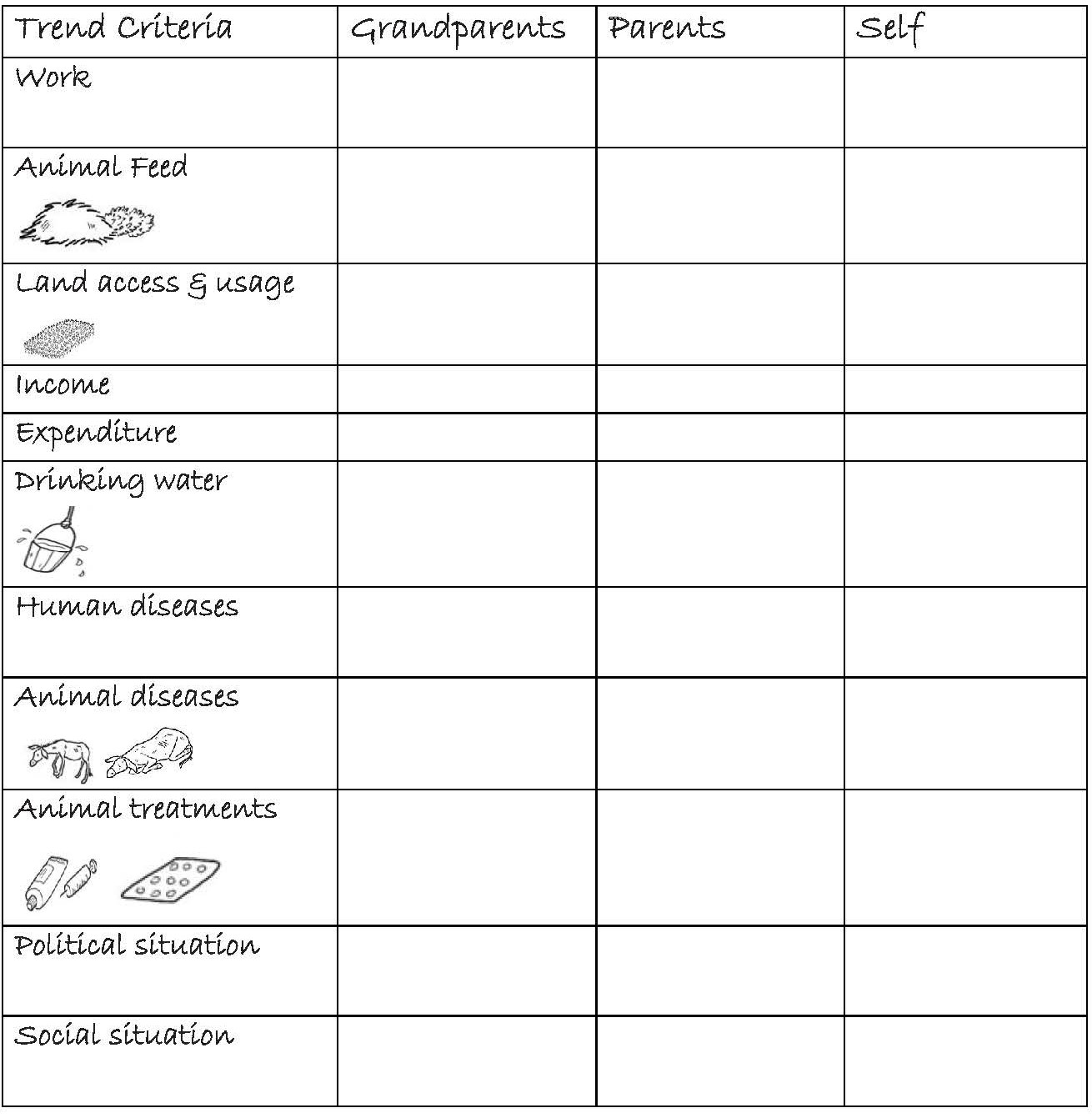
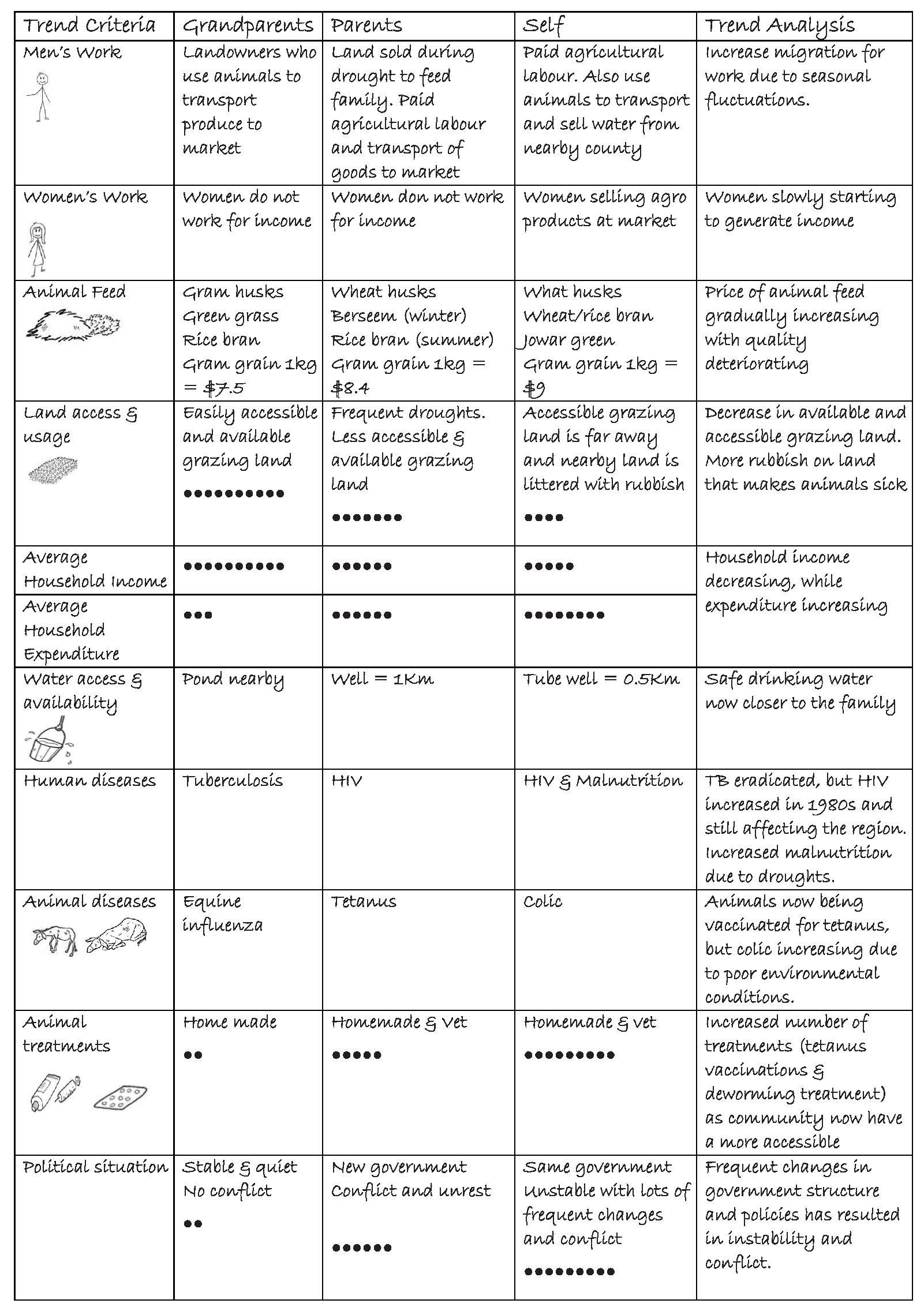

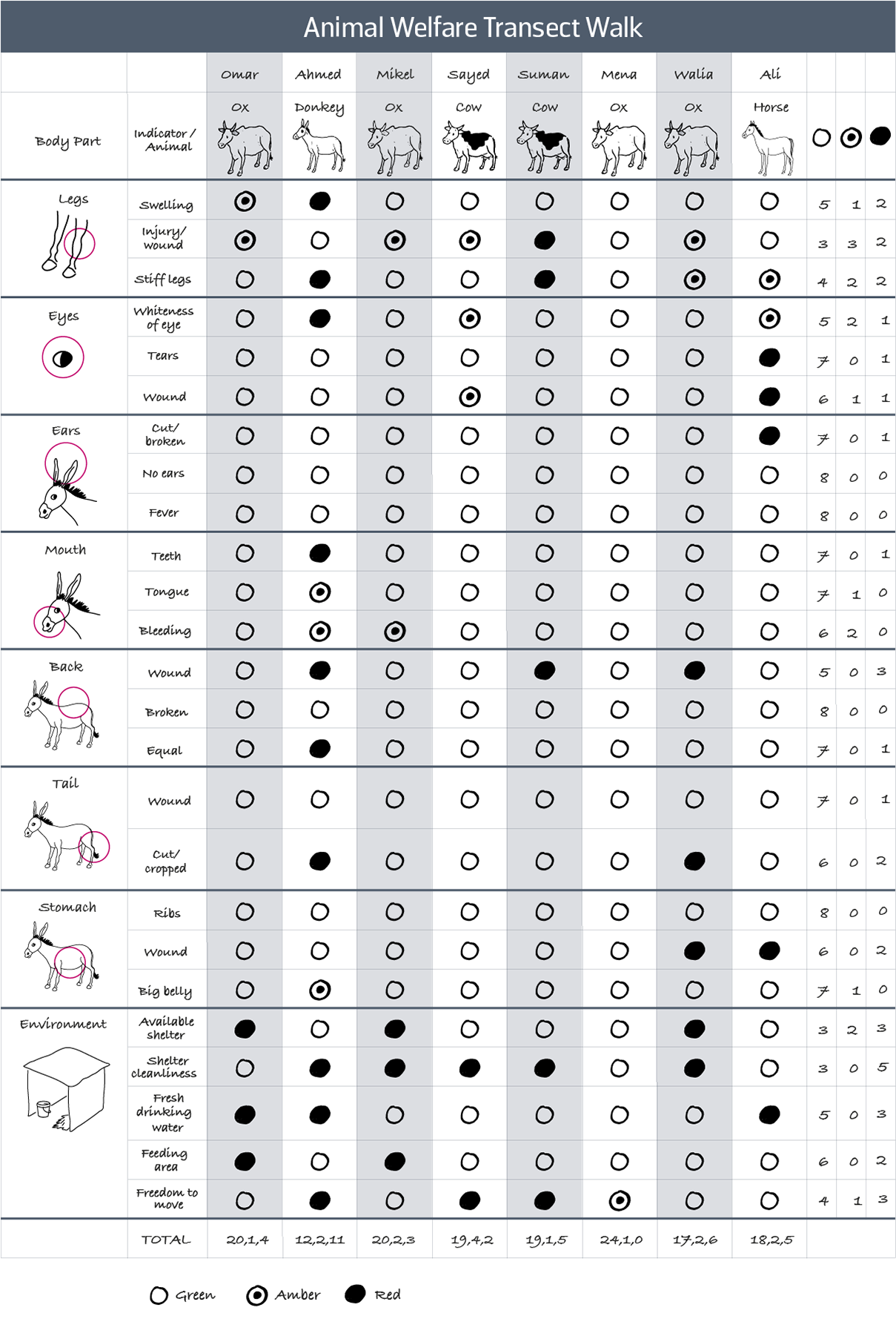

![Figure 40: Stages of Group Development [70]](http://communitiesforanimals.thebrooke.org/wp-content/uploads/2022/05/image-4.png)

![Figure 42: Reflection and Learning Process [7]](http://communitiesforanimals.thebrooke.org/wp-content/uploads/2020/12/Picture-1-1.png)


